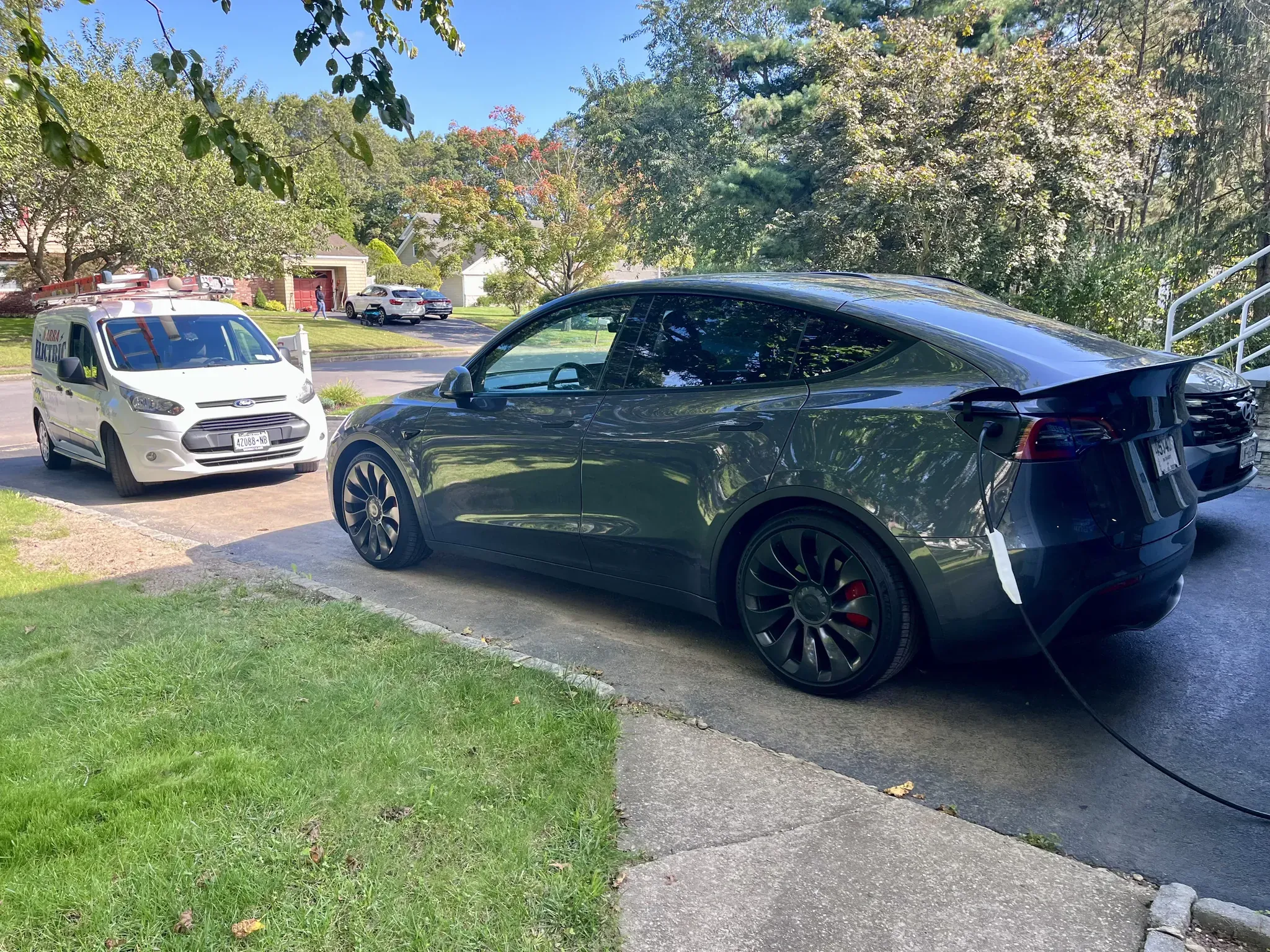
A black Tesla electric car is charging in a driveway with green grass, while a white van—possibly from a residential electrician Suffolk County, NY—sits nearby. Trees and houses can be seen under the clear blue sky.
EV Charger Rebate Suffolk County, NY

Save Big on Your Home Charging Station

Federal tax credits, PSEG rebates, and NYSERDA incentives can cut your installation costs by over $1,000 when you install an EV charger in Suffolk County, NY—but only if you know how to claim them.

Why Choose Us

Why Suffolk County Trusts Us

Over 20 Years Local Experience

We've been installing EV chargers in Suffolk County since 2004, navigating every local code and rebate program so you don't have to.

Tesla Certified Electricians

Our team holds Tesla certification and understands exactly what your EV needs to charge safely, efficiently, and qualify for every available incentive.

Documentation Handled for You

We provide all receipts, permits, and paperwork you need for Form 8911 and rebate applications—nothing gets left to chance or confusion.

100% Satisfaction Guaranteed

Every installation is backed by our satisfaction guarantee. If something's not right, we make it right. No exceptions, no runarounds.

Federal EV Charger Tax Credit

You Could Be Leaving $1,000 on the Table

The federal government offers a 30% tax credit on EV charger installation costs in Suffolk County, NY, capped at $1,000 per charging port. That's real money back when you file your taxes. But there's a catch—the credit expires June 30, 2026, and your home needs to be in an eligible census tract. Most Suffolk County residents qualify, but you need proper documentation and an installation that meets IRS requirements. We handle the technical side. You handle the savings.

PSEG Long Island adds another $200 to $300 in rebates for ENERGY STAR certified Level 2 chargers. NYSERDA programs offer additional support for commercial and multifamily properties. When you stack these incentives correctly, your out-of-pocket cost drops significantly. The challenge isn't whether the money exists—it's knowing how to claim it before deadlines pass and funding runs out.
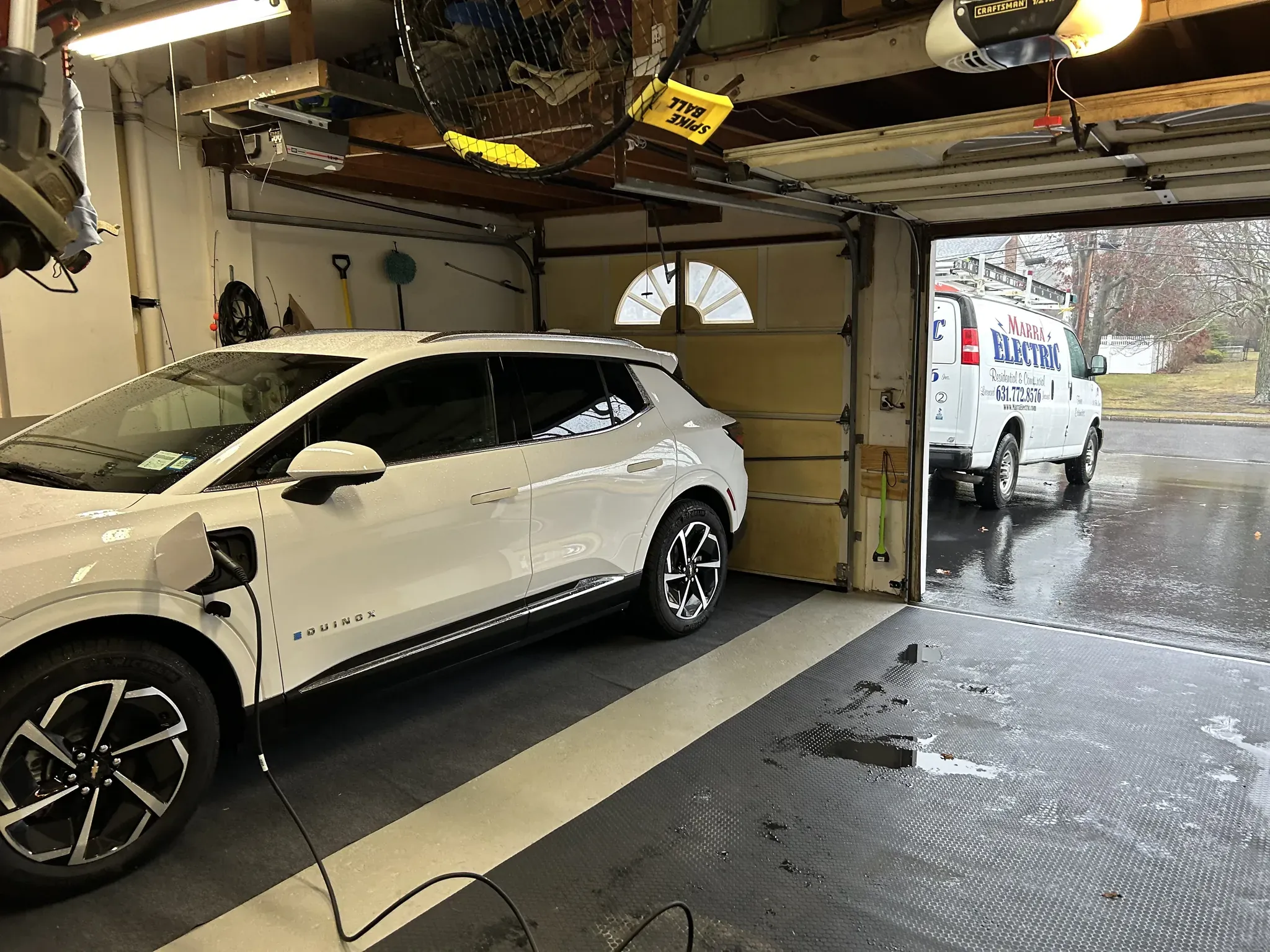
A white electric car charges inside a garage on a rainy day, the garage door partially open and a residential electrician Suffolk County, NY van parked outside on the wet driveway.
NY State EV Charging Rebate

What You Actually Get from These Incentives

These aren't abstract savings—they're real reductions in what you pay for a home charging station that works every single day.

20+ Years Serving Suffolk County
350+ Five-Star Google Reviews
#35607 NY Licensed & Insured
Know Your Costs
You recover up to 30% of your total installation cost through the federal tax credit, reducing what you owe the IRS next April.
Safety First
PSEG's rebate cuts $200 to $300 off your charger cost immediately, not months later after paperwork and waiting.
Equipment Protection
Your installation qualifies for all programs because we know exactly what documentation and specifications each one requires.
Root Cause Fixed
You'll save another $30 to $50 every month on electricity with PSEG's Time-of-Day rates for EV charging during off-peak hours.
Plain English
If your panel needs upgrading to support the charger, that work may qualify for an additional $600 federal tax credit.
Code Compliant
You stop worrying about whether you did it right or missed a deadline—we've handled hundreds of these installations and rebate applications.

Every benefit above is delivered on every job we take.

Get a Free Estimate

Ready to get started?

Our licensed crew is standing by for free estimates and 24/7 emergency service across Suffolk County.

No Obligation Same-Day Available Free Estimates
How to Get EV Charger Rebate

The Money's There—Here's How to Claim It

Start with the federal 30C Alternative Fuel Infrastructure Tax Credit. This covers 30% of your total installation cost—the charger itself, labor, permits, electrical work, even the wall mount or dedicated panel if needed. The cap is $1,000 per charging port. You claim it on IRS Form 8911 when you file your taxes for the year your charger becomes operational. Not the year you bought it. The year it's actually working and charging your car.

Your home needs to be in an eligible census tract. Most Suffolk County addresses qualify as either low-income or non-urban areas under IRS guidelines. We verify your eligibility during the consultation so you know upfront whether you're getting that credit. Keep every receipt. The IRS wants proof of what you paid for equipment and installation. We provide detailed invoices that break down exactly what the credit covers.

Then there's PSEG Long Island. They offer $200 back on ENERGY STAR certified Level 2 chargers. If you're in a Disadvantaged Community or enrolled in their Household Assistance Program, that jumps to $300. You can buy directly from PSEG's online marketplace for an instant rebate, or purchase from another retailer and submit documentation for reimbursement. Either way, it stacks with the federal credit—you get both. For commercial properties or multifamily buildings, NYSERDA's Charge Ready NY 2.0 program offers $3,000 per charging port, or $4,000 in disadvantaged communities. That's for workplaces, apartment complexes, and hotels installing Level 2 stations. Different program, different requirements, but the savings are substantial if you qualify.
Learn More
EV Charger Tax Credit Form 8911

What Form 8911 Actually Requires from You

Form 8911 is how you claim the federal EV charger tax credit. It's not complicated, but it's specific. You'll need the total cost of your charging equipment and installation, broken down to show what qualifies. That includes the charger, mounting hardware, dedicated electrical panel if installed solely for the charger, conduit, wiring, and labor. The form asks when your property was placed in service—that's the date your charger became operational and started charging your vehicle.

You'll also need to confirm your census tract eligibility. The IRS provides an online locator tool, but we verify this during your consultation. If your address qualifies, you're good to go. If it doesn't, you know before we start the work. The credit is non-refundable, meaning it reduces your tax liability but won't generate a refund if you don't owe taxes. If you owe $800 in federal taxes and qualify for a $1,000 credit, you'll zero out what you owe but won't get the remaining $200 back.

We provide itemized invoices that separate equipment costs, labor, and associated materials. That documentation goes with your Form 8911 when you file. No guesswork, no missing receipts, no scrambling at tax time. The deadline is firm: your charger must be operational by June 30, 2026. After that date, the credit disappears. That's not a "might change" situation—it's federal law as of the One Big Beautiful Bill passed in 2025. If you're planning to install an EV charger and want that federal money, the window is closing.
Learn More

Get a Free Estimate Today

Our licensed crew serves all of Suffolk County with transparent pricing and guaranteed work.

Why Marra Electric

NY Licensed & Fully Insured — #35607
Upfront written estimates — no hidden fees
No subcontractors — our crew does your job start to finish
100% satisfaction guaranteed on every job
24/7 emergency service across Suffolk County
NY Electrical License #35607 Fully insured on every job
NYSERDA EV Charger Incentive Suffolk County

Our Process Gets You Every Dollar You Qualify For

Step 01 of 03

Eligibility Verification and Consultation

We check your census tract eligibility, evaluate your electrical system, and calculate exactly which incentives apply to your specific situation and location.

Step 02 of 03

Code-Compliant Installation with Proper Documentation

We install your Level 2 charger to meet all federal, state, and local requirements, handle permits, and provide itemized invoices for your rebate applications.

Step 03 of 03

Rebate Application Support and Tax Documentation

You receive all paperwork needed for Form 8911 and PSEG rebates, with clear instructions on what to submit and when to file.

FAQ

Common Questions About This Service

The federal Alternative Fuel Vehicle Refueling Property Credit, also called the 30C tax credit, gives you back 30% of your total EV charger installation cost, up to $1,000 maximum. That includes the charging equipment, installation labor, permits, electrical work, and any associated components like wall mounts or dedicated electrical panels installed specifically for the charger. You claim it on IRS Form 8911 when you file your federal tax return for the year your charger becomes operational. Your home must be located in an eligible census tract—either a low-income or non-urban area as defined by the Census Bureau. Most Suffolk County addresses qualify, but we verify your specific location during the initial consultation. The credit expires June 30, 2026, so your charger must be installed and operational by that date. This isn't a refundable credit, meaning it reduces your tax liability but won't generate a refund beyond what you owe. If you combine this with PSEG Long Island's $200 to $300 rebate, you're looking at real savings that make home EV charging significantly more affordable.

Yes, you can stack the federal 30C tax credit with PSEG Long Island's residential charger rebate. They're separate programs with different funding sources, so claiming one doesn't disqualify you from the other. PSEG offers $200 back on qualified ENERGY STAR certified Level 2 EV chargers. If you live in a Disadvantaged Community or participate in PSEG's Household Assistance Program, that rebate increases to $300. You can either purchase your charger through PSEG's online marketplace for an instant rebate, or buy from another retailer and submit documentation for reimbursement afterward. The federal credit covers your total installation cost—charger plus labor plus permits—while the PSEG rebate applies specifically to the charger equipment itself. When you combine both programs, you're reducing your out-of-pocket expense from two different directions. We handle installations that meet the requirements for both programs, provide the documentation you need for each application, and walk you through the process so nothing falls through the cracks.

The federal 30C tax credit requires your home to be located in an eligible census tract, defined as either a low-income community or a non-urban area according to Census Bureau data. Most Suffolk County addresses qualify under one of these categories, but it's determined by your specific census tract, not just your zip code or town. The U.S. Department of Energy provides an online eligibility locator tool where you can enter your address and see immediately whether you qualify. We verify this during your initial consultation before any work begins, so you know exactly what incentives you're eligible for before making any decisions. If your address doesn't qualify for the federal credit, you'll still be eligible for PSEG Long Island's rebate and any applicable NYSERDA programs. The census tract requirement is specific to the federal tax credit only. It's worth checking because the difference between qualifying and not qualifying is up to $1,000 in tax savings. We've worked with hundreds of Suffolk County homeowners and know which areas typically qualify, but we always verify your specific address to be certain.

For the federal tax credit, you'll need itemized receipts showing the total cost of your EV charger and installation, broken down to separate equipment, labor, and associated materials. This includes the charging unit itself, mounting hardware, electrical work, permits, and any dedicated electrical components installed solely to support the charger. You'll also need proof that your charger was placed in service—meaning it became operational—during the tax year you're claiming. We provide detailed invoices that meet IRS requirements for Form 8911, so you have everything documented correctly from the start. For PSEG Long Island's rebate, if you purchase through their online marketplace, no additional documentation is required for the instant rebate. If you buy your charger elsewhere, you'll need a copy of your sales receipt showing the charger model, proof of payment, and photos of the installed charger at your home showing the model and serial number. The charger must be ENERGY STAR certified and appear on PSEG's eligible equipment list. We ensure the equipment we install meets these requirements and provide you with all necessary documentation. Keep everything organized in one folder—receipts, invoices, permit approvals, photos, and installation completion certificates. This makes filing Form 8911 and submitting rebate applications straightforward instead of stressful.

Yes, and it's important. The federal 30C tax credit expires on June 30, 2026. Your EV charger must be installed and operational—meaning it's actually charging your vehicle—by that date to qualify. This deadline was set by the One Big Beautiful Bill passed in 2025, which shortened the original timeline that ran through 2032. After June 30, 2026, the federal credit disappears completely. PSEG Long Island's residential charger rebate program is currently active but operates on a first-come, first-served basis until funding runs out or the program ends. While PSEG hasn't announced a hard deadline, these utility rebate programs can close when their allocated budget is depleted. The sooner you install, the more confident you can be that funding will still be available when you apply. For the federal credit, timing matters for tax purposes too. You must claim the credit on your tax return for the year your charger was placed in service. If you install in 2025, you claim it on your 2025 tax return filed in early 2026. If you install in early 2026, you'll claim it on your 2026 return filed in 2027. Don't wait until the last minute—permit approvals, scheduling, and potential panel upgrades can add weeks to your timeline.

Charge Ready NY 2.0 is NYSERDA's rebate program for Level 2 EV charging stations, but it's designed for commercial properties, workplaces, multifamily buildings, and hotels—not single-family homes. The program offers $3,000 per charging port for eligible properties, or $4,000 per port in Disadvantaged Communities. It's meant to expand public and semi-public charging access at locations where drivers park for extended periods, like apartment complexes, office buildings, and hospitality properties. If you're a business owner, property manager, or building owner in Suffolk County looking to install EV chargers for employees, tenants, or customers, Charge Ready NY could significantly reduce your installation costs. Residential homeowners installing a charger at a single-family home should focus on the federal 30C tax credit and PSEG Long Island's residential rebate instead—those are the programs that apply to your situation. We work with both residential and commercial clients, so whether you're installing a single charger at your home or multiple charging stations at a commercial property, we can navigate the right incentive programs for your specific project and ensure your installation qualifies for maximum savings.