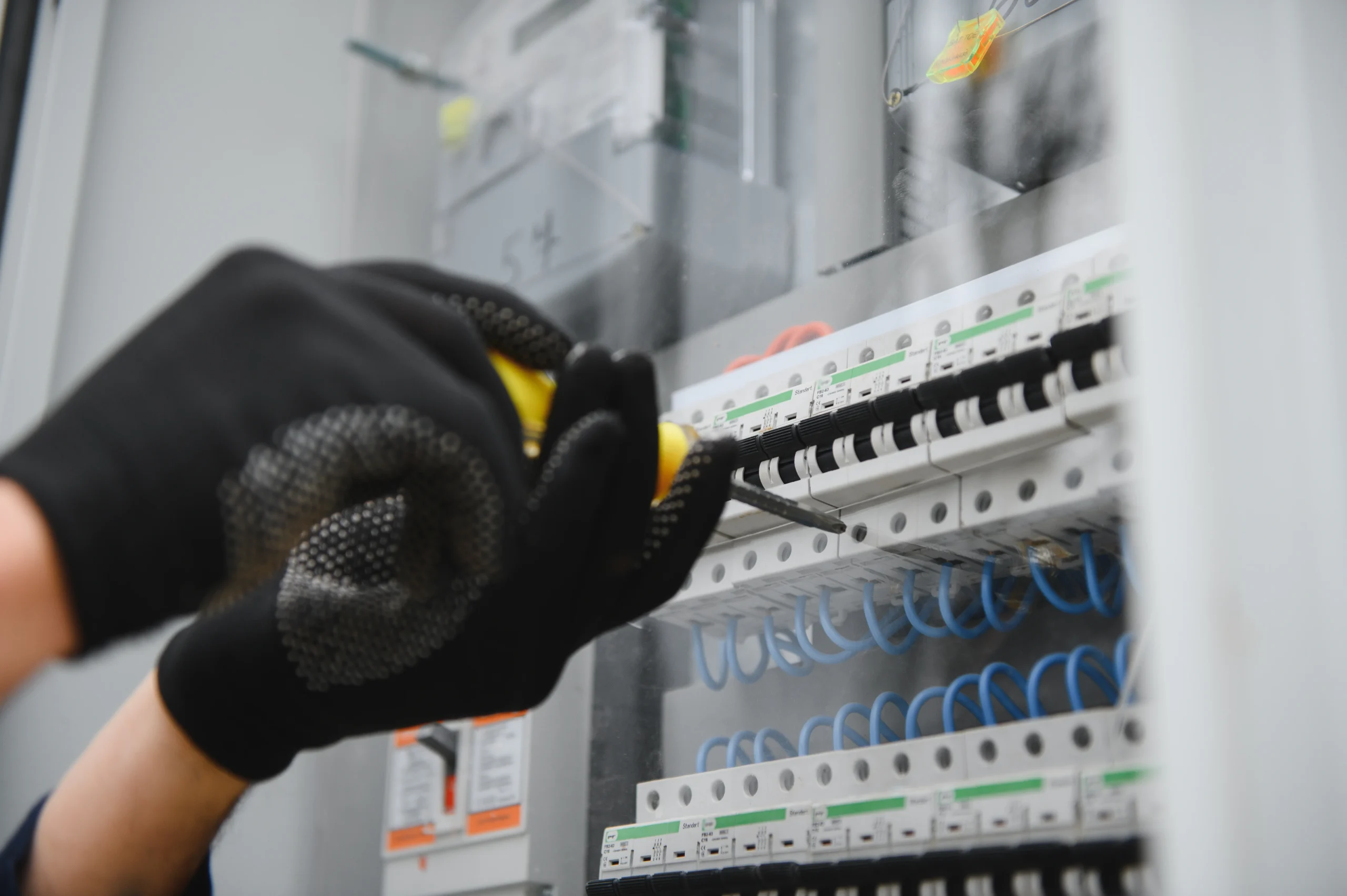
Your electrical panel wasn't built for how you live today. If breakers trip when you're making dinner or your lights dim every time the AC kicks on, you need more than a temporary fix. You need a panel that can actually handle modern life in Suffolk County.
Every technician carries proper credentials and insurance coverage, protecting your home and giving you legal recourse if anything goes wrong.
You approve the final cost before we start. No surprise bills, no hidden fees, no excuses after the work is done.
Angie's List Super Service Award recipient for seven consecutive years, reflecting consistent quality and customer satisfaction across hundreds of Suffolk County projects.
Serving Suffolk County since 2004, we've upgraded panels in homes from the 1950s to last year, navigating every electrical challenge this area presents.
You'll notice the difference immediately. No more walking to the basement to reset breakers. No more choosing which appliances you can run at the same time. Just reliable power when you need it.
Every benefit above is delivered on every job we take.
Get a Free EstimateOur licensed crew is standing by for free estimates and 24/7 emergency service across Suffolk County.
Our licensed crew serves all of Suffolk County with transparent pricing and guaranteed work.
We inspect your current panel, evaluate your home's electrical demands, and determine the right amperage for your needs now and in the future.
We handle all Suffolk County permit applications and coordinate with your utility company for the required power disconnection during installation.
We install your new panel, connect all circuits properly, and schedule the county inspection to verify code compliance before power restoration.
Most electrical panel upgrades in Suffolk County range from $1,200 to $4,500, with the typical 200-amp upgrade costing between $1,300 and $2,500. The final cost depends on several factors: your home's current electrical setup, whether you're upgrading from 100 to 200 amps or replacing a fuse box entirely, the condition of your existing wiring, and whether additional work is needed to bring everything up to code. Homes that need significant rewiring or service line upgrades can cost more. We provide upfront pricing after assessing your specific situation, so you know the exact cost before any work begins. This includes all permits, labor, materials, and the final inspection required by Suffolk County.
The physical installation typically takes 4-10 hours and can usually be completed in one day. Your power will be shut off during this time, so plan accordingly. However, the total timeline from start to finish is longer because of permits and inspections. Suffolk County's permit approval process typically takes 20-30 business days, which is actually faster than many areas. After installation, a county inspector must verify the work meets code before your power is fully restored. We coordinate with your utility company for the disconnection and reconnection, which adds a few hours. From the day you decide to move forward to the day everything is complete and inspected, expect 3-5 weeks total. We handle all the coordination so you're not chasing down permits or scheduling inspections yourself.
Most Suffolk County homes built before 2000 can benefit from upgrading to 200 amps, especially if you're planning to add an EV charger, heat pump, or other high-demand appliances. The decision comes down to a load calculation—we add up all your current appliances, lighting, HVAC, and planned additions to determine your total electrical demand. The National Electrical Code requires staying below 80% of your panel's capacity for safety, so a 100-amp panel only gives you 80 usable amps. When you factor in central AC, electric water heating, kitchen appliances, and an EV charger that draws 30-50 amps continuously, you quickly exceed that limit. If you have a small home with minimal electrical demands and no plans to add major appliances, 100 amps might suffice. But for most modern households, 200 amps is the minimum recommended capacity and costs only slightly more to install than staying at 100 amps.
An overloaded or outdated panel creates several serious problems. First, there's the safety risk—older panels that can't handle modern electrical loads overheat, which can lead to electrical fires. Panels like Federal Pacific Electric or Zinsco are known to have breakers that fail to trip during overloads, creating silent fire hazards. Second, your homeowner's insurance may be at risk. Many insurers won't cover homes with certain outdated panels, or they charge significantly higher premiums. If you have an electrical fire and your panel was outdated or overloaded, your claim could be denied. Third, you can't add modern conveniences like EV chargers, upgraded HVAC systems, or kitchen remodels without exceeding your panel's capacity. Finally, when you try to sell your home, outdated panels often fail inspection or scare away buyers, potentially costing you the sale or forcing a last-minute upgrade under pressure.
It depends on your current panel's capacity and available circuits. A Level 2 EV charger requires a dedicated 240-volt circuit and draws 30-50 amps continuously—that's a substantial load compared to most household circuits that use 15-20 amps intermittently. If your panel is already near capacity, adding an EV charger without upgrading first will cause frequent breaker trips and potential safety issues. We start by performing a load calculation to determine if your current panel can support the charger alongside your existing electrical demands. If you have a newer 200-amp panel with available capacity, we might be able to install the charger without a full panel upgrade. But many Suffolk County homes with 100-amp panels or older need the upgrade first. Trying to install an EV charger on an inadequate panel doesn't just cause inconvenience—it creates a fire hazard and violates electrical code.
Yes, permits are mandatory for electrical panel upgrades in Suffolk County, and only licensed electricians can pull them. The permit process ensures your upgrade meets National Electrical Code requirements and local regulations, and it includes a final inspection to verify safe installation. Some contractors try to skip permits to save time or money, but this creates serious problems. Unpermitted electrical work can void your homeowner's insurance, meaning if there's ever an electrical fire or issue, your claim will be denied. It also creates problems when you try to sell your home—unpermitted work shows up during inspections and can delay or kill the sale. Suffolk County actually has a relatively fast permitting system using online applications, with most projects approved within 20-30 business days. We handle all permit applications and inspections as part of our service, so you don't have to navigate the process yourself. The permits and inspections protect you legally and financially.