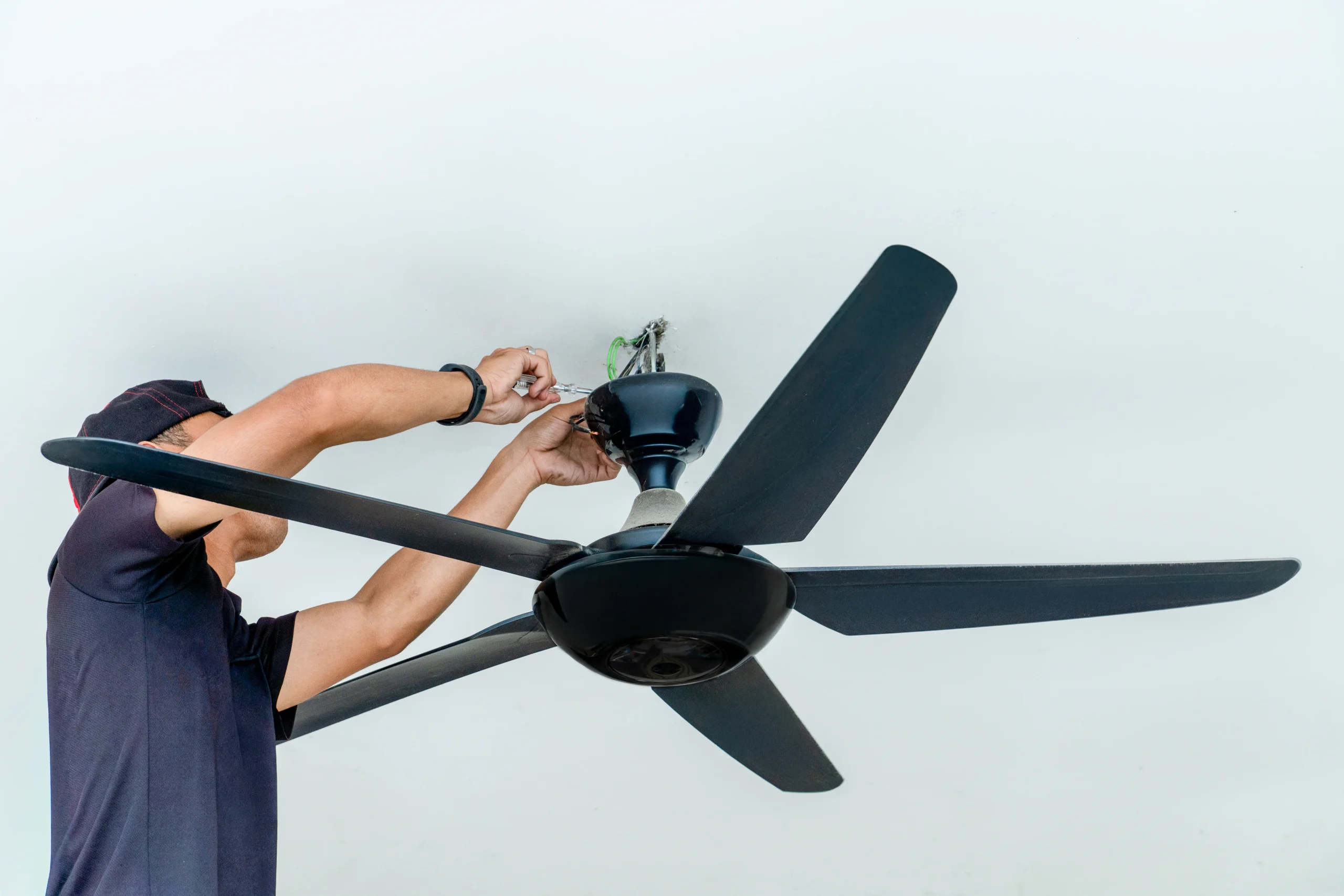
You need ceiling fans that actually work and outlets where you need them—not flickering lights, tripping breakers, or adapters taking up every plug. We're licensed electricians in Suffolk County, NY who show up on time, quote upfront, and install it right the first time.
Every technician on our team is fully licensed and insured, following Suffolk County electrical codes so your installation passes inspection without issues.
You get a clear quote before any work starts—no surprise fees, no hidden costs, no runaround when the bill comes.
We've been serving Suffolk County since 2004 with consistent results. Seven-time Angie's List Super Service Award winner for a reason.
Electrical problems don't wait for business hours. Neither do we. We're available 24/7 when you need urgent help with your electrical system.
Professional ceiling fan installation and outlet work eliminates the headaches that come with faulty wiring, outdated systems, and DIY attempts that create more problems than they solve.
Every benefit above is delivered on every job we take.
Get a Free EstimateOur licensed crew is standing by for free estimates and 24/7 emergency service across Suffolk County.
Our licensed crew serves all of Suffolk County with transparent pricing and guaranteed work.
We evaluate your electrical system, discuss what you need, and provide an upfront quote with no obligation or pressure to proceed.
Our licensed electricians complete the work according to Suffolk County electrical codes, using proper materials and techniques that pass inspection.
We test everything to confirm it works correctly, clean up the work area, and walk you through what was done before we consider the job complete.
Ceiling fan installation typically costs between $145 and $356 for straightforward replacements using existing wiring, though costs can reach $600 or more for complex installations requiring new wiring, circuit upgrades, or work on vaulted ceilings. The final price depends on several factors: whether you already have a fan-rated electrical box or need one installed, if existing wiring can support the fan or if new circuits are required, ceiling height and accessibility, and whether you're adding wall switches or smart controls. We provide free estimates that outline exactly what your specific installation will cost before any work begins, so you know the price upfront without surprises. Labor typically takes 1-2 hours for basic replacements but can extend to 3-4 hours when new wiring or switches are involved.
Yes, New York electrical code requires GFCI outlets in specific locations throughout your home: all bathroom outlets, kitchen countertop outlets, garage outlets, outdoor outlets, and outlets in unfinished basements. GFCI protection is mandatory in any area where electricity and water might come into contact because these outlets prevent deadly electrical shock by cutting power within milliseconds when they detect current imbalance. Many Suffolk County homes built before these code requirements took effect still have standard outlets in these locations, which creates both a safety hazard and a code violation that can affect your home insurance coverage. If you're selling your home, inspections often flag missing GFCI protection as an issue that must be corrected. Installing GFCI outlets is straightforward work that brings your home up to current safety standards and provides critical protection for your family.
Maybe, but it depends on your electrical box and wiring. Light fixtures typically use standard electrical boxes that aren't rated to support the weight and vibration of a ceiling fan. Ceiling fans require fan-rated boxes that are specifically designed and braced to handle the dynamic load. If your current box isn't fan-rated, attempting to hang a ceiling fan from it creates a serious safety hazard—the fan could eventually pull free from the ceiling. Additionally, if your light fixture is controlled by a dimmer switch, that switch needs to be replaced because dimmer switches aren't compatible with ceiling fan motors and can cause overheating or motor damage. The existing wiring might work if it includes the necessary conductors for both the fan motor and light kit, but this varies by installation. We can assess your current setup, determine if the electrical box needs upgrading, verify the wiring is adequate, and handle the installation correctly so your ceiling fan operates safely.
Noise and wobbling typically indicate installation issues or component problems that need attention. Common causes include: the fan isn't mounted to a proper fan-rated electrical box, which allows movement and vibration; loose screws in the mounting bracket, motor housing, or blade attachments; unbalanced blades due to dust buildup, damage, or manufacturing defects; incorrect wiring causing the motor to struggle or operate inconsistently; a failing capacitor that prevents the motor from running smoothly; or the fan is mounted too close to the ceiling without adequate clearance for proper airflow. Sometimes the issue is simply that the fan was installed incorrectly from the start—wires connected wrong, mounting hardware not secured properly, or the wrong type of electrical box used. While some fixes like tightening screws or cleaning blades are straightforward, electrical issues require a licensed electrician to diagnose and repair safely. Ignoring these problems can lead to motor failure, electrical hazards, or the fan detaching from the ceiling.
USB outlets are standard electrical outlets with built-in USB charging ports (USB-A, USB-C, or both) integrated directly into the outlet itself. Instead of plugging in a bulky wall adapter to charge your phone or tablet, you plug your USB cable straight into the outlet. They're increasingly popular because modern households have multiple devices that charge via USB—smartphones, tablets, wireless earbuds, smartwatches, e-readers, and more. USB outlets eliminate the clutter of adapters, free up your traditional plug spaces for other devices, and often provide faster charging than cheap wall adapters because they include smart charging technology that optimizes power delivery. The USB outlet market is growing rapidly, with USB-C ports becoming standard for faster charging of laptops and high-power devices. Installation is similar to standard outlet replacement, though USB outlets do cost more than basic outlets. They're particularly useful in kitchens, bedrooms, home offices, and anywhere you regularly charge devices. If you're already upgrading outlets or doing electrical work, adding USB outlets is a smart, future-focused choice.
Permit requirements in Suffolk County depend on the scope of work. Generally, replacing an existing ceiling fan or outlet using current wiring doesn't require a permit, but installing new circuits, adding outlets where none existed, or making significant electrical modifications typically does require permits and inspection. Each municipality within Suffolk County—Babylon, Huntington, Smithtown, Brookhaven, and others—has specific requirements, though all follow New York State electrical codes. Permits ensure that electrical work meets safety standards, is performed by qualified individuals, and passes inspection to verify code compliance. Skipping required permits creates several problems: your work may not pass home inspections when selling, your homeowner's insurance might deny claims related to unpermitted work, and you could face fines from your local building department. We handle permit applications and scheduling inspections as part of our professional service, ensuring your electrical work is legal, safe, and properly documented.