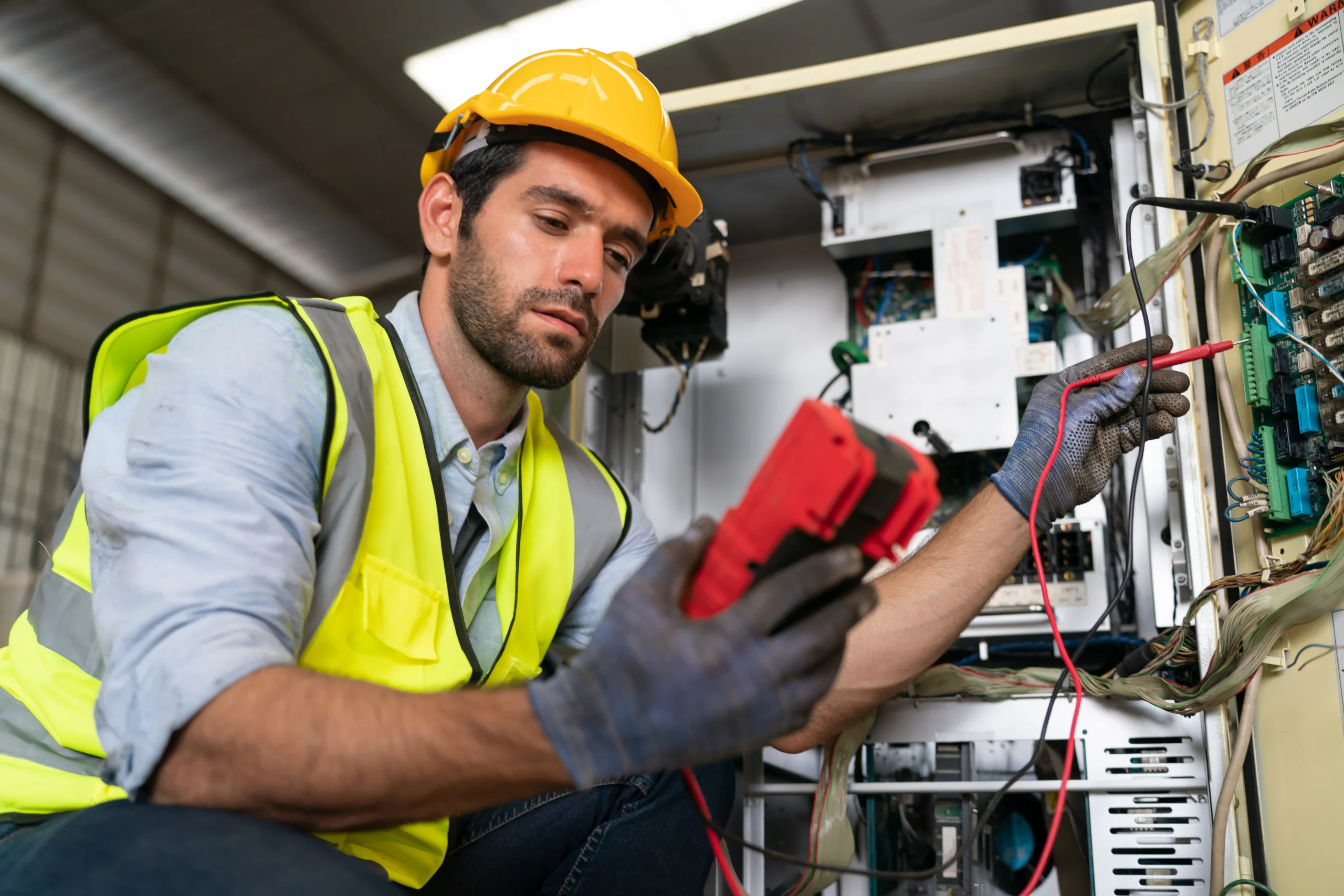
A commercial electrician in Suffolk County, NY, wearing a yellow safety vest and hard hat, uses a multimeter to check electrical components inside an open industrial machine.
Electrical Fault Diagnosis Suffolk County, NY

Power Back On, Problem Actually Solved

When your power goes out or circuits keep tripping, you need answers fast—not guesswork. We diagnose electrical faults accurately the first time, with upfront pricing and permanent solutions that keep your Suffolk County home safe.

Why Choose Us

What Sets Us Apart

Licensed and Fully Insured

Every technician on our team carries proper credentials and liability coverage, so your home and family stay protected throughout every electrical repair.

Over 20 Years Experience

Since 2004, we've diagnosed thousands of electrical faults across Suffolk County, from aging panels to hidden wiring issues.

Upfront Pricing Always

You'll know the cost before work begins. No surprise charges, no hidden fees—just honest pricing on every service call.

24/7 Emergency Response

Electrical emergencies don't wait for business hours. We're available around the clock when you need immediate help with power outages.

Power Outage Electrician Suffolk County, NY

We Find What's Actually Causing Your Electrical Problems

Flickering lights, breakers that won't stay on, or power that cuts out in half your house—these aren't just annoyances. They're warning signs that something in your electrical system needs professional attention. The problem is, most electrical faults hide behind walls or inside panels where you can't see them.

That's where diagnostic equipment and experience make the difference. Marra Electric uses voltage meters, thermal imaging, and circuit testing to pinpoint exactly what's failing—whether it's a loose connection generating dangerous heat, an overloaded circuit that can't handle your home's demand, or aging wiring that's reached the end of its safe lifespan.

You get a clear explanation of what went wrong, why it happened, and what it takes to fix it permanently.
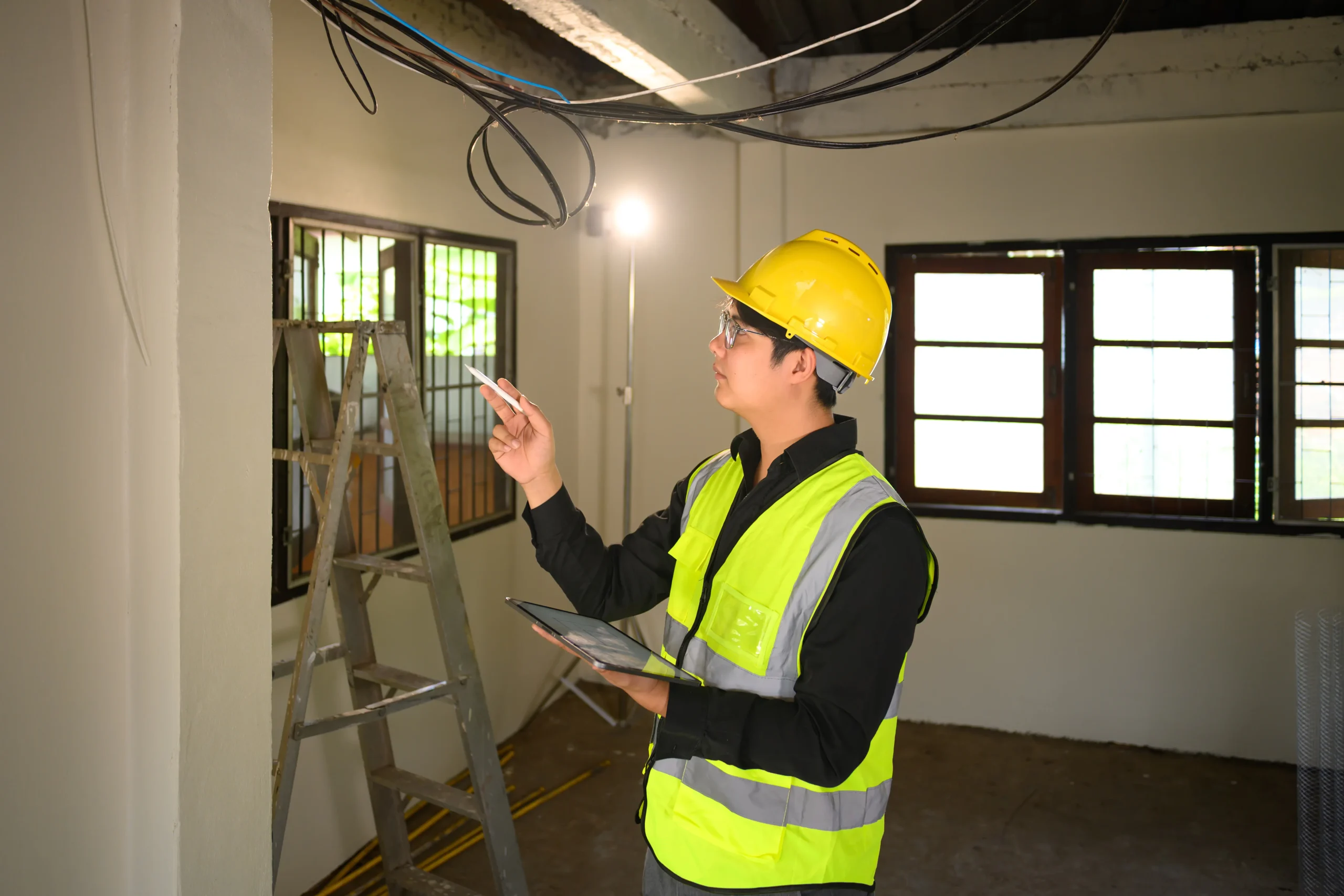
A construction worker in a yellow hard hat and reflective vest inspects a room with exposed ceiling wires, holding a tablet and pen near a metal ladder—typical tasks for a residential electrician in Suffolk County, NY, as sunlight streams through the windows.
Electrical Troubleshooting Service Suffolk County, NY

What You Get With Professional Fault Diagnosis

Fast, accurate diagnosis means you're not paying for trial and error. You're paying to actually solve the problem and prevent it from happening again.

20+ Years Serving Suffolk County
350+ Five-Star Google Reviews
#35607 NY Licensed & Insured
Know Your Costs
You'll know exactly what's wrong with your electrical system and what it costs to fix before any work starts.
Safety First
Dangerous conditions like loose wiring or failing breakers get identified before they spark a fire in your walls.
Equipment Protection
Your expensive electronics and appliances stay protected from the voltage fluctuations that damage sensitive equipment over time.
Root Cause Fixed
Recurring issues finally stop because we fix the root cause, not just reset the breaker and hope it holds.
Plain English
You'll understand what happened in plain language, without technical jargon or unnecessary upselling.
Code Compliant
Code-compliant repairs mean your electrical work passes inspection and keeps your home insurance valid if you ever need it.

Every benefit above is delivered on every job we take.

Get a Free Estimate

Ready to get started?

Our licensed crew is standing by for free estimates and 24/7 emergency service across Suffolk County.

No Obligation Same-Day Available Free Estimates
Circuit Breaker Keeps Tripping Suffolk County, NY

When Your Breaker Trips, It's Trying to Tell You Something

Circuit breakers don't trip for fun. They're safety devices designed to cut power when something dangerous is happening—too much current flowing through the circuit, a short where wires are touching, or a ground fault sending electricity where it shouldn't go. If you're resetting the same breaker more than once, that's your electrical system asking for help.

The issue might be as simple as too many devices on one circuit, or as serious as damaged wiring arcing inside your walls at temperatures exceeding 10,000 degrees. Here's what most people don't realize: every time a breaker trips and you reset it, you're wearing down the breaker's internal mechanism. Do it enough times, and the breaker itself becomes unreliable it might not trip when it should, or it might trip when there's no real problem. That's why repeatedly resetting a tripping breaker isn't a solution. It's a countdown.

We test the actual current load on your circuits, measure voltage under operating conditions, and check breaker response times to verify they're still protecting you reliably. Many Suffolk County, NY homes still have 60 to 100 amp panels from the 1960s and 70s trying to power modern electrical demands that require 150 to 200 amps. If your breakers trip when you run the microwave and toaster at the same time, or your AC kicks on, that's often your panel telling you it's undersized for how you actually live.
Learn More
Flickering Lights Electrician Suffolk County, NY

Flickering Lights Mean More Than a Loose Bulb

When lights flicker throughout your home especially when appliances turn on you're seeing voltage drops that indicate your electrical system is struggling. If it's just one light fixture, you might have a loose bulb or a bad switch. But when multiple lights dim or flicker, particularly in different rooms, that points to a bigger issue: loose connections in your panel, inadequate wiring for your electrical load, or failing components somewhere in the circuit.

Loose electrical connections are especially dangerous because they create resistance, and resistance creates heat. That heat can reach the point where it melts wire insulation, ignites surrounding materials, or causes arcing—those brief electrical discharges that can start fires inside your walls where you won't see smoke until it's too late. Thermal imaging lets us spot these hot connections before they become fire hazards.

Lights that flicker when large appliances start your refrigerator, AC unit, or washing machine often mean those appliances are sharing a circuit with your lighting, creating voltage drops exceeding 5%. That might not sound like much, but it reduces appliance lifespan by 20 to 30% and signals that your circuits weren't designed for modern electrical loads. We measure voltage stability under load to identify which circuits need redistribution or upgrading, so your lights stay steady and your appliances last as long as they should.
Learn More

Get a Free Estimate Today

Our licensed crew serves all of Suffolk County with transparent pricing and guaranteed work.

Why Marra Electric

NY Licensed & Fully Insured — #35607
Upfront written estimates — no hidden fees
No subcontractors — our crew does your job start to finish
100% satisfaction guaranteed on every job
24/7 emergency service across Suffolk County
NY Electrical License #35607 Fully insured on every job
Electrical Short Circuit Repair Suffolk County

How We Diagnose and Fix Electrical Faults

Step 01 of 03

Thorough System Inspection

We test your electrical panel, measure voltage at outlets under load, and use thermal imaging to spot problems invisible to the naked eye.

Step 02 of 03

Clear Diagnosis and Pricing

You get a straightforward explanation of what's wrong, why it's happening, and exactly what it costs to fix before any repair work begins.

Step 03 of 03

Permanent, Code-Compliant Repair

We fix the root cause using quality materials and proper techniques, so the problem doesn't come back next week or next month.

FAQ

Common Questions About This Service

Partial power loss—where some rooms work and others don't—usually points to a tripped circuit breaker, a GFCI outlet that's cut power to downstream outlets, or a problem with the wiring serving that section of your home. Start by checking your breaker panel for any breakers in the off or middle position and reset them fully off then back on. Next, look for GFCI outlets in your kitchen, bathrooms, garage, or basement and press the reset button. If power doesn't restore, or if it comes back but goes out again quickly, you're likely dealing with a short circuit, ground fault, or damaged wiring that needs professional diagnosis. Don't keep resetting breakers that trip repeatedly—that's a sign the protective device is doing its job by cutting power to prevent a more serious problem like overheating or fire.

Professional electrical fault diagnosis uses specialized testing equipment that measures what you can't see. We start with voltage testing at your panel and outlets under various load conditions to identify voltage drops or irregularities. Thermal imaging cameras detect hot spots caused by loose connections or overloaded circuits before they're visible to the eye. Circuit testers and multimeters measure current flow, resistance, and continuity to pinpoint shorts, ground faults, or breaks in wiring. We also inspect breakers for proper operation and test their response times under fault conditions. The goal is to identify the exact location and cause of the problem—not just the symptom—so repairs actually solve the issue permanently instead of masking it temporarily.

Yes, a circuit breaker that trips repeatedly is warning you about a potentially dangerous condition. The breaker is designed to cut power when it detects too much current flowing through the circuit, which causes dangerous heat buildup in your wiring. Common causes include overloaded circuits running too many devices, short circuits where hot and neutral wires touch, or ground faults sending current through unintended paths. Each time you reset a breaker that trips again, you're not fixing the underlying problem—you're just temporarily restoring power to a circuit that's already told you something is wrong. Continuing to reset a tripping breaker can damage the breaker mechanism itself, cause it to fail when you actually need protection, or allow the real problem to escalate into an electrical fire. The safe approach is to leave the breaker off and contact a licensed electrician to diagnose why it's tripping.

Lights that dim or flicker when large appliances turn on indicate voltage drops caused by high startup current draw on circuits that aren't adequately sized or separated. When your air conditioner, refrigerator, microwave, or washing machine starts up, it pulls a surge of current. If that appliance shares a circuit with your lighting, the sudden demand causes a temporary voltage drop that makes lights dim. This is especially common in older homes where lighting and outlets were wired on the same circuits to save on installation costs. While brief dimming during appliance startup isn't always dangerous, frequent or severe flickering can indicate undersized wiring, loose connections creating resistance, or an electrical panel that can't handle your home's total load. The solution often involves installing dedicated circuits for major appliances, upgrading undersized wiring, or replacing an outdated electrical panel with one sized for modern electrical demands.

Electrical troubleshooting typically involves a service call fee that covers the first hour of diagnostic work, generally ranging from $100 to $200 depending on the complexity and timing of the call. This diagnostic fee includes our technician's travel time, initial system inspection, voltage testing, and identification of the problem. Once we've diagnosed the issue, we provide upfront pricing for the actual repair before any work begins—no surprises, no hidden charges. Simple fixes like resetting a GFCI or tightening a loose connection might be resolved during the initial service call. More involved repairs like replacing damaged wiring, upgrading a breaker, or correcting code violations are quoted separately based on the specific work required. Emergency calls outside normal business hours may carry premium rates, but you'll always know the cost before we start. The value of professional diagnosis is that it prevents the expensive trial-and-error approach and identifies safety hazards before they cause fires or damage to your home and electronics.

If your neighbors have power but you don't, contact an electrician—the problem is with your home's electrical system, not the utility grid. If you smell burning plastic or see smoke near outlets, panels, or fixtures, shut off power at the main breaker and reach out immediately. If breakers trip repeatedly when you try to reset them, that's another clear signal to get professional help rather than keep trying. Sparking outlets, buzzing sounds from your panel, or any situation where you're unsure about safety all warrant a call to a licensed electrician. On the other hand, if your whole neighborhood is dark, that's a utility company issue—report it to them and wait for grid power restoration. Even after utility power returns, if you notice any unusual behavior like flickering lights, partial power, or burning smells, have your system inspected. Power surges during outages and restoration can damage your electrical system in ways that aren't immediately obvious but create safety hazards or equipment failures down the line.