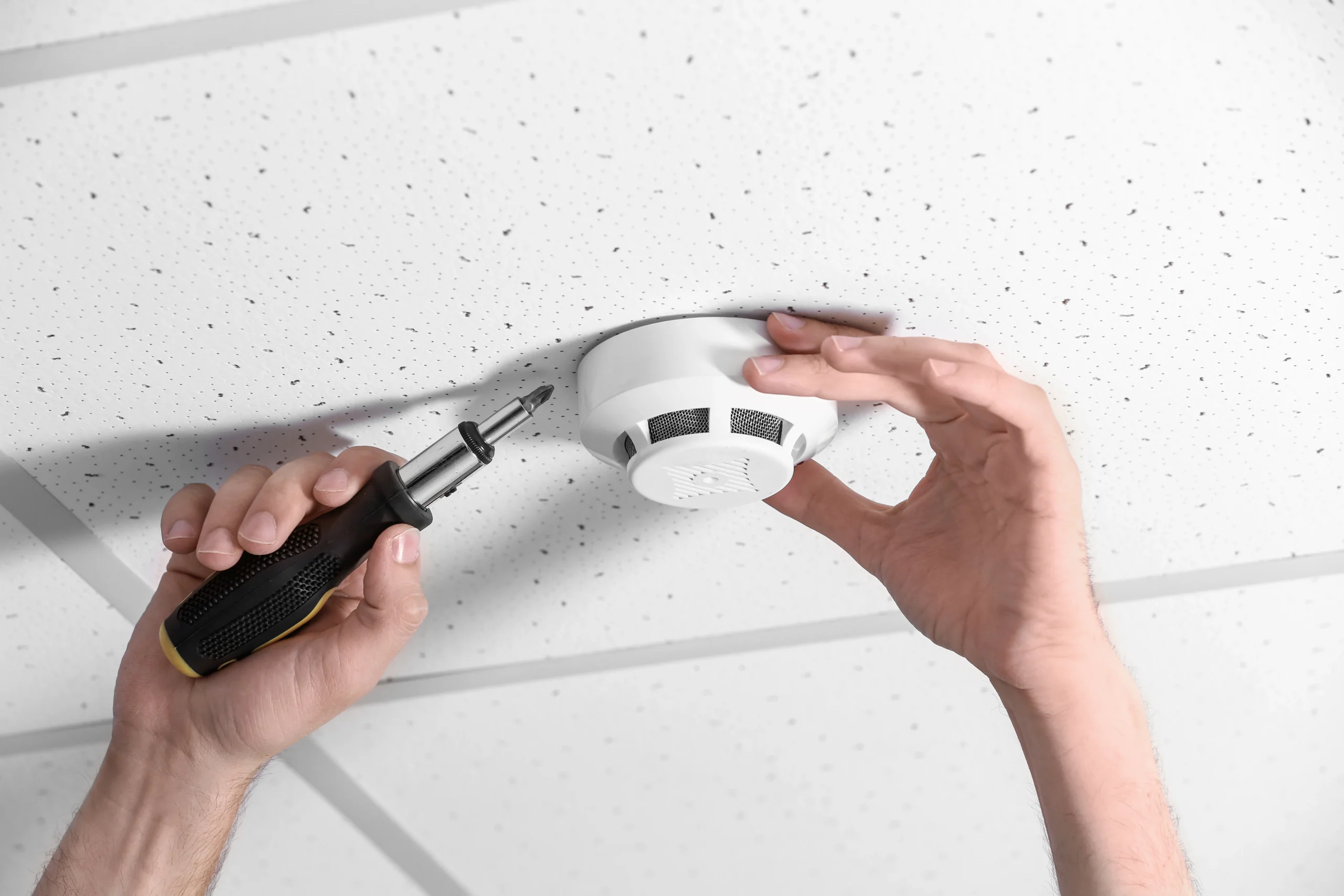
A person’s hands, likely a residential electrician in Suffolk County, NY, installing or removing a smoke detector from a white ceiling tile with a screwdriver.
Smoke Detector Installation Electrician Suffolk County, NY

Protection That Actually Alerts Your Whole Home

We're licensed electricians installing hardwired, interconnected smoke and carbon monoxide detectors throughout Suffolk County, NY. Code-compliant systems that meet NY requirements with upfront pricing and no surprises.

Why Choose Us

Why Suffolk County Trusts Us

Licensed and Fully Insured

Over 20 years serving Suffolk County with fully licensed electricians who know NY code requirements inside and out.

Upfront Pricing Always

Free estimates with transparent pricing before we start. You'll know exactly what you're paying with zero hidden fees.

Seven-Year Award Winner

Angie's List Super Service Award recipient for seven consecutive years, reflecting consistent excellence homeowners can count on.

Emergency Service Available

Available 24/7 for urgent electrical needs. When you need us fast, we're there with professional, reliable service.

Smoke Alarm Installation Suffolk County, NY

Hardwired Systems That Meet NY Code Requirements

New York requires more than just battery-powered smoke detectors stuck to your ceiling. If you're renovating, selling your home, or your detectors are over 10 years old, you likely need hardwired, interconnected systems installed by a licensed electrician. That's where most homeowners hit a wall—figuring out what's actually required, where detectors need to go, and whether their current setup passes inspection.

We install code-compliant smoke and carbon monoxide detection systems throughout Suffolk County. Hardwired units with battery backup. Interconnected so when one alarm sounds, they all sound. Properly placed according to NY Fire Code and NFPA standards. You get a system that actually protects your whole house, not just the room where the fire starts.
A person’s hands are installing or repairing a circular ceiling light fixture, connecting wires inside the fixture mounted on a white ceiling—work often handled by a residential electrician Suffolk County, NY.
Carbon Monoxide Detector Installation Suffolk County, NY

What You Get With Professional Installation

This isn't about slapping a detector on the wall. It's about creating a system that gives your family time to get out safely when it matters most.

20+ Years Serving Suffolk County
350+ Five-Star Google Reviews
#35607 NY Licensed & Insured
Know Your Costs
Every alarm in your house sounds at once—if there's smoke in the basement, you'll hear it upstairs before it's too late.
Safety First
Your system meets NY State code requirements, so you won't face violations during inspections or delays during real estate transactions.
Equipment Protection
Hardwired detectors with battery backup keep working even when the power goes out, unlike battery-only units that fail when you need them most.
Root Cause Fixed
Proper placement means fewer false alarms from cooking while still getting early detection when there's actual danger.
Plain English
You'll have documentation showing code-compliant installation, which matters for insurance claims and home sales.
Code Compliant
Licensed electricians handle the wiring safely, so you're not risking electrical fires from DIY mistakes or voiding manufacturer warranties.

Every benefit above is delivered on every job we take.

Get a Free Estimate

Ready to get started?

Our licensed crew is standing by for free estimates and 24/7 emergency service across Suffolk County.

No Obligation Same-Day Available Free Estimates
Hardwired Smoke Detector Installation Suffolk County, NY

Why Hardwired Beats Battery-Only Every Time

Battery-powered smoke detectors seem convenient until the battery dies at 2 AM or someone forgets to replace it after that annoying chirp. New York's 2020 Residential Code requires hardwired systems in most scenarios for good reason—they're connected to your home's electrical system with battery backup, so they don't quit when the power goes out.

The real advantage is interconnection. When one detector senses smoke, it triggers every other detector in your house simultaneously. That's critical in a two-story home where a basement fire might not be heard in upstairs bedrooms. According to NFPA data, most fire fatalities happen in areas away from where the fire started. Interconnected alarms give everyone in the house the same early warning, no matter where they are.

Proper installation also means proper placement. Detectors need to be in specific locations—inside each bedroom, outside sleeping areas, on every floor including basements. Too close to the kitchen and you'll get false alarms every time you cook. Too far from bedrooms and you won't hear the alarm in time. Marra Electric knows these placement rules and can assess your home's layout to position detectors where they'll actually work.
Learn More
CO Detector Wiring Suffolk County, NY

Smoke and Carbon Monoxide Protection Together

Carbon monoxide is odorless and invisible. You can't smell it, see it, or sense it until symptoms hit—and by then it may be too late. Amanda's Law requires CO detectors in New York homes with fuel-burning appliances or attached garages. Like smoke detectors, these need to be within 15 feet of sleeping areas and should be interconnected with your smoke alarm system.

We install combination units or separate CO detectors depending on your home's needs. If you have a gas furnace, water heater, fireplace, or attached garage, you need carbon monoxide protection. The detectors connect to the same hardwired system as your smoke alarms, creating comprehensive protection against both fire and CO poisoning.

Many homeowners don't realize their current setup doesn't meet code until they're selling their home and need a compliance affidavit. Suffolk County real estate transactions require documentation that smoke and CO detectors are installed correctly. We provide that documentation and ensure your system passes inspection the first time, so your closing doesn't get delayed over detector issues.
Learn More

Get a Free Estimate Today

Our licensed crew serves all of Suffolk County with transparent pricing and guaranteed work.

Why Marra Electric

NY Licensed & Fully Insured — #35607
Upfront written estimates — no hidden fees
No subcontractors — our crew does your job start to finish
100% satisfaction guaranteed on every job
24/7 emergency service across Suffolk County
NY Electrical License #35607 Fully insured on every job
Smoke Detector Electrician Near You Suffolk County

How We Install Your Detection System

Step 01 of 03

Assessment and Code Review

We evaluate your home's layout, existing wiring, and NY code requirements to determine exactly what you need and where.

Step 02 of 03

Hardwired Installation and Integration

Our licensed electricians install hardwired detectors, connect them to your electrical system, wire them for interconnection, and add battery backup.

Step 03 of 03

Testing and Documentation

We test every detector to confirm interconnection works properly and provide documentation showing your system meets code requirements.

FAQ

Common Questions About This Service

Hardwired smoke detector installation typically costs between $110 and $410 per unit, depending on your home's wiring, the number of detectors needed, and whether you're adding carbon monoxide detection. Most electricians charge $50 to $100 per hour, and a full-house installation usually takes 2 to 4 hours depending on how many floors and bedrooms you have. We provide free estimates with upfront pricing before starting any work, so you'll know exactly what you're paying. The investment is worth it—professional installation ensures code compliance, protects your family properly, and prevents costly mistakes that can happen with DIY electrical work. Many homeowners find that the peace of mind and proper protection are worth far more than the installation cost.

It depends on your situation. New construction and major renovations in New York require hardwired, interconnected smoke detectors with battery backup according to the 2020 Residential Code. Existing homes can sometimes use battery-operated detectors, but there's a catch—as of April 2019, any new or replacement smoke detectors sold in NY must have either a sealed 10-year battery or be hardwired to the building. If you're renovating and opening up walls, or if your home is being sold, you'll likely need to upgrade to hardwired systems. The exact requirements depend on when your house was built and what work you're doing. We can assess your specific situation during a free consultation and tell you exactly what's required for your home to meet current code.

New York code requires smoke detectors in three key locations: inside each bedroom, on the ceiling or wall outside each sleeping area, and on every story of your home including the basement. Carbon monoxide detectors must be within 15 feet of sleeping areas if you have fuel-burning appliances like a gas furnace or water heater, or if you have an attached garage. The detectors also need to be interconnected, meaning when one goes off, they all go off. Placement matters more than most people realize. Put a detector too close to the kitchen and you'll get false alarms every time you cook. Put it in the wrong spot on a vaulted ceiling and it might not detect smoke effectively. We assess your home's specific layout—where your bedrooms are, how many floors you have, where your HVAC system is located—and position detectors in the optimal locations for both code compliance and actual protection.

Regular standalone smoke detectors only sound an alarm in the room where smoke is detected. Interconnected alarms are wired together so when one detects smoke, every alarm in your house sounds simultaneously. This is crucial for safety, especially in multi-story homes. If a fire starts in your basement while you're sleeping upstairs, a standalone detector down there might not be loud enough for you to hear through closed doors and floors. With interconnected alarms, the detector in your bedroom goes off the instant the basement detector triggers, giving you critical extra seconds to get your family out safely. New York requires interconnected alarms in most residential scenarios for this reason. The interconnection can be hardwired through your electrical system or wireless using RF signals, but hardwired is generally more reliable and is what code requires for new construction and major renovations. We install systems that meet these interconnection requirements while ensuring reliable performance.

Unless you have significant electrical experience, you should hire a licensed electrician for hardwired smoke detector installation. This isn't like changing a light bulb—it involves working with your home's electrical system, running wiring between detectors, connecting to circuit breakers, and ensuring proper interconnection. Mistakes can create electrical hazards, cause fires, void manufacturer warranties, and violate local codes, potentially leading to failed inspections or fines. We understand NY electrical code requirements, know how to integrate detectors safely into your existing wiring, and can ensure everything is placed correctly according to NFPA standards. We also provide documentation that your installation meets code, which matters for insurance and real estate transactions. While DIY might seem like it saves money, improper installation can cost you far more in repairs, failed inspections, or—worst case—a system that doesn't work when you need it. Professional installation typically takes just a few hours and ensures your family's safety system is done right the first time.

Smoke detectors should be replaced every 10 years, regardless of whether they seem to be working fine. The sensors inside degrade over time and become less effective at detecting smoke, even if the alarm still chirps during testing. Carbon monoxide detectors typically last 5 to 7 years before they need replacement. You can usually find the manufacture date printed on the back of the detector—if it's been 10 years or you can't find a date, it's time to replace them. New York's 10-year sealed battery requirement means that when the battery dies in newer detectors, you replace the entire unit rather than just the battery. If you're unsure about the age of your detectors or whether they meet current code, we can assess your existing system during a free consultation and let you know if replacement is needed. Many homeowners discover during real estate transactions that their detectors are outdated and need upgrading to meet current requirements.