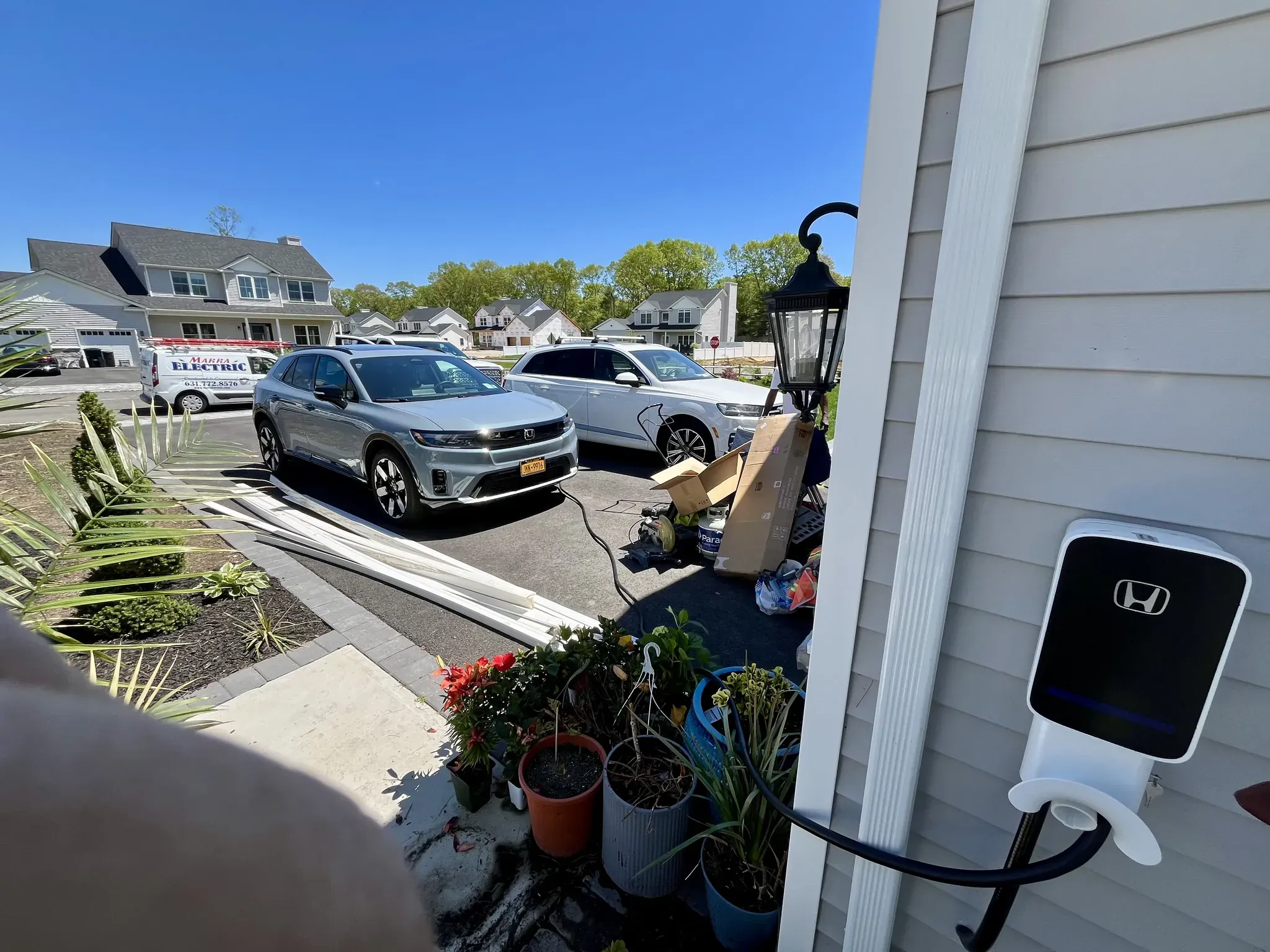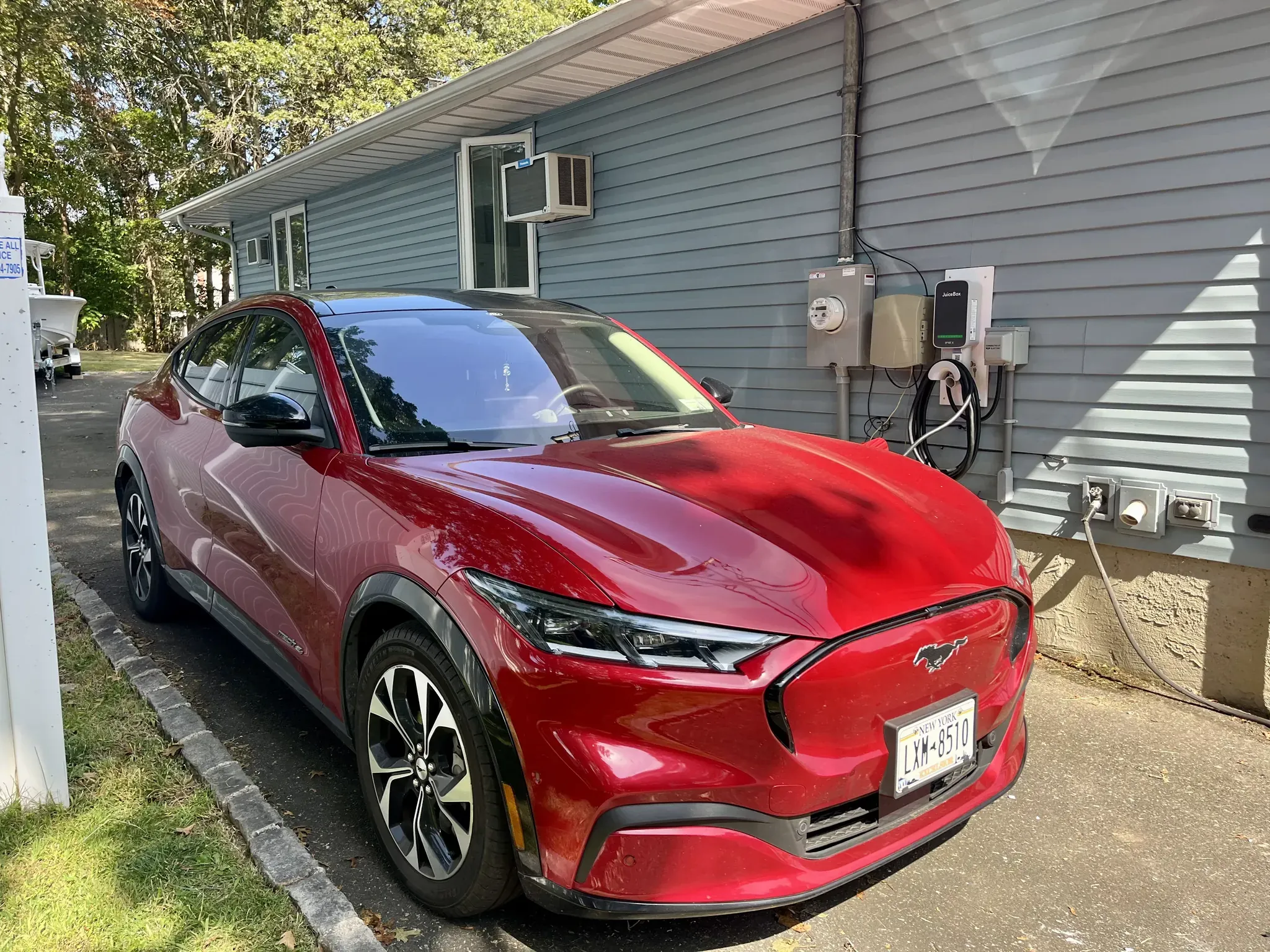
You need commercial EV charger installation in Suffolk County that handles the electrical complexity, navigates the rebates, and gets your tenants or employees charging without the runaround. We bring over 20 years of licensed electrical experience to every Level 2 charger, panel upgrade, and multi-unit dwelling project across Suffolk County, NY.
Every commercial EV charger installation is performed by our fully licensed and insured electricians who know Suffolk County codes inside and out.
You'll know exactly what your commercial EV charging station costs before we touch a wire. No surprise bills, no hidden fees.
Since 2004, we've handled electrical projects across Suffolk County with a track record that speaks for itself.
Get a clear assessment of your commercial EV charger installation needs without spending a dime to find out what's involved.
This isn't about being trendy. It's about staying competitive, meeting tenant expectations, and positioning your property for what's already happening across Long Island.
Every benefit above is delivered on every job we take.
Get a Free EstimateOur licensed crew is standing by for free estimates and 24/7 emergency service across Suffolk County.
Our licensed crew serves all of Suffolk County with transparent pricing and guaranteed work.
We evaluate your electrical panel, parking layout, and power capacity to determine what your property can support and what upgrades you might need.
We help you choose the right chargers for your needs, pull the necessary permits, and make sure everything qualifies for available rebates.
Our licensed electricians install the charging equipment, complete the electrical work, and coordinate inspections so your stations go live without delays.
Most Level 2 commercial EV charger installations in Suffolk County range from $6,000 to $15,000 per charger, including equipment and installation. That number can go higher if you need panel upgrades, transformer work, or extensive trenching to reach your parking areas. The good news is that rebates can cover a significant portion of those costs. NYSERDA's Charge Ready NY program offers up to $4,000 per charging port, and if your property is in a disadvantaged community, you can get an additional $500 per Level 2 charger. The federal 30C tax credit covers 30% of installation costs up to $100,000 per port through June 30, 2026. PSEG Long Island also runs a Make Ready Program that helps offset infrastructure costs. When you factor in these incentives, your out-of-pocket cost drops considerably. We provide free estimates that break down equipment, labor, and any electrical upgrades you'll need, so you know exactly what you're looking at before committing to anything.
It depends on your current electrical capacity and how many chargers you're installing. A single Level 2 charger typically requires a dedicated 40-amp circuit, which many commercial panels can handle without upgrades. But if you're installing multiple chargers—say, five or ten units for a multi-unit dwelling or office parking lot—you're adding significant load to your system. We start every project with a load calculation to see if your existing panel can support the additional demand. If it can't, you have a few options. You can upgrade your electrical panel to a higher amperage service, which gives you room to grow. Or you can use load management systems that intelligently distribute power across multiple chargers, allowing you to install more units without exceeding your panel's capacity. Load management is often the more cost-effective route, especially if you're working with an older building. Either way, we'll walk you through what makes sense for your property and budget, and we'll handle the upgrade work if it's needed.
New York offers some of the best incentives in the country for commercial EV charger installation. NYSERDA's Charge Ready NY 2.0 program provides rebates of $4,000 per charging port for public facilities, workplaces, and multi-unit dwellings. If your property is located in a disadvantaged community, you can get an additional $500 per Level 2 charger. The federal Alternative Fuel Infrastructure Tax Credit (30C) is still available through June 30, 2026, covering 30% of your installation costs up to $100,000 per charging port. PSEG Long Island runs a Make Ready Program that covers infrastructure costs like trenching, conduit, and panel work needed to support Level 2 and DC fast chargers. There's also a New York State tax credit equal to 50% of the infrastructure cost, up to $5,000, for businesses that install public or workplace EV chargers. These programs can stack in some cases, which means you could offset 40-70% of your total project cost. The catch is that most of these incentives require you to reserve funding before you start installation, so it's worth getting your application in early. We help clients navigate the paperwork and make sure their equipment qualifies for the programs they're applying to.
Timeline depends on the scope of your project. A straightforward installation—one or two Level 2 chargers with no panel upgrades—can usually be completed in a few days once permits are approved. Larger projects with multiple chargers, panel upgrades, or extensive trenching can take several weeks from start to finish. Permitting is often the longest part of the process. Suffolk County requires electrical permits for EV charger installations, and depending on the workload at the building department, approval can take anywhere from a few days to a couple of weeks. Once permits are in hand, the actual installation moves quickly. We schedule the work to minimize disruption to your property, and if you're running a business or managing tenants, we coordinate around your operating hours. If you're applying for rebates, factor in additional time for that process. Some programs require pre-approval before installation begins, and others need documentation after the work is done. We handle the coordination on our end to keep things moving, but it's smart to plan for at least a month from initial consultation to fully operational chargers, especially if you're dealing with larger installations or incentive applications.
Absolutely. Multi-unit dwellings are one of the fastest-growing segments for EV charger installations, and for good reason—over 80% of EV charging happens at home, and about 30% of U.S. households live in apartments or condos. If your tenants drive electric vehicles and can't charge at home, they're either going to ask you to install chargers or they're going to move somewhere that already has them. New York has Right to Charge laws that prevent landlords and HOAs from unreasonably blocking EV charger installations, so tenant requests are becoming more common. The installation process for apartment buildings is similar to other commercial properties, but there are a few extra considerations. You'll need to decide whether chargers are shared (first-come, first-served in designated spots) or assigned to specific units. You'll also need to figure out billing—some properties offer free charging as an amenity, while others use networked chargers that track usage and bill tenants for the electricity they consume. Load management is especially important in multi-unit dwellings because you're often working with limited electrical capacity, and you don't want to overload your system when multiple tenants plug in at the same time. We've handled plenty of apartment and condo installations across Suffolk County, and we can walk you through the options that make sense for your property.
Level 2 and DC fast charging serve different purposes, and which one you need depends on how your property is used. Level 2 chargers operate on 208-240 volts and add 12 to 80 miles of range per hour depending on the charger's power output. They're ideal for locations where vehicles are parked for extended periods—apartments, office buildings, retail centers, hotels. Most people can fully charge their EV overnight or during a workday with a Level 2 charger, and the equipment is relatively affordable to install. DC fast chargers, on the other hand, can charge a vehicle to 80% in 20 to 40 minutes. They require 480-volt, three-phase power, which means more expensive equipment and often significant electrical upgrades. Fast chargers make sense for high-traffic locations like highway rest stops, gas stations, or fleet depots where vehicles need a quick turnaround. For most commercial properties in Suffolk County, Level 2 is the right choice. It's cost-effective, meets the needs of employees and tenants, and qualifies for the same rebates and incentives as fast charging. If you're not sure which option fits your property, we can assess your usage patterns and help you make the call.