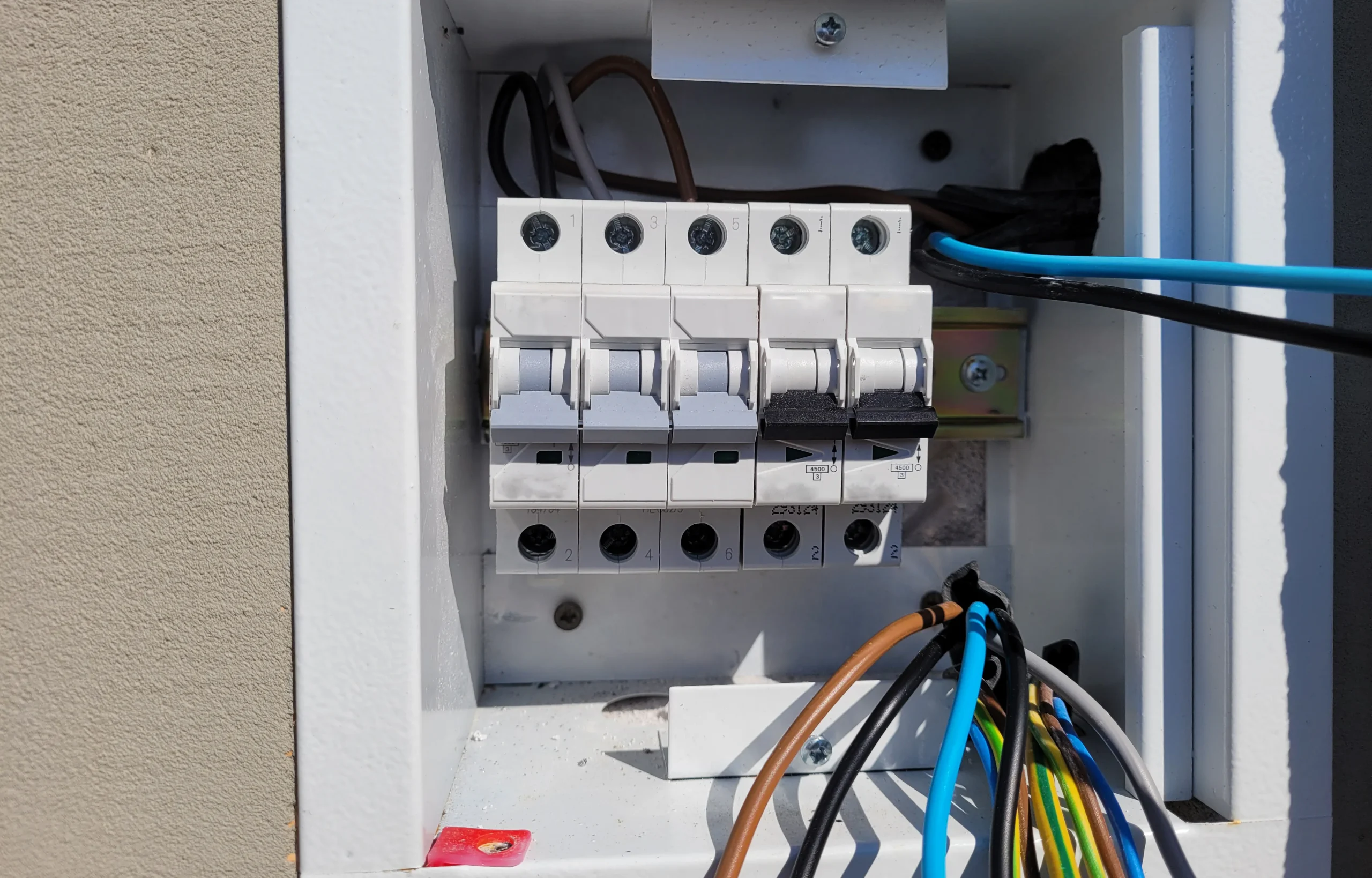
Close-up of an electrical fuse box with several circuit breakers and colorful wiring, partially open on a wall. A residential electrician Suffolk County, NY, may inspect such panels to ensure safe and reliable home electrical systems.
Generator Transfer Switch Installation Suffolk County, NY

Never Lose Power During Suffolk County Storms

When the next nor'easter hits Suffolk County, your lights stay on, your food stays cold, and your family stays safe—automatically. Professional generator transfer switch installation connects your backup power safely to your home's electrical system without extension cords or guesswork.

Why Choose Us

What Sets Us Apart

Licensed Suffolk County Electricians

Every installation we perform is completed by fully licensed and insured electricians with over 20 years of experience in Suffolk County codes and requirements.

We Handle All Permits

We manage all permit applications and coordinate inspections with Suffolk County, ensuring your installation meets every safety code and legal requirement.

No Surprise Bills

You'll receive a clear, detailed estimate before any work begins—no hidden fees, no surprise charges, just honest pricing you can trust.

Seven Years Angie's List Award

Our Angie's List Super Service Award for seven consecutive years reflects consistent quality, professionalism, and customer satisfaction on every project we complete.

Transfer Switch Electrician Suffolk County, NY

Safe Generator Connection That Actually Works

A transfer switch is the critical link between your generator and your home's electrical panel. Without one, you're stuck running extension cords through windows or risking dangerous backfeeding that can electrocute utility workers and damage your equipment. Professional installation ensures your generator powers essential circuits safely and legally.

Whether you own a portable generator that needs a manual transfer switch or you're installing a whole-house standby system with automatic switching, the installation must meet Suffolk County, NY electrical codes. That means proper permits, correct wire sizing, secure connections, and inspections that confirm everything works as intended.

We handle generator transfer switch installation in Suffolk County, NY for both residential and commercial properties. Our electricians assess your power needs, recommend the right system, obtain permits, complete the installation, and coordinate inspections—so you get reliable backup power without the headaches.
A person’s hands operate a control panel, pulling out a drawer-like section filled with colorful switches, buttons, and electronic components—skills essential for a commercial electrician Suffolk County, NY.
Automatic Transfer Switch Installation Suffolk County, NY

What You Get With Professional Installation

The right transfer switch installation gives you more than just backup power—it gives you safety, convenience, and peace of mind when Suffolk County's next storm hits.

20+ Years Serving Suffolk County
350+ Five-Star Google Reviews
#35607 NY Licensed & Insured
Know Your Costs
Your power returns within seconds of an outage with automatic transfer switches, before you even notice the lights went out.
Safety First
You'll keep refrigerators, freezers, medical equipment, and security systems running without manually starting anything or flipping switches in the dark.
Equipment Protection
Your home stays protected from dangerous backfeeding that can injure utility workers and damage your electrical system or generator.
Root Cause Fixed
You can power your entire electrical panel instead of being limited to whatever appliances you can reach with extension cords.
Plain English
Your installation passes inspection the first time because we handle permits, code compliance, and coordination with Suffolk County authorities.
Code Compliant
You avoid the risk and liability of improper DIY installation that can void warranties, fail inspections, or create fire hazards.

Every benefit above is delivered on every job we take.

Get a Free Estimate

Ready to get started?

Our licensed crew is standing by for free estimates and 24/7 emergency service across Suffolk County.

No Obligation Same-Day Available Free Estimates
Manual Transfer Switch Installation Suffolk County, NY

Understanding Manual vs Automatic Transfer Switches

Manual transfer switches work with portable generators and require you to physically flip the switch when power goes out. You start the generator, walk to your electrical panel, and manually transfer power from the utility to your generator. When power returns, you reverse the process. Manual systems cost significantly less—typically $500 to $1,500 installed—and they're simpler with fewer components that can fail.

Automatic transfer switches detect outages within seconds and start your standby generator without any action from you. Power transfers automatically, usually in 10 to 30 seconds. When utility power returns, the system switches back and shuts down the generator. Automatic systems cost more—$1,500 to $3,500 installed—but they're essential if you're away from home frequently, have critical medical equipment, or just want the convenience of never dealing with power outages manually.

The choice depends on your generator type, budget, and how you want to manage outages. Portable generators almost always use manual transfer switches. Whole-house standby generators require automatic systems. We'll assess your situation and recommend the option that makes sense for your property and priorities.
Learn More
Generator Inlet Box Installation Suffolk County, NY

What's Included in Your Installation

Transfer switch installation starts with evaluating your electrical panel, determining which circuits you want powered during outages, and confirming your generator's capacity matches your needs. We calculate the correct wire gauge, breaker size, and transfer switch amperage based on your specific setup—not guesswork.

Next comes permit applications. Suffolk County requires electrical permits for transfer switch installations, and only licensed contractors can apply. We submit plans, electrical diagrams, and specifications, then schedule inspections at the appropriate stages. The actual installation involves mounting the transfer switch near your main panel, running properly sized wire, making secure connections, and installing a generator inlet box if you're using a portable generator. For interlock kits—a cost-effective alternative to separate transfer switches—we mount the interlock device directly on your panel cover, preventing the main breaker and generator breaker from being on simultaneously.

After installation, we test the complete system to confirm proper operation, walk you through how to use it, and coordinate final inspections. You get documentation showing the work was completed to code, which protects your insurance coverage and property value.
Learn More

Get a Free Estimate Today

Our licensed crew serves all of Suffolk County with transparent pricing and guaranteed work.

Why Marra Electric

NY Licensed & Fully Insured — #35607
Upfront written estimates — no hidden fees
No subcontractors — our crew does your job start to finish
100% satisfaction guaranteed on every job
24/7 emergency service across Suffolk County
NY Electrical License #35607 Fully insured on every job
Portable Generator Hookup Suffolk County NY

Our Installation Process From Start to Finish

Step 01 of 03

Assessment and Planning

We evaluate your electrical panel, calculate power requirements, and recommend the right transfer switch type and size for your generator and home.

Step 02 of 03

Permits and Preparation

We handle all permit applications with Suffolk County, order materials, and schedule the installation at a time that works for you.

Step 03 of 03

Professional Installation and Testing

Our licensed electricians install the transfer switch, inlet box, and all wiring to code, then test the complete system and coordinate inspections before considering the job complete.

FAQ

Common Questions About This Service

Manual transfer switch installation typically costs between $500 and $1,500 in Suffolk County, depending on the size of the switch, how many circuits you're connecting, and the complexity of your electrical panel. Automatic transfer switch installation for whole-house standby generators usually runs $1,500 to $3,500. These prices include the transfer switch equipment, labor, permits, and basic installation. However, if your electrical panel needs upgrades to meet current code, or if the installation requires extensive wire runs or difficult access, costs can increase. Generator interlock kits offer a more budget-friendly option at $900 to $1,400 installed, providing the same safety function as a transfer switch but mounting directly on your existing panel. We provide free estimates that break down exactly what's included, so you know the total cost before any work begins.

A transfer switch is a separate panel that mounts near your main electrical panel and allows you to select which circuits receive generator power during an outage. You physically flip switches to transfer individual circuits from utility power to generator power. An interlock kit, on the other hand, mounts directly onto your existing electrical panel cover and uses a sliding mechanism to prevent your main breaker and generator breaker from being turned on at the same time. Both accomplish the same safety goal—preventing dangerous backfeeding into utility lines—but interlock kits cost significantly less because they don't require a separate panel. The tradeoff is that interlock kits give you less granular control over which circuits are powered. With a transfer switch, you can easily select exactly which circuits to power. With an interlock, you turn on individual breakers in your main panel, but you need to be more careful about not overloading your generator. Both options are code-compliant when properly installed by a licensed electrician.

Yes, Suffolk County requires electrical permits for all transfer switch and interlock kit installations. The permit process ensures your installation meets the National Electrical Code and local requirements for safety. Only licensed electrical contractors can apply for these permits in Suffolk County. The application must include site plans, electrical diagrams, manufacturer specifications, and details about how the generator connects to your home's electrical system. Some installations may also require building permits, especially if you're installing a generator inlet box that requires drilling through exterior walls. Inspections happen at specific stages—typically after the electrical connections are made but before everything is closed up, and again after final completion. Attempting to skip permits can result in fines, failed home inspections when you sell, and insurance claims being denied if something goes wrong. We handle all permit applications and inspections as part of our service, so you don't need to navigate the process yourself or take time off work to meet inspectors.

Transfer switch installation involves working with live electrical terminals that carry enough voltage to cause serious injury or death. You're making connections inside your main electrical panel, running new circuits, and ensuring everything is properly grounded and sized for the electrical load. While it's technically possible for someone with electrical experience to install their own transfer switch, it's not recommended and may not be legal depending on local requirements. In Suffolk County, permits are required, and inspectors will scrutinize DIY electrical work carefully. If the installation doesn't meet code, you'll need to hire a professional to correct it anyway. Beyond safety concerns, improper installation can damage your generator, create fire hazards, or fail to prevent backfeeding—which can electrocute utility workers trying to restore power to your neighborhood. Most homeowners insurance policies also require professional installation for coverage to remain valid. Licensed electricians have the training, tools, and experience to complete the installation correctly the first time, and they carry insurance that protects you if something goes wrong during the work.

Most transfer switch installations take between four and eight hours of actual work time, depending on the complexity of your electrical system and the type of switch being installed. A straightforward manual transfer switch installation in a home with an accessible electrical panel and no complications typically takes about four to six hours. Automatic transfer switch installations for standby generators usually take longer—six to eight hours—because they involve more complex wiring and programming. However, the total timeline from start to finish is longer than just the installation day. You need to account for the initial assessment visit, time for permit approval from Suffolk County, ordering and receiving equipment, scheduling the installation, and arranging the final inspection. From the day you decide to move forward to the day your system passes final inspection, expect the process to take one to three weeks. We coordinate everything to minimize delays and keep you informed at each stage so you know exactly when to expect your backup power system to be operational.

Most portable generators rated for 5,000 watts or higher can work with a transfer switch, but the transfer switch must be properly sized to match your generator's output. Generators produce power measured in watts, while transfer switches are rated in amps. A typical 7,500-watt portable generator produces about 30 amps at 240 volts, so you'd need a 30-amp transfer switch. Larger generators producing 10,000 to 12,000 watts need 50-amp transfer switches. The transfer switch also needs to match your home's voltage—most residential systems are 120/240 volts. During the assessment, we'll look at your generator's specifications and confirm it's compatible with the transfer switch we're recommending. If you haven't purchased a generator yet, we can help you determine what size you need based on which circuits and appliances you want to power during outages. One important note: your portable generator needs what's called a "floating neutral" to work safely with a transfer switch connected to your main panel. Most modern portable generators have this, but older models may not. We'll verify compatibility before starting any work.