That portable charger that came with your car? It’s keeping you stuck overnight for barely enough range to cover your commute. Level 1 charging adds maybe 3-5 miles per hour. If you’re starting from empty, you’re looking at 20+ hours just to get back to full.
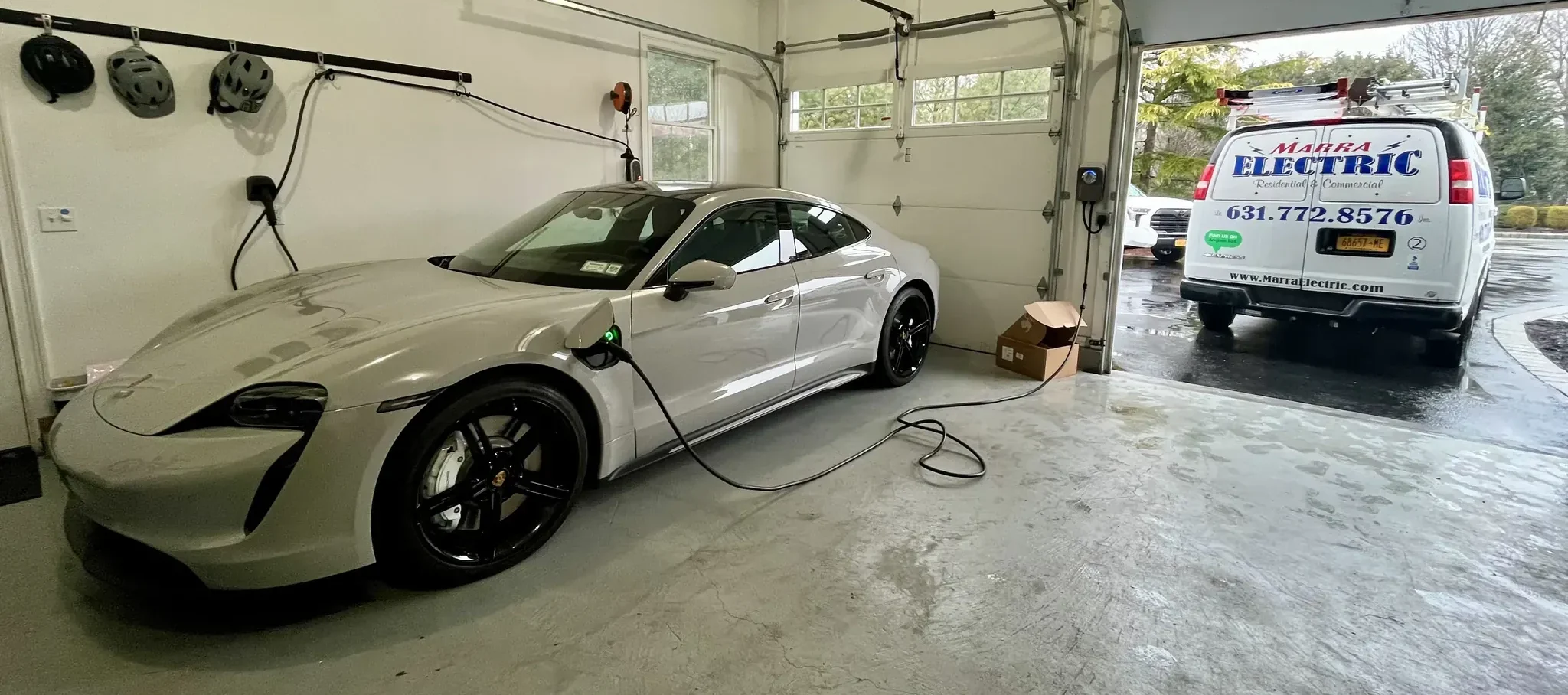
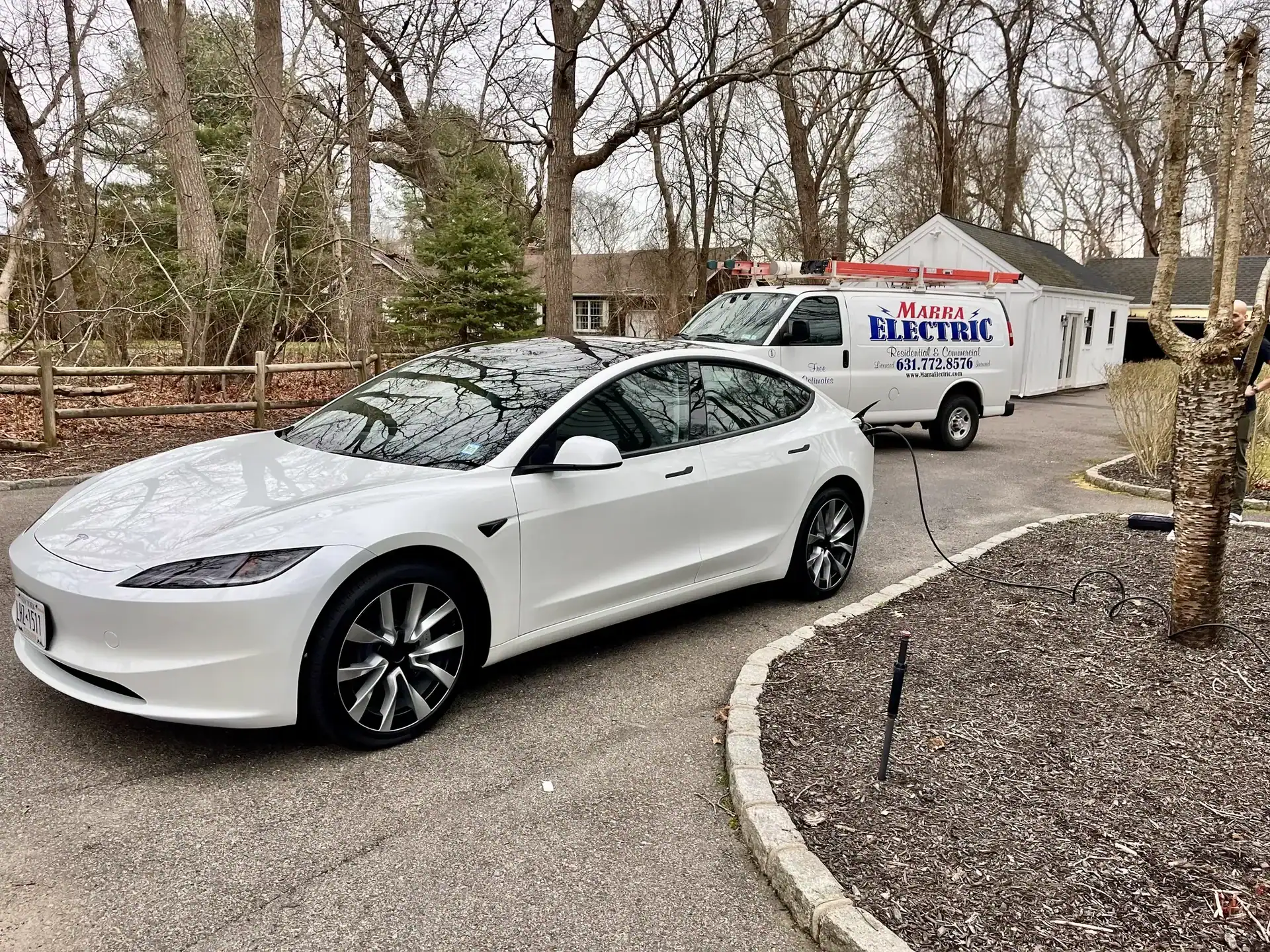
A Level 2 home EV charging station installation changes that completely. You plug in when you get home, and by morning, you’ve got 200+ miles of range ready to go. No more planning your day around public charging stations or paying premium rates while you wait in line.
You’re also charging at home rates—around $0.27 per kWh in New York—instead of the $0.36 you’d pay at most public chargers. Over time, that adds up. But more than the savings, it’s about convenience. You’re not dependent on anyone else’s schedule or equipment. Your car charges while you sleep, and you start every day ready.
We’ve been handling residential and commercial electrical projects across Suffolk County since 2004. We’ve earned the Angie’s List Super Service Award seven years running, and we’re Tesla-certified for EV charger installations. That means we know how to assess your panel, pull the right permits, and install your charging station so it works safely from day one.
Northampton homeowners deal with older electrical systems more often than not. Homes built before 2000 typically run on 100-amp service, and adding central air, modern appliances, and an electric car charger installation in Northampton, NY can max that out fast. We don’t guess. We run a full load calculation, check your current draw during peak times, and tell you exactly what your system can handle—and what it can’t.
If you need a panel upgrade, we’ll coordinate with PSEG Long Island, handle the permits, and get it done without dragging the timeline out. You’ll know the cost upfront, and there won’t be surprise charges when the work’s finished.
We start with a free estimate at your home. One of our licensed electricians will look at your electrical panel, measure your current load, and figure out whether your system can support a Level 2 EV charger installation in Northampton, NY without upgrades. If it can, great. If not, we’ll explain what needs to happen and why.
Most EVSE installations require a dedicated 240-volt circuit. That charger is a continuous load, which means the circuit and breaker need to be sized at least 125% of the charger’s maximum current. We’ll run new wiring from your panel to wherever you’re parking—garage, driveway, carport—and mount the charging unit where it makes sense for your daily routine.
We also pull the permit. Nearly every Level 2 charger installation in Suffolk County requires one, and that’s not a step you want to skip. The permit process ensures your setup meets code and won’t create a fire hazard or insurance headache down the road.
Once everything’s installed and inspected, we’ll walk you through how the charger works and answer any questions. Then it’s yours. Plug in, charge up, and stop thinking about where the nearest public station is.
Ready to get started?
Every home EV charging station installation starts with a load calculation. We need to know how much electricity your home pulls during peak times and whether adding a 30-50 amp charger will overload your panel. If your home was built before 2000 and you’re still running 100-amp service, there’s a good chance you’ll need an upgrade to 200 amps. That’s not a sales pitch—it’s electrical reality.
Panel upgrades in Suffolk County typically run between $2,000 and $3,500, depending on the scope. That includes the new panel, labor, permits, and coordination with PSEG Long Island. We handle all of it so you’re not stuck making calls or waiting on inspections.
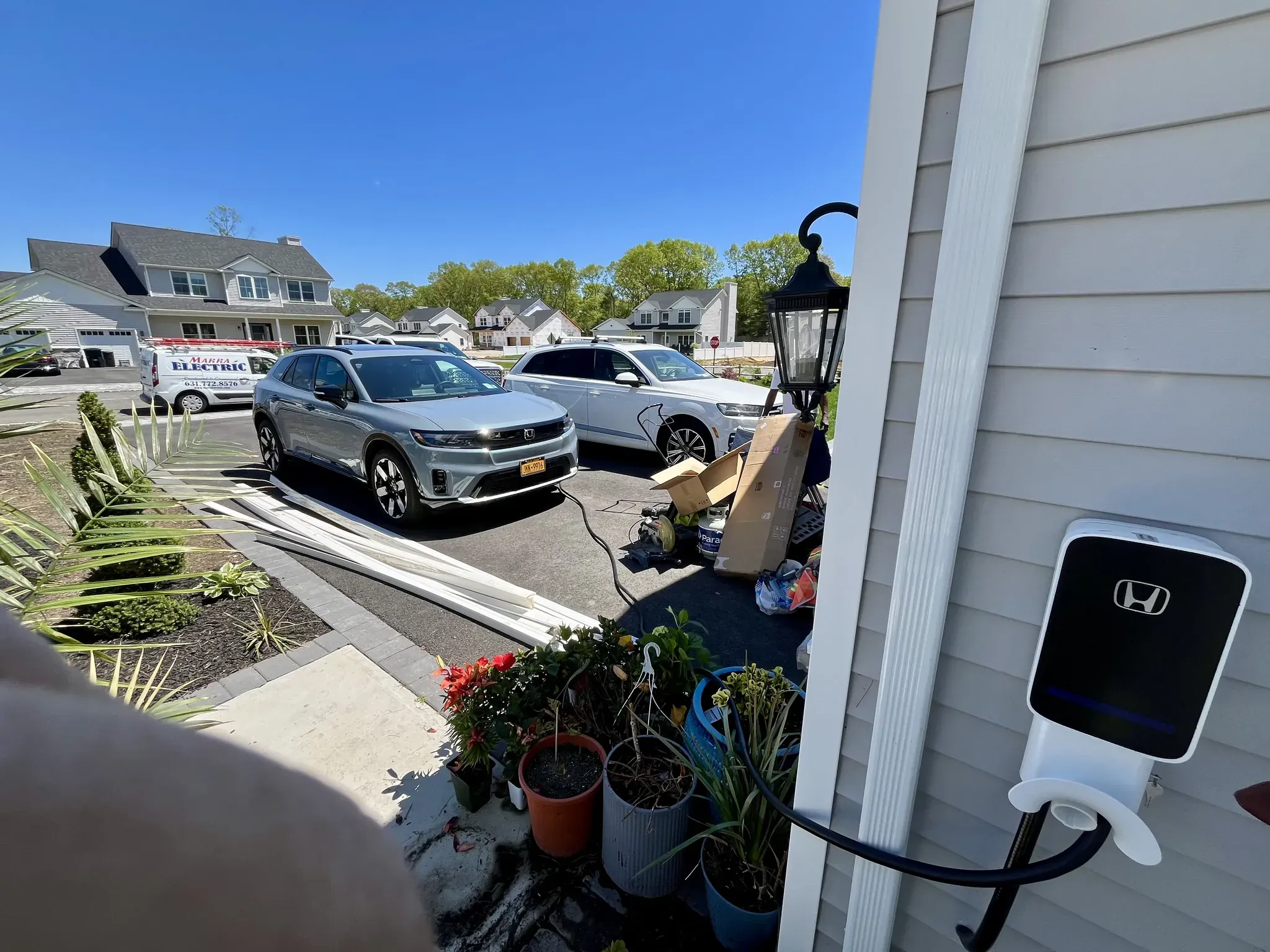
From there, we install the charger itself. If you’ve got a Tesla Wall Connector or another Level 2 unit, we’ll mount it, wire it to your panel, and make sure it’s pulling the right amperage without tripping breakers or creating heat issues. Everything gets tested before we leave.
You’re also eligible for incentives. The federal tax credit covers 30% of installation costs—up to $1,000—through June 2026. New York’s Drive Clean Rebate can add another $2,000 depending on your vehicle. We won’t file the paperwork for you, but we’ll give you documentation that shows exactly what was installed and what it cost.
It depends on your current panel and how much load you’re already pulling. Most homes in Northampton built before 2000 have 100-amp electrical service. If you’re running central air, a full set of modern appliances, and now want to add a Level 2 charger that draws 30-50 amps continuously, you’re likely pushing that system to its limit.
We run a load calculation during the estimate to measure your peak usage. If your panel can handle the additional draw, we’ll install the charger on your existing system. If it can’t, we’ll recommend upgrading to 200-amp service. That’s not upselling—it’s preventing breaker trips, overheating, and potential fire hazards.
Panel upgrades aren’t cheap, but they’re often necessary. In Suffolk County, expect to pay between $2,000 and $3,500 for the upgrade, including permits and utility coordination. The good news? You’re also setting your home up to handle future electrical needs without running into the same issue again.
If your panel doesn’t need an upgrade and the charger location is close to your electrical panel, most installations take 4-6 hours. That includes running the new 240-volt circuit, mounting the charger, connecting everything, and testing it.
If you need a panel upgrade first, add another day or two depending on permit approval and scheduling with PSEG Long Island. We coordinate that process, but we can’t control how fast the utility moves.
The permit itself usually takes a few days to a week in Suffolk County. Once it’s approved, we schedule the install. After the work’s done, there’s a final inspection to make sure everything meets code. We handle that too. Start to finish, you’re looking at one to two weeks if there’s an upgrade involved, or less than a week if your panel’s already good to go.
You need a licensed electrician, and here’s why. A Level 2 charger runs on 240 volts and pulls a continuous load of 30-50 amps. That’s the same power demand as an electric dryer or central air conditioner. If the wiring isn’t sized correctly, the breaker isn’t rated properly, or the connections aren’t tight, you’re creating a serious fire risk.
Electrical issues cause over 51,000 home fires every year. A DIY install might work for a few weeks or months, but if something’s wrong, it won’t show up until it’s too late. You’re also voiding your homeowner’s insurance if an unlicensed install causes damage.
On top of that, nearly every EV charger installation in Suffolk County requires a permit. That permit ensures the work meets code and gets inspected. If you skip it, you’ll have problems when you try to sell your home or file an insurance claim. It’s not worth the risk. Hire someone licensed, insured, and Tesla-certified like us, and you’ll know it’s done right from the start.
Level 1 chargers plug into a standard 120-volt outlet—the same outlet you’d use for a lamp or phone charger. They’re slow. You’re adding about 3-5 miles of range per hour, which means a full charge from empty takes 20+ hours. If you’ve got a short commute and can leave your car plugged in overnight, it might keep up. Barely.
Level 2 chargers run on 240 volts and add 25-30 miles of range per hour, depending on your vehicle and charger model. That means a full charge in 6-8 hours instead of a full day. You plug in after work, and by morning, you’re at 100%. No waiting, no planning your schedule around charging stops.
Most EV owners upgrade to Level 2 within the first few months of ownership because Level 1 just doesn’t cut it for daily use. If you’re serious about driving electric and want the convenience of home charging, Level 2 is the only real option. It requires a dedicated circuit and professional installation, but the difference in speed and usability is night and day.
Yes. The federal government offers a 30% tax credit on EV charger installation costs, covering up to $1,000. That credit runs through June 30, 2026, and applies to the equipment and labor. You’ll claim it when you file your taxes, so keep all receipts and documentation from the install.
New York also has the Drive Clean Rebate, which offers up to $2,000 off the purchase or lease of a qualifying electric vehicle. That’s separate from the charger installation credit, but it’s worth knowing about if you’re shopping for an EV or just bought one.
Between the federal tax credit and state rebates, you can offset a significant chunk of the installation cost. Combined with lower charging rates at home compared to public stations, the payback period is shorter than most people expect. We’ll provide all the documentation you need to claim the credit—you just need to file it with your return.
If your electrical panel can handle the load and the charger location is close to the panel, expect to pay between $800 and $1,500 for the installation. That includes running a new 240-volt circuit, mounting the charger, and pulling the permit.
If you need a panel upgrade to 200-amp service, add another $2,000 to $3,500 depending on the complexity. That covers the new panel, labor, permits, and coordination with PSEG Long Island. Some homes also need a longer wire run if the charger’s going in a detached garage or far from the panel, which can add to the cost.
The charger itself is separate. Tesla Wall Connectors run around $400-$500. Other Level 2 chargers range from $300 to $700 depending on features. We’ll give you a free estimate that breaks down exactly what you’re paying for—no surprises, no hidden fees. And remember, the federal tax credit covers 30% of the total installation cost, up to $1,000, so factor that in when you’re budgeting.
Other Services we provide in Northampton