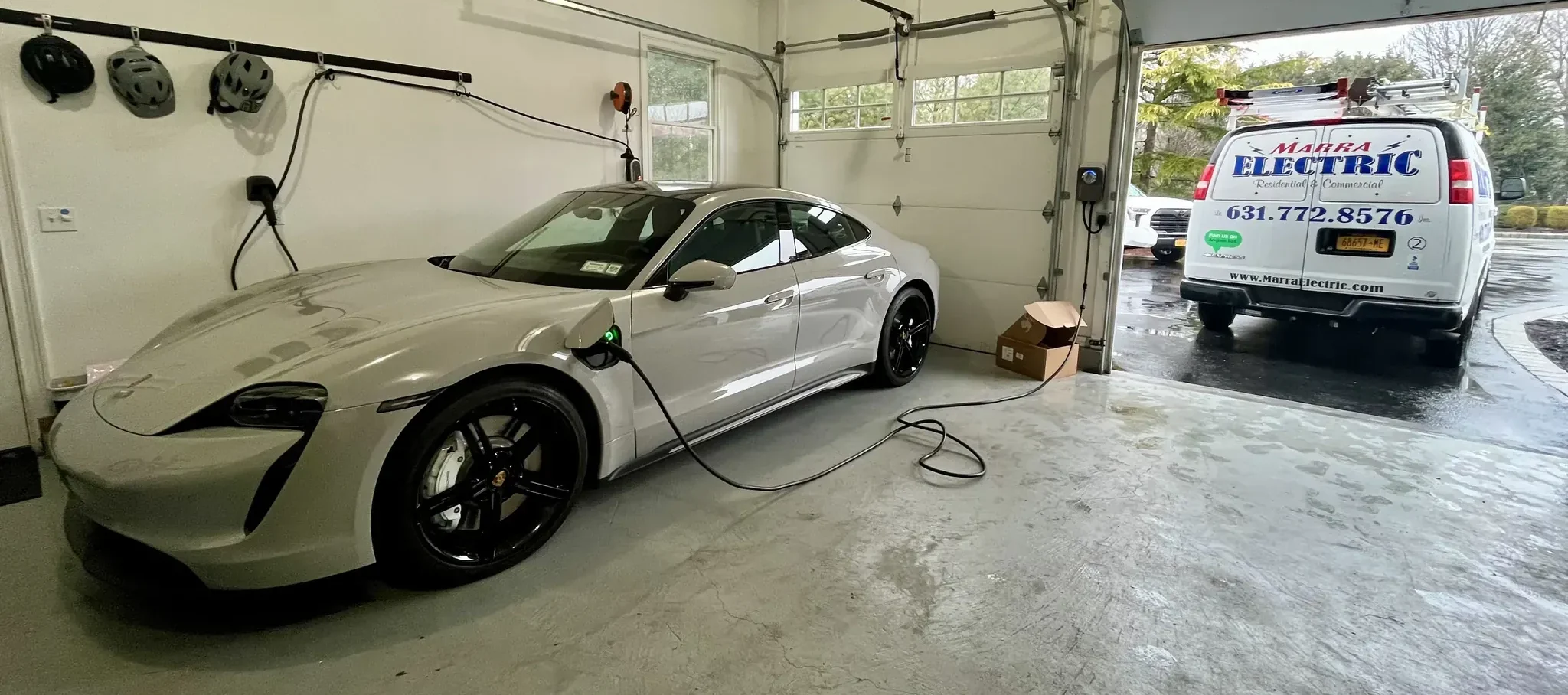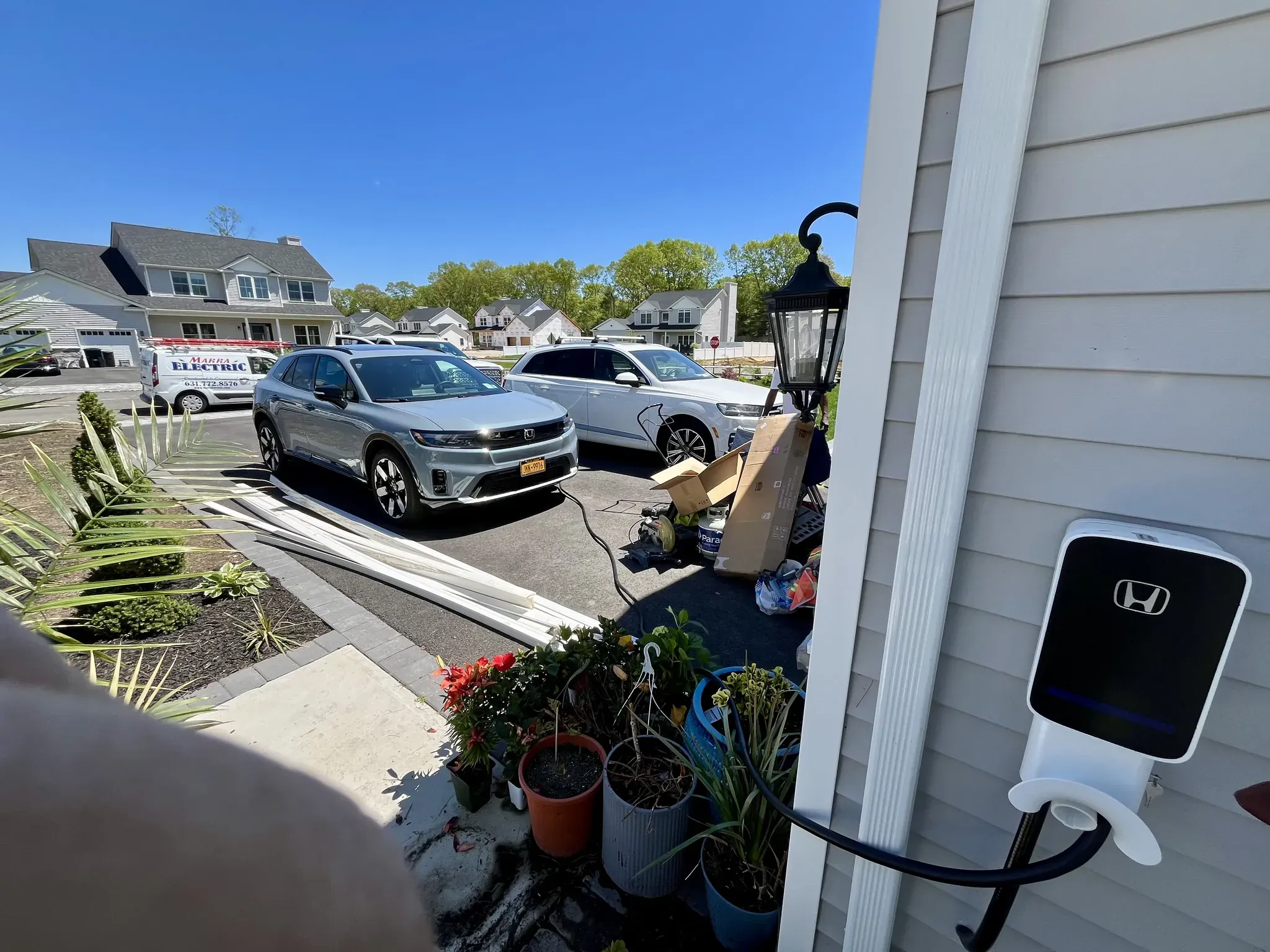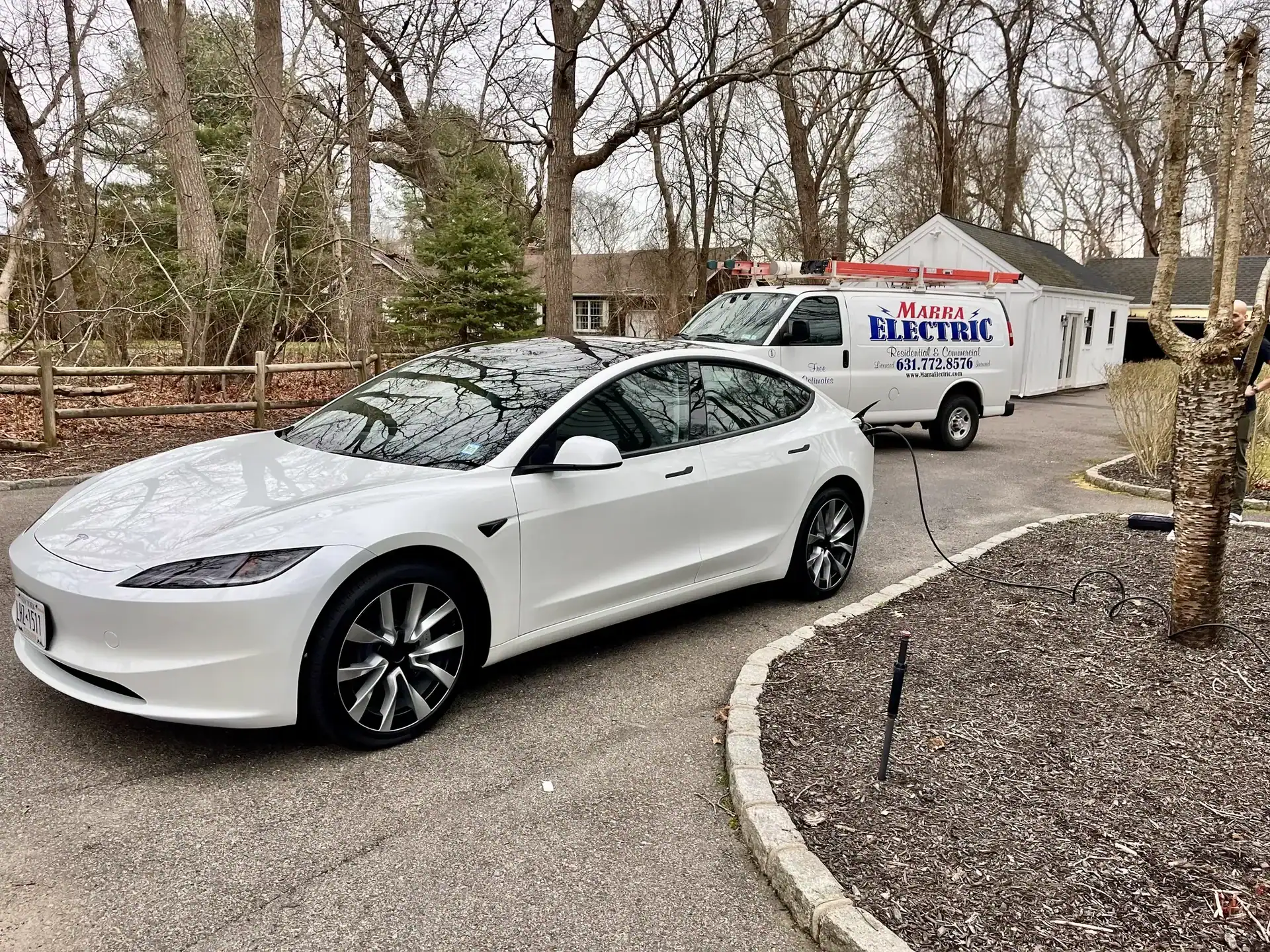
You bought an EV to simplify your life, not spend 30 minutes at a public charging station hoping someone finishes up. Home charging means you plug in when you get home and start every day with a full battery. No apps to download, no wondering if the station’s working, no sitting in your car waiting.
A Level 2 EV charger installation in Wainscott, NY gives you 20 to 30 miles of range per hour. That’s enough to recover a full day’s driving overnight. You’re also spending less than half what public charging costs, and your battery experiences less wear from the slower, steadier charge.
If your electrical panel can’t handle the load, that’s not a problem. We assess what you need, handle the upgrade if required, pull permits, and install everything to code. You get a charging setup that works the day we finish and keeps working without issue.
We’ve been handling residential and commercial electrical work across Suffolk County since 2004. We’re not new to complex installations, and we’re not learning on your property. Our team is fully licensed and insured, and we’ve earned the Angie’s List Super Service Award seven years running.
Wainscott homeowners need electricians who understand local permitting requirements and can navigate panel upgrades in older homes. We’ve done this work in your area long enough to know what inspectors expect and how to get your Tesla charger installation in Wainscott, NY approved without delays.
You’ll get upfront pricing before we start, no surprise charges when we finish, and a 100% satisfaction guarantee on the work. If something needs fixing, we’re available 24/7 for emergency service.
First, we schedule a free estimate at your property. We’ll look at your electrical panel, measure the distance to where you want the charger, and discuss which Level 2 charger works best for your vehicle. If your panel needs an upgrade to handle the load, we’ll explain what that involves and give you a clear price for the entire job.
Once you approve the estimate, we handle the permit application with your local municipality. Suffolk County requires permits for 240V installations, and the process varies depending on whether it’s classified as major or minor electrical work. We manage that so you don’t have to figure out what forms to file.
On installation day, we upgrade your panel if needed, run the wiring, mount the charger, and test everything to confirm it’s delivering the right voltage. We clean up completely, walk you through how to use the system, and make sure you’re comfortable before we leave. The entire process typically takes one to two days depending on whether a panel upgrade is involved.
Ready to get started?
Your home EV charging station installation in Wainscott, NY includes a full electrical assessment, permit handling, panel upgrade if necessary, charger mounting, wiring from panel to charger, code-compliant installation, and final testing. We also coordinate the inspection if your municipality requires one.
Wainscott’s median home value exceeds two million dollars, and many properties here were built before EVs existed. That often means older panels that need upgrading to safely handle a 40 or 50-amp charger. We size the upgrade correctly so you’re not just meeting today’s needs but also accommodating future electrical demands.
New York is pushing hard toward zero-emission vehicles by 2035, and EV adoption across the state jumped by 23,000 sales in 2024 alone. Homes with Level 2 chargers already installed see a 2 to 3 percent price premium in areas with high EV density. You’re not just adding convenience—you’re increasing your property’s value and future-proofing it for the next owner.
We install chargers compatible with Tesla, Rivian, Ford, Chevy, and every other EV on the market. If you’re unsure which unit to buy, we’ll recommend one based on your vehicle and charging needs.
Most Level 2 EV charger installations in Wainscott, NY run between $1,200 and $2,500, depending on your electrical panel’s current capacity and how far the charger is from the panel. If your panel needs an upgrade to handle the additional load, that adds to the cost but is often necessary in older homes.
We provide a free estimate after evaluating your specific setup. You’ll know exactly what you’re paying before any work starts. There are no hidden fees or surprise charges when the job’s done.
New York offers rebates through programs like Drive Clean, which can offset some of the upfront cost. We’ll point you toward available incentives, but the rebate application is separate from our installation work.
Yes, Suffolk County requires permits for installing a 240-volt outlet or dedicated circuit for an EV charger. The permit process ensures the work meets electrical code and passes inspection, which protects you and future buyers if you sell your home.
We handle the permit application as part of your installation. Depending on your municipality, the work may be classified as major or minor electrical work, which affects the timeline and requirements. We know what each town expects and make sure everything is filed correctly.
Skipping the permit might seem like a shortcut, but it creates problems during home sales and insurance claims. Unpermitted electrical work can also fail inspection if discovered later, forcing you to redo everything at your expense.
If your electrical panel is ready and doesn’t need an upgrade, installation typically takes four to six hours. That includes mounting the charger, running the wiring, connecting everything to your panel, and testing the system to confirm it’s working correctly.
If your panel needs an upgrade to handle the charger’s electrical load, the job takes one to two days. Panel upgrades involve more labor and require inspection, which adds time but ensures your home’s electrical system can safely support the charger and any other future demands.
Permit approval can add a few days to a couple of weeks depending on your local municipality’s workload. We submit permits as soon as you approve the estimate and keep you updated on timing throughout the process.
Many homes in Wainscott, NY were built before EVs became common, and older panels often can’t handle the additional 40 to 50 amps a Level 2 charger requires. If your panel is already near capacity or outdated, an upgrade is necessary to safely support the charger.
During your free estimate, we assess your panel’s current load and capacity. If an upgrade is needed, we’ll explain what that involves and provide a clear price. Upgrading your panel also gives you room for other electrical additions down the road, like a backup generator or additional circuits.
Skipping the upgrade and overloading your panel creates a fire hazard and will fail inspection. We size the upgrade correctly so your system is safe, compliant, and ready for future needs.
Yes, we install Level 2 chargers that work with Tesla, Ford, Chevy, Rivian, Nissan, and every other EV currently on the market. Most EVs use a standard J1772 plug, and Tesla vehicles come with an adapter that works with those chargers.
If you already own a charger, we’ll install it. If you haven’t purchased one yet, we can recommend a reliable unit based on your vehicle and how much range you need per hour. Some chargers offer smart features like scheduling and energy monitoring, but a basic unit works just fine if you want something straightforward.
The installation process is the same regardless of which charger you choose. We run a dedicated 240-volt circuit from your panel, mount the unit where you want it, and make sure everything is wired and grounded correctly.
Level 1 charging uses a standard 120-volt outlet and adds about 3 to 5 miles of range per hour. That’s fine if you drive very little and can leave your car plugged in for 24 hours, but most people find it too slow for daily use.
Level 2 charging uses a 240-volt circuit and delivers 20 to 30 miles of range per hour, which is three to seven times faster than Level 1. You can fully charge most EVs overnight, even if you drove 50 or 60 miles that day. It’s the same voltage your dryer or oven uses, and it’s the standard for home EV charging.
Level 2 chargers also put less strain on your battery compared to DC fast chargers, which push a lot of power quickly and generate more heat. Slower charging at home extends your battery’s lifespan and keeps your operating costs low.
Other Services we provide in Wainscott