You already know public charging is unreliable. One out of five attempts fails because the station’s occupied, broken, or the payment system won’t cooperate. That’s not a charging strategy—that’s hoping you get lucky.
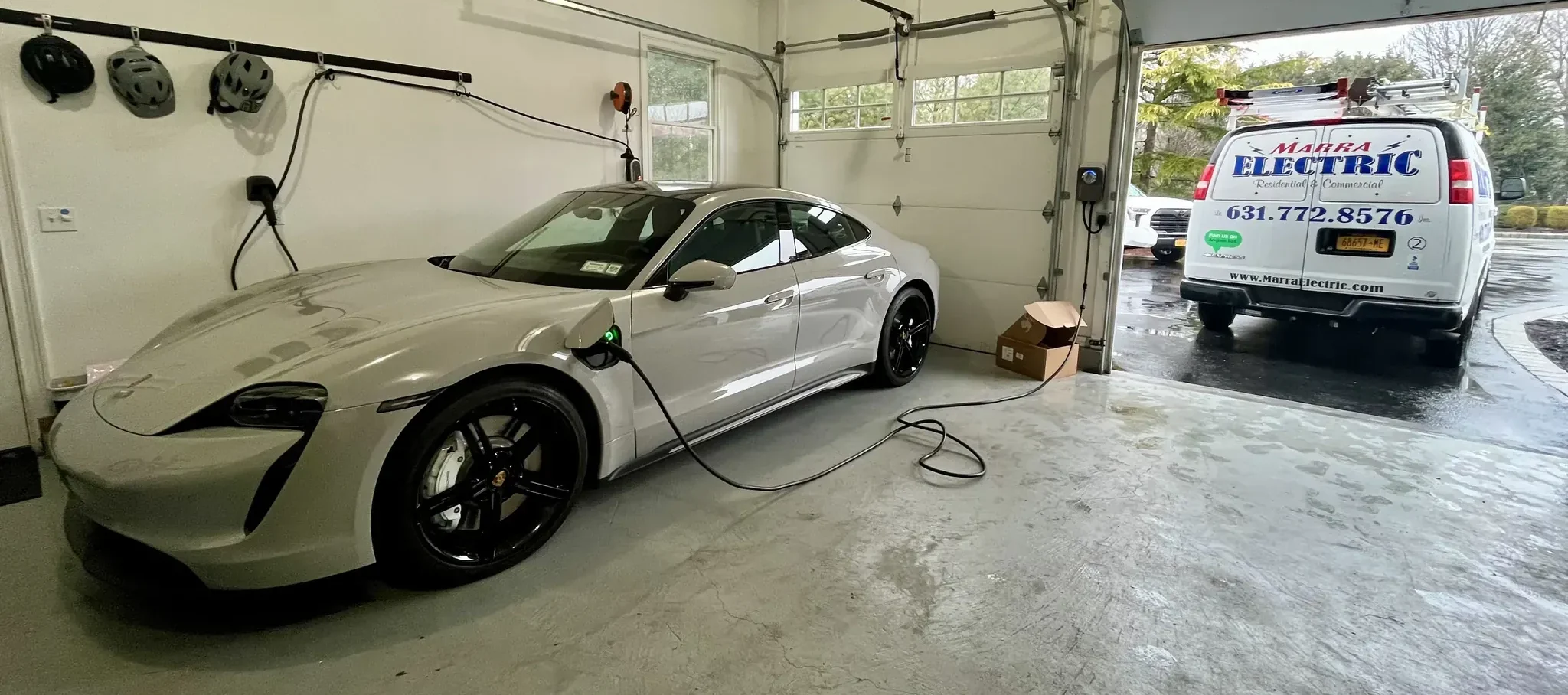
A home EV charging station installation in West Bay Shore, NY changes that completely. You plug in when you get home, and your car charges overnight while you sleep. No apps to troubleshoot, no waiting in line, no wondering if the station near the grocery store is actually working today.
Level 2 charging gives you a full battery in just a few hours instead of the 20+ hours a standard outlet requires. You’re not managing your car’s charge anymore—you’re just driving it. And if you’re on PSEG Long Island’s off-peak rates, you’re saving real money every month compared to what you’d spend at public stations.
We’ve been handling electrical work across Suffolk County for over 20 years. We’re not new to this, and we’re not figuring it out as we go. Every electric car charger installation in West Bay Shore, NY gets the same treatment: a full electrical assessment, proper permitting, code-compliant installation, and a final inspection to make sure everything works exactly as it should.
We’ve earned the Angie’s List Super Service Award seven years running because we show up on time, do the work right, and charge exactly what we quoted. No surprises, no runarounds. You get a fully licensed and insured team that knows Suffolk County’s electrical codes and has installed enough EV chargers to spot potential issues before they become problems.
If something’s not right, we come back and fix it. That’s the guarantee.
First, we assess your electrical panel to see if it can handle the additional load from a Level 2 EV charger installation in West Bay Shore, NY. Most modern homes need 150-200 amp service to safely run everything from central air to an EV charger. If your panel was installed in the ’70s or ’80s, there’s a decent chance you’ll need an upgrade—and we’ll tell you upfront if that’s the case.
Once we confirm your system can handle it, we pull the necessary permits with Nassau or Suffolk County. This isn’t optional—Level 2 chargers require dedicated 240-volt circuits, which qualifies as major electrical work. We handle the paperwork so you don’t have to deal with the town office.
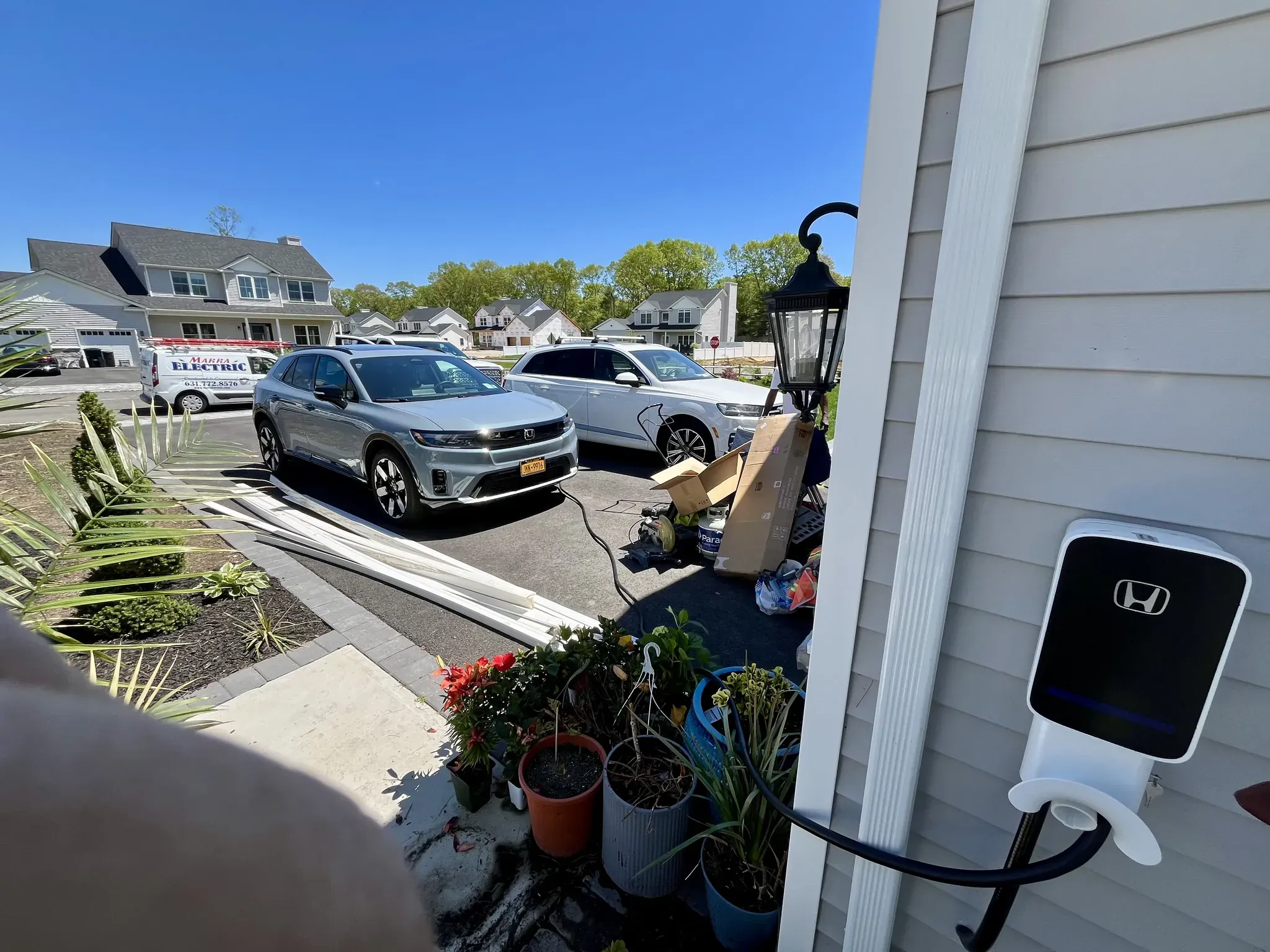
Then we install the charging equipment where you want it—usually in your garage or driveway—run the wiring, connect everything to your panel, and test the system to make sure it’s charging correctly. After that, the town inspector comes out to verify everything meets code. You’re not involved in any of that unless you want to be.
Ready to get started?
Every Tesla charger installation in West Bay Shore, NY starts with a free electrical panel inspection. We’re checking for code violations, outdated components, and anything that could cause problems down the line. If your system needs work, you’ll know before we start the charger installation—not after.
We install all major EV charging brands, including Tesla Wall Connectors, ChargePoint, JuiceBox, and others. The equipment itself typically runs between $500 and $1,200 depending on the model and features you choose. Installation costs vary based on your panel’s capacity, how far we need to run wiring, and whether you need a service upgrade.
Here’s what matters for Long Island homeowners: PSEG offers up to $300 in rebates for qualified customers, and the federal government provides a 30% tax credit up to $1,000 under the Inflation Reduction Act. Between those two incentives, you’re covering a significant portion of your installation cost. We can walk you through both programs so you’re not leaving money on the table.
Suffolk County is seeing serious EV growth—over 33,000 registered electric vehicles as of last year, and that number’s climbing fast with New York’s 2035 zero-emission vehicle mandate. Charging infrastructure hasn’t kept pace, which is exactly why home charging makes sense. You’re not competing for public stations or dealing with the fact that charger growth is happening at less than half the rate of EV adoption.
You’re looking at roughly $1,700 to $1,800 total for a Level 2 EV charger installation in West Bay Shore, NY, which includes both equipment and labor. That’s assuming your electrical panel can handle the load and doesn’t need an upgrade.
If your home still has an older 100-amp panel or outdated wiring, you’ll need to budget for a panel upgrade as well. That’s a separate cost, but it’s necessary—modern electrical demands from central air, appliances, and now EV chargers require 150-200 amp service to operate safely. We’ll assess your system during the initial inspection and give you an exact quote before any work starts.
The good news is that rebates and tax credits can offset a big chunk of that cost. PSEG Long Island offers up to $300 in rebates, and the federal tax credit covers 30% of your installation cost up to $1,000. Between those two programs, you’re bringing your out-of-pocket expense down significantly.
Yes. Level 2 EV charger installations almost always require an electrical permit in Nassau and Suffolk County because they involve installing a dedicated 240-volt circuit, which qualifies as major electrical work.
This isn’t something you can skip or handle on your own unless you’re a licensed electrician. The town requires permits to ensure the work meets code and doesn’t create safety hazards. After installation, an inspector comes out to verify everything was done correctly.
We handle the entire permit process from start to finish—filing the paperwork, scheduling the inspection, and making sure everything passes. You don’t need to visit the town office or deal with any of the back-and-forth. It’s built into the service, and it’s one less thing you have to manage.
Most home EV charging station installations in West Bay Shore, NY take four to six hours from start to finish, assuming your electrical panel is ready and doesn’t need upgrades. That includes running the wiring, mounting the charger, connecting everything to your panel, and testing the system.
If you need a panel upgrade, that adds time—usually another half day depending on the scope of work. We’ll give you a clear timeline during the initial assessment so you know exactly what to expect.
The permit and inspection process can add a few days to the overall timeline, but that’s just waiting for the town to schedule the inspector. The actual work gets done in a single visit. Once the inspection clears, you’re good to start charging.
It depends on your current panel’s capacity and age. If your home was built or last updated in the ’70s or ’80s, there’s a strong chance your panel won’t handle the additional load from a Level 2 charger without an upgrade.
Most EV chargers pull between 30 and 50 amps, and your panel needs enough available capacity to support that on top of everything else running in your home—air conditioning, appliances, heating, lighting. Modern homes typically need 150-200 amp service to handle it all safely.
We start every EV charger installation with a free electrical panel inspection. We’ll check your current setup, measure your load capacity, and let you know upfront whether an upgrade is necessary. If it is, we’ll explain exactly what’s involved and give you a clear quote before moving forward. No surprises.
We install Tesla Wall Connectors, ChargePoint units, JuiceBox chargers, and pretty much any other Level 2 EVSE equipment you want. The process is the same regardless of brand—dedicated 240-volt circuit, proper wiring, code-compliant installation.
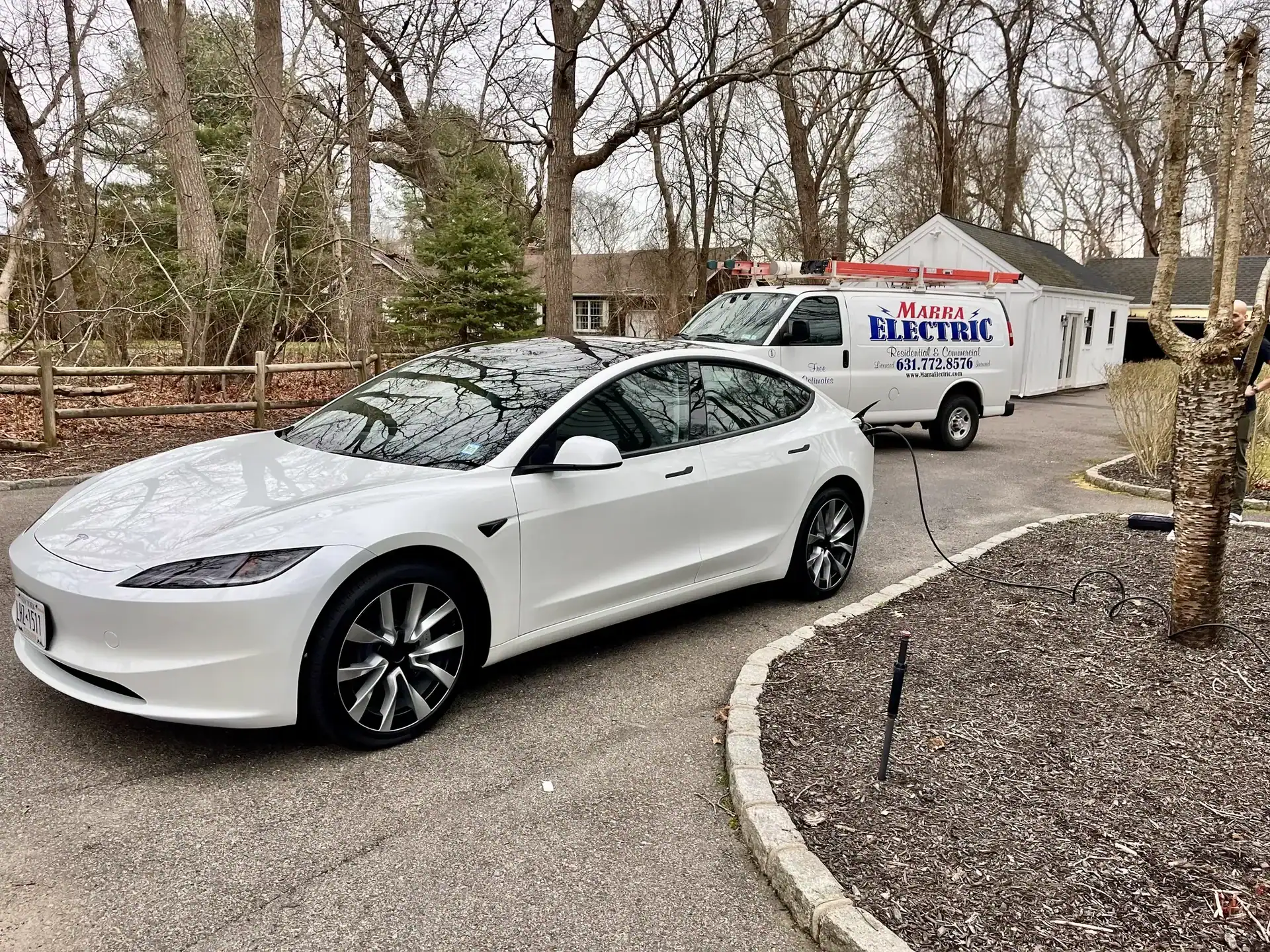
Tesla Wall Connectors are popular because they’re designed specifically for Tesla vehicles and integrate cleanly with the car’s software. But if you’ve got a different EV or think you might switch brands down the road, a universal J1772 charger gives you more flexibility.
Either way, the installation process doesn’t change. We’re running the same electrical work, pulling the same permits, and ensuring everything meets Suffolk County code requirements. The main difference is the equipment itself, and we’ll help you figure out which option makes the most sense for your situation.
The average New York driver saves between $800 and $1,000 per year on fuel costs by charging at home instead of paying for gas. Compared to public charging stations, your savings depend on how often you’d be using fast chargers versus Level 2 public stations—but either way, home charging is cheaper.
PSEG Long Island offers off-peak electricity rates that make overnight charging even more affordable. You’re paying significantly less per kilowatt-hour during off-peak hours than you would at a public station, and you’re not dealing with the markup that comes with commercial charging networks.
Public charging also comes with hidden costs—time spent waiting for an available station, failed charging attempts, and the inconvenience of planning your errands around charging locations. When you charge at home, you’re plugging in when you park and waking up to a full battery. The cost savings are real, but the convenience is what actually changes how you use your car.
Other Services we provide in West Bay Shore