That portable charger that came with your car barely keeps up with your daily commute. You’re already tired of planning trips around public charging stations, waiting in line, or wondering if you’ll make it home with enough range left over.
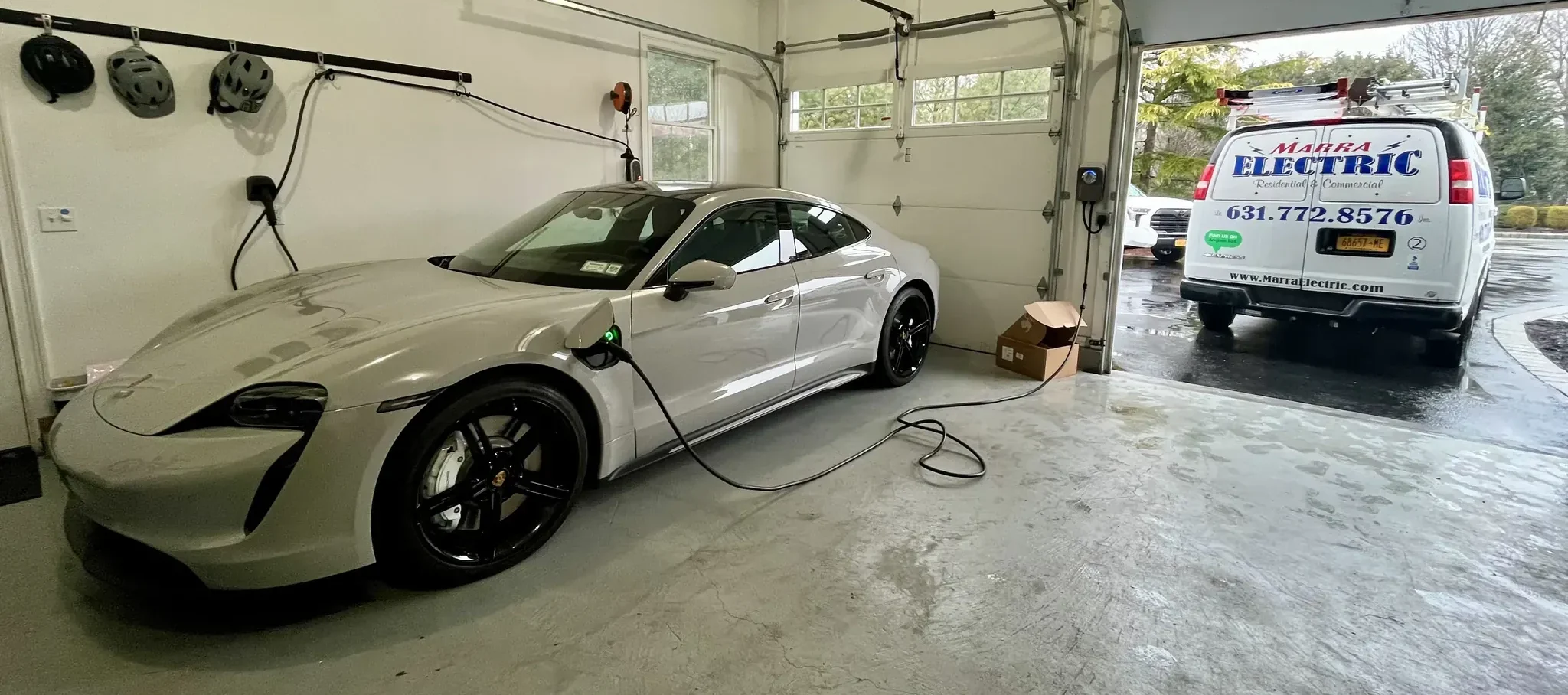
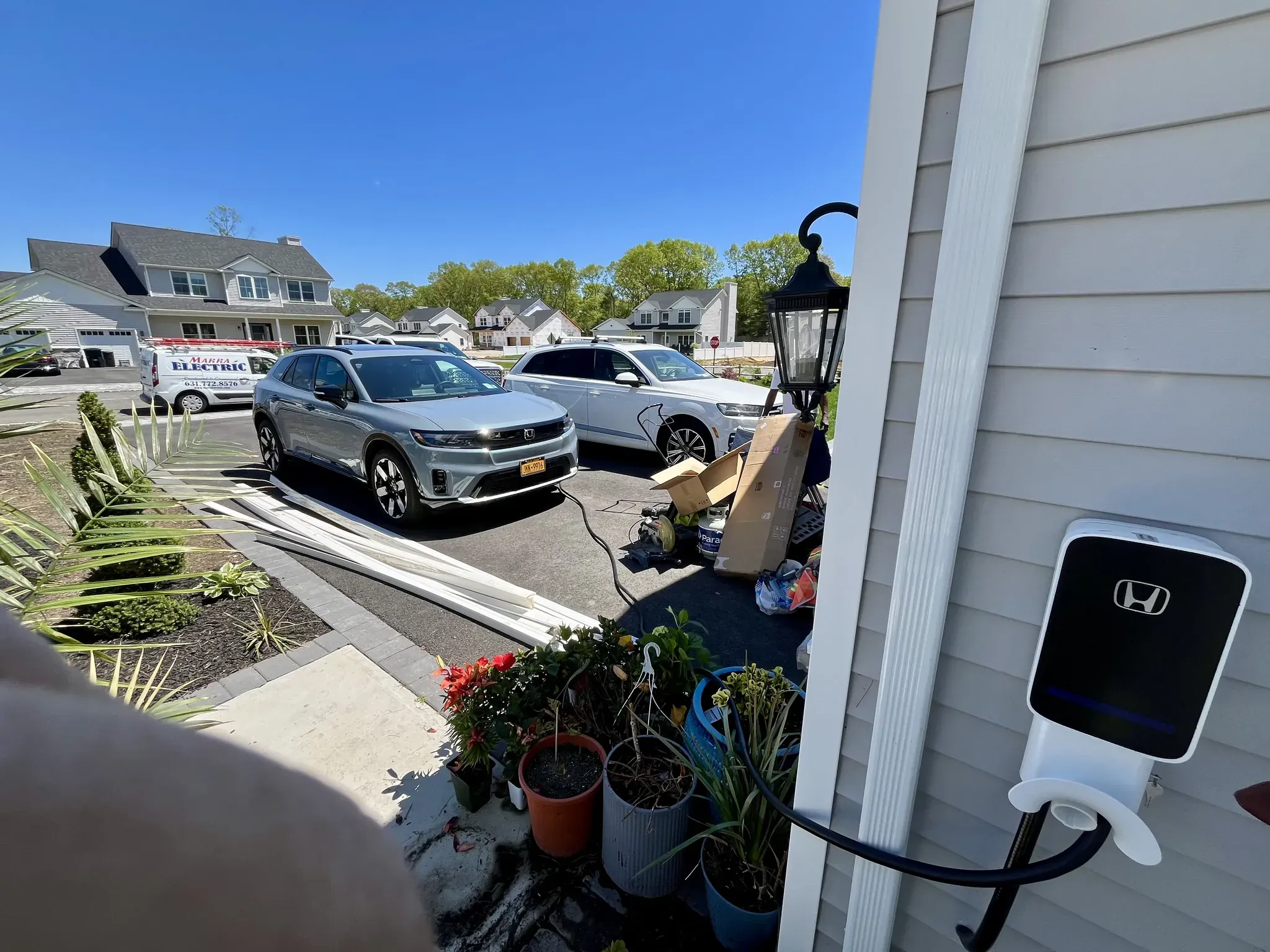
A Level 2 home EV charging station installation in Yaphank, NY changes that completely. You pull into your driveway, plug in your car, and forget about it. By morning, you have a full charge—every single day. It’s as simple as charging your phone overnight, except it’s your car.
You’re not just saving time. You’re saving real money compared to public charging, and you’re adding value to your property. New York is phasing out internal combustion engine vehicle sales by 2035, which means EV infrastructure isn’t a luxury anymore—it’s becoming standard. Homes with charging stations already installed have a clear advantage when it comes time to sell.
The difference between a DIY setup and a professional electric car charger installation in Yaphank, NY comes down to safety, code compliance, and whether your system actually works when you need it. Wrong wire gauge creates fire risk. Missing grounding creates shock hazard. Skipping permits can void your homeowner’s insurance and create problems during a sale.
We’ve been serving Yaphank, NY and the rest of Suffolk County since 2004. We’re fully licensed, fully insured, and we’ve been doing residential electrical work long enough to know what actually matters: safety, transparency, and getting it right the first time.
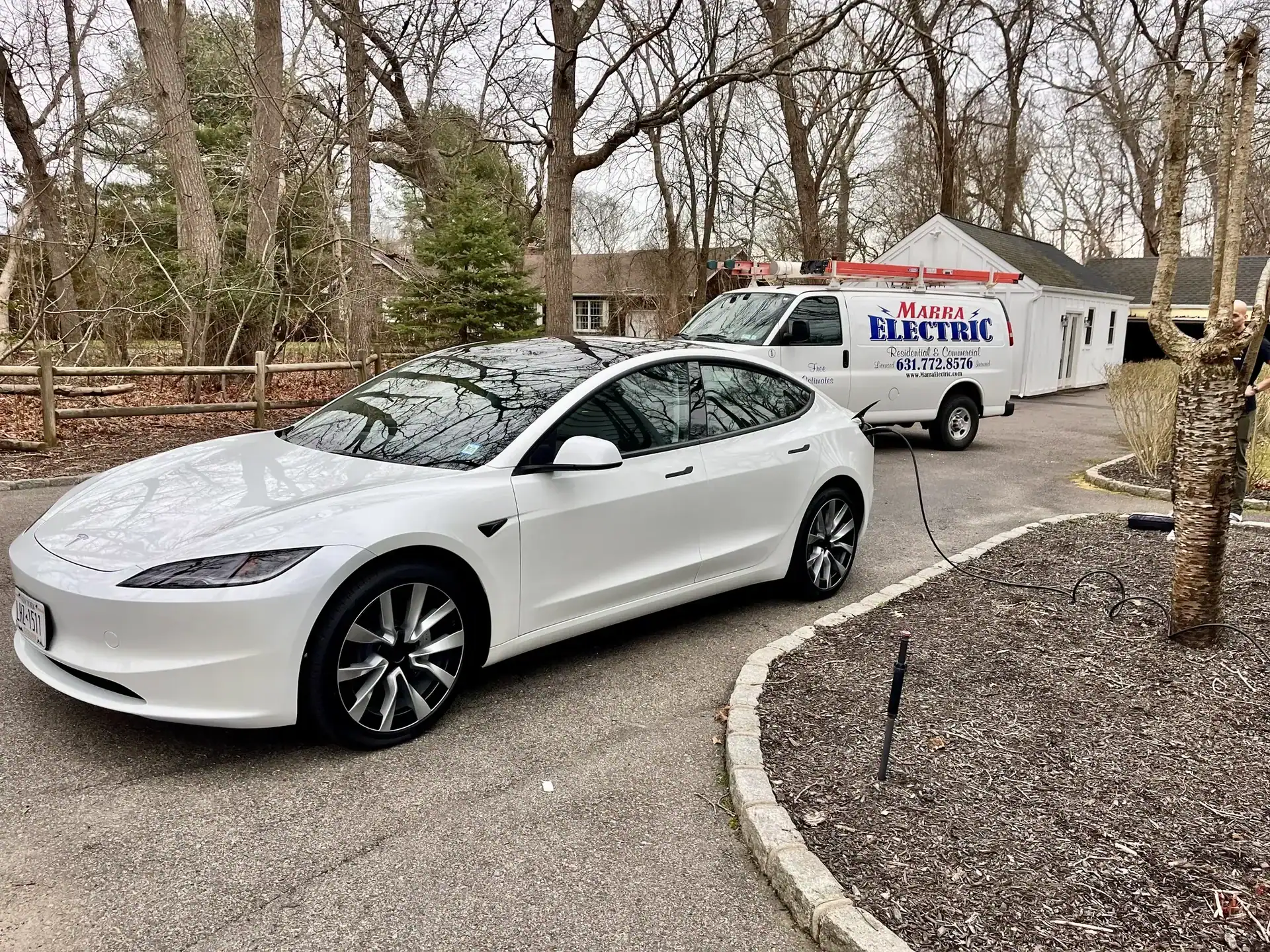
We don’t show up in unmarked vans or give you a price after the work is done. You get upfront pricing before we start, a crew in uniform driving a professionally lettered vehicle, and a 100% satisfaction guarantee on every job. If something’s not right, we come back and fix it.
Suffolk County homeowners have different electrical needs than the rest of the state. Many homes here were built before 2000 with 100-amp service panels that weren’t designed for modern electrical loads. Add an EV charger to that system without a proper assessment, and you’re asking for problems. We calculate your total load, check your panel capacity, and tell you exactly what’s needed—whether that’s a simple circuit addition or a full panel upgrade to 200 amps.
We start with a site assessment at your home in Yaphank, NY. That means looking at your electrical panel, measuring the distance from the panel to where you want the charger installed, and calculating whether your current system can handle the load. Most Level 2 chargers pull between 30 and 50 amps, which is significant.
If your panel can handle it, we move forward with the installation. If it can’t, we’ll tell you exactly what’s needed—usually a panel upgrade from 100 amps to 150 or 200 amps. We pull the permit, schedule the work, and handle the inspection. You don’t have to call the town or figure out code requirements.
The actual EVSE installation in Yaphank, NY involves running a dedicated circuit from your panel to the charging location, mounting the unit, and making sure everything is grounded correctly and wired to NEC Article 625 standards. We test the system before we leave, walk you through how it works, and make sure you’re comfortable using it.
After the install, the town inspector comes out to verify everything meets code. Once it passes, you’re done. The whole process usually takes one to two days depending on whether you need a panel upgrade, and you’ll have a charging station that works reliably in all weather conditions.
Ready to get started?
A complete home EV charging station installation in Yaphank, NY includes the electrical load assessment, permit application, dedicated 240-volt circuit installation, proper grounding and bonding, charger mounting, connection to your electrical panel, and final inspection coordination. You’re also eligible for the federal Alternative Fuel Vehicle Refueling Property Credit, which covers 30% of installation costs up to $1,000 for equipment installed through June 30, 2026.
Suffolk County has specific code requirements that go beyond the National Electrical Code. We stay current with local amendments and make sure your installation meets both NEC Article 625 standards and any additional county regulations. That’s not optional—it’s the legal standard for electrical work, and it’s enforced.
Many Yaphank, NY homes still operate on 100-amp service. That was fine when it was installed, but modern homes use significantly more electricity. Between HVAC systems, kitchen appliances, electronics, and now EV chargers, older panels are often maxed out. We perform a full load calculation to determine whether your existing system can safely handle a Level 2 EV charger installation in Yaphank, NY, or whether you need an upgrade first.
The average household income in Yaphank is $106,833, and 73.2% of housing units are owner-occupied. Most homes here are detached single-family properties, which makes them ideal for home charging setups. You have the space, the driveway access, and the electrical infrastructure—you just need someone who knows how to connect it all safely and legally.
Most electric car charger installations in Yaphank, NY take one day if your electrical panel has enough capacity and the charger location is within a reasonable distance from the panel. If you need a panel upgrade, add another day for that work.
The timeline also depends on permit approval and inspection scheduling. Suffolk County typically processes electrical permits within a few business days, and inspections are usually scheduled within a week of completion. We handle all of that coordination so you’re not making calls to the town or waiting on hold.
From the day you call us to the day your charger is fully operational and inspected, expect about one to two weeks total. That includes the site visit, permit processing, installation, and final inspection. If you’re in a rush, let us know—we offer options to expedite where possible.
It depends on your current panel capacity and how much electrical load you’re already using. Many homes in Yaphank, NY were built with 100-amp service panels, which were adequate at the time but struggle with today’s electrical demands. A Level 2 EV charger pulls 30 to 50 amps depending on the model, and that’s a significant addition.
We perform a load calculation during the site assessment. That means adding up everything currently drawing power in your home—HVAC, water heater, appliances, lighting—and determining whether there’s enough capacity left for the charger. If there isn’t, we’ll recommend upgrading to a 150-amp or 200-amp panel.
Panel upgrades aren’t just about the EV charger. They also give you headroom for future electrical needs and reduce the risk of overloading your system, which can damage electronics and create fire hazards. If an upgrade is needed, we’ll give you a clear price upfront so there are no surprises.
Yes. Tesla’s Wall Connector works with any EV if you use the right adapter, and most other Level 2 chargers work with all electric vehicles that use the J1772 standard plug. That includes nearly every EV sold in the U.S. except for older Tesla models, which come with an adapter anyway.
The bigger question isn’t which brand of charger you buy—it’s whether the installation is done correctly. A Tesla charger installation in Yaphank, NY requires the same electrical work as any other Level 2 EVSE installation: a dedicated 240-volt circuit, proper wire gauge for the amperage, correct grounding, and a connection to your panel that meets code.
Some chargers are hardwired directly into your electrical system. Others use a NEMA 14-50 outlet, which gives you the flexibility to unplug the charger if needed. We’ll walk you through the options during the site visit and recommend what makes sense for your setup and how you plan to use it.
You need an electrical permit from the Town of Brookhaven, which has jurisdiction over Yaphank, NY. Any work that involves adding a new circuit or modifying your electrical panel requires a permit, and EV charger installations fall into that category. Skipping the permit process is a risk most homeowners don’t realize they’re taking until it becomes a problem.
Unpermitted electrical work can void your homeowner’s insurance coverage for claims related to the installation. It can also create issues when you sell your home, because buyers and their inspectors will ask for proof that electrical work was done legally. If you can’t provide permit records and a passed inspection, you’re either reducing your sale price or paying to have the work redone.
We pull the permit as part of the installation process, schedule the required inspection, and make sure everything passes the first time. You don’t have to deal with the town or figure out what forms to fill out. It’s included in the service, and it protects you long-term.
Cost depends on three main factors: the charger itself, the installation complexity, and whether you need a panel upgrade. A quality Level 2 charger runs between $400 and $1,200 depending on features. Installation typically ranges from $800 to $2,000 if your panel has capacity and the charger location is close to the panel.
If you need a panel upgrade, add another $1,500 to $3,000 depending on whether you’re going from 100 amps to 150 or 200, and whether the upgrade requires additional work like a new meter base or service line. We give you upfront pricing after the site assessment so you know exactly what you’re paying before any work starts.
You’re also eligible for the federal tax credit, which covers 30% of installation costs up to $1,000. That’s a real rebate you can claim when you file taxes, and it applies to equipment installed through June 30, 2026. Between the tax credit and the money you’ll save on charging costs compared to gas or public stations, the payback period is shorter than most people expect.
No. Your home EV charging station installation in Yaphank, NY runs on your home’s electrical system, so if the power goes out, the charger stops working. That’s true whether you have a hardwired unit or one that plugs into an outlet.
If you have a backup generator, your EV charger can be included in the circuits that the generator powers during an outage. That requires planning during the installation phase, because the charger needs to be on a circuit that’s connected to your transfer switch. We can set that up if you already have a generator or if you’re considering adding one.
Another option is a battery backup system, though those are less common for EV charging because of the high power draw. Most homeowners in Suffolk County prioritize keeping essentials like refrigeration, heating, and lighting running during outages. If EV charging during a power outage is important to you, let us know during the site visit and we’ll walk through what’s possible with your current setup.
Other Services we provide in Yaphank