Home Generator Installation in Amagansett, NY

Power On. Automatically. Every Single Time.

Your home stays powered through every storm, outage, and grid failure—without lifting a finger, running extension cords, or losing what’s in your fridge.
[Add Trustindex Button Here]
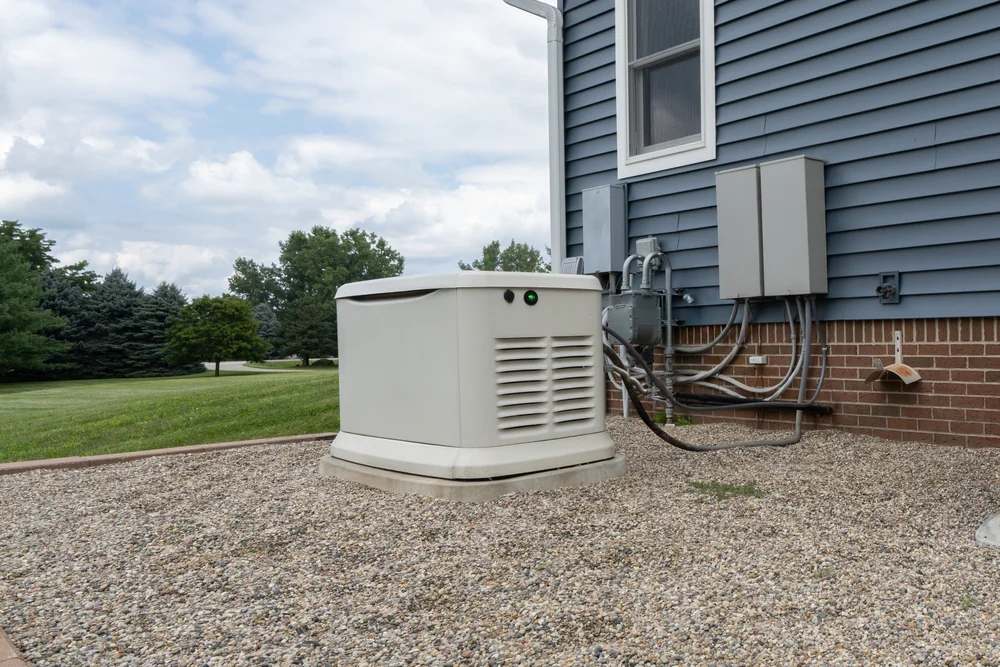
A standby generator sits on a gravel bed beside a blue house with siding in NY. Nearby, a residential electrician Suffolk County has mounted electrical boxes and conduit. Trees and lawn appear in the background under a cloudy sky.
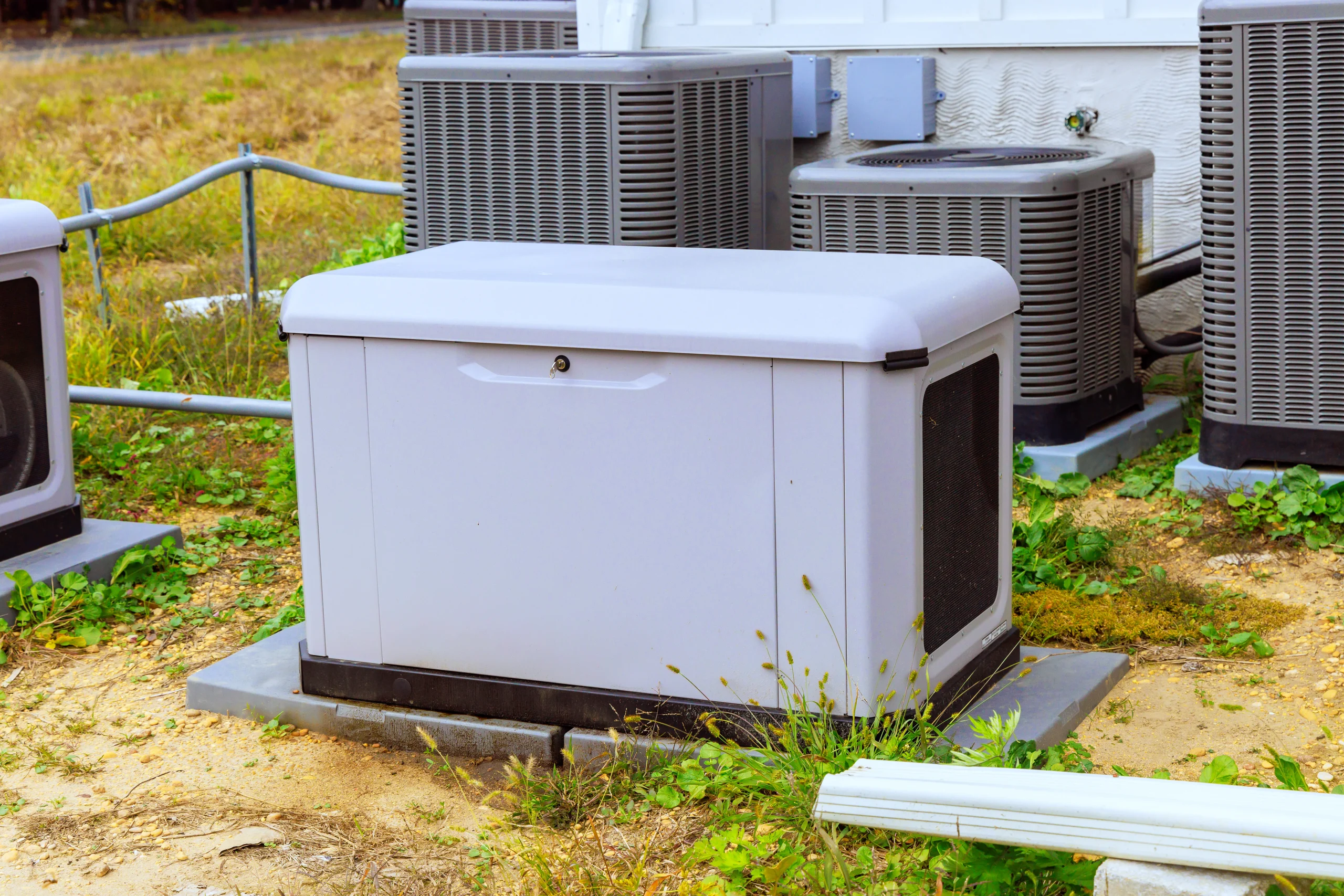
A standby generator sits on a concrete pad near several outdoor air conditioning units, with grass and weeds growing around the area. For installation or service, contact a residential electrician Suffolk County, NY, near this white building.

Whole House Generator Installation Amagansett NY

What You Get With Standby Power

You’re not buying a generator. You’re buying the ability to ignore the next outage completely.

When the power drops, your system kicks on in seconds. Your HVAC keeps running. Your refrigerator stays cold. Your security system stays active. Your sump pump keeps working. You’re not scrambling for flashlights or wondering if the basement is flooding.

This is what whole house generator installation in Amagansett, NY actually does: it removes power outages from your list of problems. No manual startup. No fuel runs in the rain. No wondering if you have enough gas to make it through the night. The generator runs on your existing natural gas or propane line, so it’s always ready.

And in a place like Amagansett, where soft soil and coastal storms knock out power multiple times a year, that’s not a luxury. It’s the difference between riding out a nor’easter in comfort and spending three days at a hotel because your house isn’t safe for your kids or your parents.

Licensed Generator Installers Amagansett NY

We've Been Doing This Since 2004

We’ve been installing backup generator systems across Suffolk County for over 20 years. We’re fully licensed, fully insured, and we’ve earned the Angie’s List Super Service Award seven years running—not because we’re flashy, but because we show up on time, price things upfront, and finish the job right.

We’re based in Bohemia and we work throughout Suffolk County, including Amagansett. We know the permit process here. We know how PSEG Long Island’s service area behaves during storms. We know what size system your home actually needs, not just what’s easiest to sell you.

You’ll meet with someone who walks your property, looks at your electrical panel, checks your gas line, and gives you a real number before any work starts. No surprises. No upselling. Just a clear plan and a crew that does what they said they’d do.

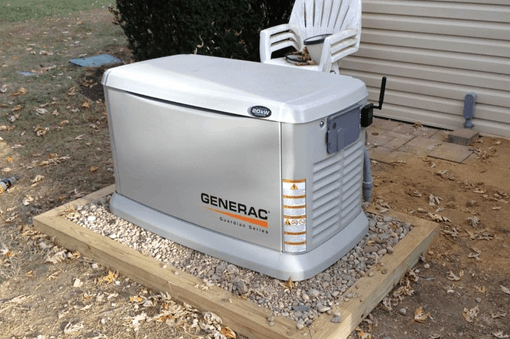
A Generac Guardian Series standby generator, expertly installed by a residential electrician Suffolk County, sits on a gravel platform beside a beige building, with a white plastic chair and scattered leaves nearby.

Home Standby Generator Installation Process

Here's How a Backup Generator Gets Installed

First, we come to your home in Amagansett, NY for a free consultation. We look at your electrical panel, your gas meter, where the generator would sit, and what you actually want to keep running during an outage. We talk through sizing—most homes here need between 16 kW and 22 kW for whole-home coverage, but it depends on your square footage, your appliances, and whether you’re running central air or a well pump.

Once you approve the estimate, we handle the permits. Then we schedule the install. Our crew shows up in branded vehicles, sets the generator on a concrete pad or composite base, connects it to your gas line and electrical panel, and wires in the automatic transfer switch. That’s the piece that detects an outage and tells the generator to start. You don’t touch anything.

After installation, we test the system, walk you through the basics, and show you how to monitor it remotely if your unit has Mobile Link. Then we clean up and you’re done. The whole process typically takes one to two days depending on the complexity of your setup. And from that point forward, you’ve got automatic backup power whenever the grid goes down.

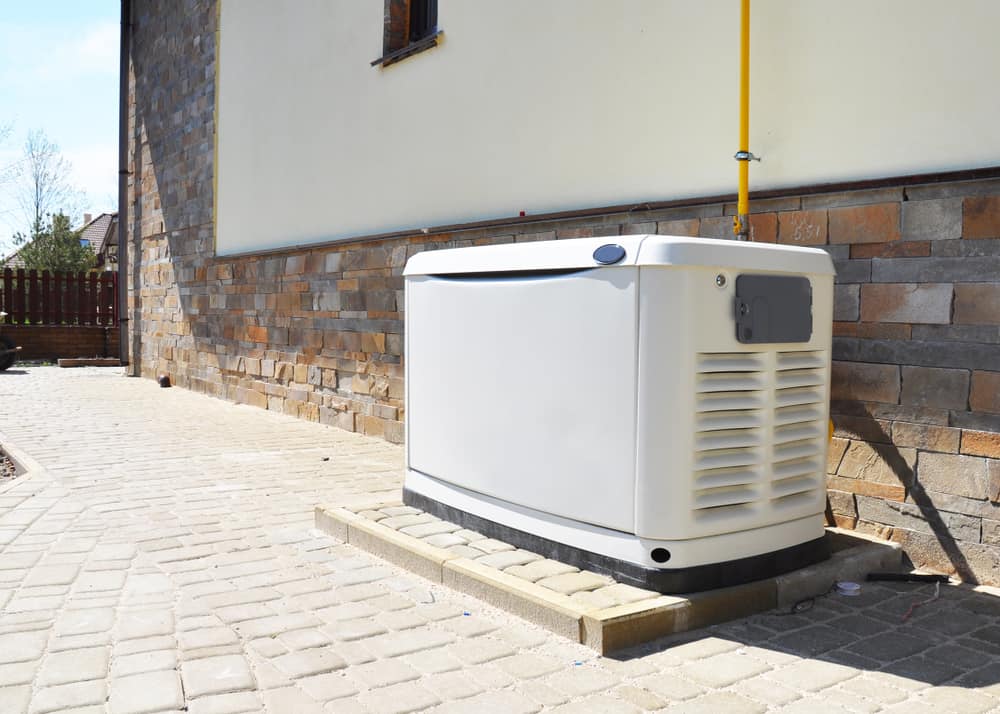
A standby generator is installed on a paved area next to a house with a brick and stone exterior wall; a yellow gas line connects to the unit, professionally set up by a residential electrician Suffolk County, NY.

Explore More Services

About Marra Electric

Generac Whole House Generator Amagansett NY

What's Included in Your Installation

When we install a home standby generator in Amagansett, NY, you’re getting the full system: the generator itself, the automatic transfer switch, the concrete or composite pad, all wiring and gas line connections, permit coordination, and startup testing. We primarily install Generac generators because they’re the most reliable units on the market and they’re backed by the best warranty and support network.

Your generator will be sized correctly for your home. That means we’re calculating your actual load—not guessing. We account for your heating system, your air conditioning, your well pump if you have one, your refrigerator, your security system, and any other critical circuits you want covered. Most Amagansett homes fall into the 16 kW to 22 kW range, but we’ll tell you exactly what you need based on your panel and your usage.

You’ll also get a system that monitors itself. Generac’s units run a self-test every week to make sure everything’s working. If something’s off, you’ll know before the next storm hits. And if your model includes Mobile Link, you can check the status from your phone no matter where you are. That’s helpful if you’re seasonal or spend part of the year somewhere else—you’ll know your Amagansett home is covered even when you’re not there.

A standby generator sits on a concrete pad next to the exterior wall of a white NY house, near some shrubs and a grassy, partly bare yard with trees in the background.

How much does whole house generator installation cost in Amagansett, NY?

Most whole house generator installations in Amagansett, NY run between $12,000 and $20,000, depending on the size of the system and the complexity of the install. A 16 kW unit that covers your essentials—heat, fridge, lights, a few outlets—will typically land on the lower end. A 22 kW or 24 kW system that powers your entire home, including central air and every circuit, will be closer to the higher end.

That price includes the generator, the automatic transfer switch, the pad, all electrical and gas connections, permits, and labor. If your gas line needs to be extended or your panel needs an upgrade to handle the load, that can add to the cost. We give you a full breakdown upfront so there’s no confusion.

And here’s the thing: a generator isn’t an expense, it’s an investment. It increases your property value by 3% to 5% according to Consumer Reports. It can lower your homeowner’s insurance premium. And it saves you from losing hundreds of dollars in spoiled food, hotel costs, or damage from frozen pipes every time the power goes out for more than a few hours.

Most homes in Amagansett, NY need a generator between 16 kW and 22 kW to cover the whole house. But the right size depends on your specific setup—your square footage, your heating and cooling systems, whether you have a well pump, and how many high-draw appliances you’re running.

If you just want to keep the essentials going—fridge, furnace, some lights, a few outlets—you can get by with a 10 kW to 14 kW unit. But if you want true whole-home coverage where you don’t have to think about what’s on or off, you’re looking at 20 kW or higher. Central air conditioning is the biggest load in most homes, and if you want that running during a summer outage, you need the capacity to handle it.

We size your system during the consultation. We look at your electrical panel, add up your loads, and recommend a generator that handles your actual usage with a little headroom. Undersizing a generator means you’ll be flipping breakers during an outage. Oversizing it means you’re paying for capacity you’ll never use. We get it right the first time.

A Generac whole house generator typically lasts 15 to 30 years with proper maintenance. Most manufacturers estimate around 3,000 hours of runtime over the life of the unit, which is more than enough for the average homeowner in Amagansett, NY who’s dealing with a handful of outages per year.

The key is maintenance. Your generator needs an annual service—oil change, filter change, battery check, and a full system test. Think of it like your car. If you take care of it, it’ll run for decades. If you ignore it, you’ll have problems when you need it most.

Generac units are built to handle all weather conditions. The RhinoCoat powder-coated finish protects against rust and corrosion, which matters in a coastal area like Amagansett where salt air can wear down equipment faster than inland locations. And because the generator runs a self-test every week, you’ll catch small issues before they become big ones. We can handle the annual maintenance for you, or you can work with any qualified technician. Either way, plan on servicing it once a year.

Yes, you need a permit to install a backup generator in Amagansett, NY. The Town of East Hampton, which Amagansett falls under, requires an electrical permit and often a building permit depending on the size and placement of the unit. You may also need to meet setback requirements—how far the generator sits from your property line, your home, and any neighboring structures.

We handle the permit process for you. We know what the town requires, we know how to submit the paperwork, and we know how long it typically takes to get approval. You don’t have to deal with the back-and-forth or figure out the zoning rules yourself.

Once the permits are approved and the installation is complete, the town will send an inspector to verify everything was done to code. We schedule that inspection, we’re there when it happens, and we make sure it passes the first time. The whole permit process usually adds a week or two to the timeline depending on how busy the town is, but it’s not something you need to worry about. We take care of it from start to finish.

Yes. A home standby generator typically increases property value by 3% to 5%, according to Consumer Reports. In Amagansett, NY, where the median home value is $1.76 million, that’s a potential increase of $50,000 to $88,000. Even if you don’t see the full return when you sell, you’re adding a feature that makes your home more attractive to buyers—especially buyers who’ve lived through extended outages before.

A generator also makes your home more insurable. Some insurance companies offer lower premiums for homes with backup power because the risk of damage from power loss—frozen pipes, flooded basements, spoiled food—goes down significantly. That’s a recurring savings that adds up over time.

And beyond the numbers, a generator just makes your home more livable. You’re not evacuating during storms. You’re not throwing out everything in your fridge after a three-day outage. You’re not worrying about your elderly parents or young kids being uncomfortable or unsafe. That peace of mind doesn’t show up on a balance sheet, but it’s worth something. And when you go to sell, buyers in this area understand that value because they’ve dealt with the same outages you have.

Most Generac whole house generators run at about 60 to 70 decibels when they’re under load. That’s roughly the same volume as a normal conversation or background music. You’ll hear it if you’re standing next to it, but it’s not going to keep you up at night or bother your neighbors, especially if it’s installed with proper setback distances.

The generator sits outside, usually on the side or back of your home, and modern units are designed with sound insulation to keep noise levels down. Generac’s newer models are quieter than older portable generators, which can hit 80 to 90 decibels and sound like a lawnmower running nonstop.

During the weekly self-test, the generator runs for about 12 minutes at a low load, so it’s even quieter than it would be during an actual outage. Most homeowners in Amagansett, NY don’t even notice the test cycle unless they’re outside. And during a real power outage, you’re usually just relieved the thing turned on. The sound becomes background noise pretty quickly, especially compared to the alternative of sitting in a dark, cold house with no power.

Other Services we provide in Amagansett