Home Generator Installation in Farmingville, NY

Power That Kicks On Before You Notice It's Gone

Your home stays running during the next storm. No scrambling for flashlights, no wondering when the lights come back, no food lost.
[Add Trustindex Button Here]
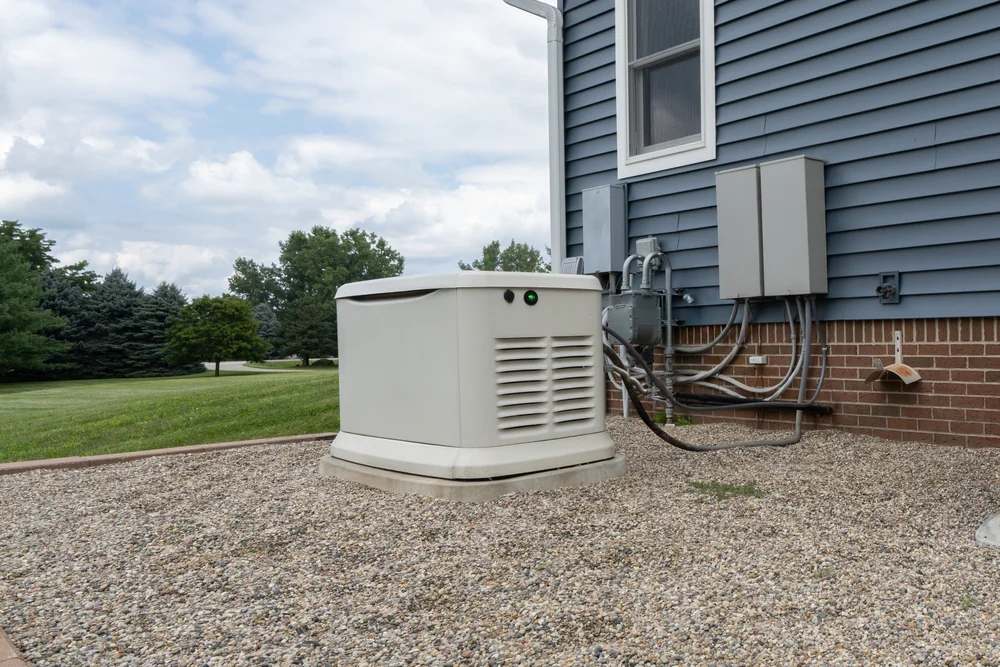
A standby generator sits on a gravel bed beside a blue house with siding in NY. Nearby, a residential electrician Suffolk County has mounted electrical boxes and conduit. Trees and lawn appear in the background under a cloudy sky.
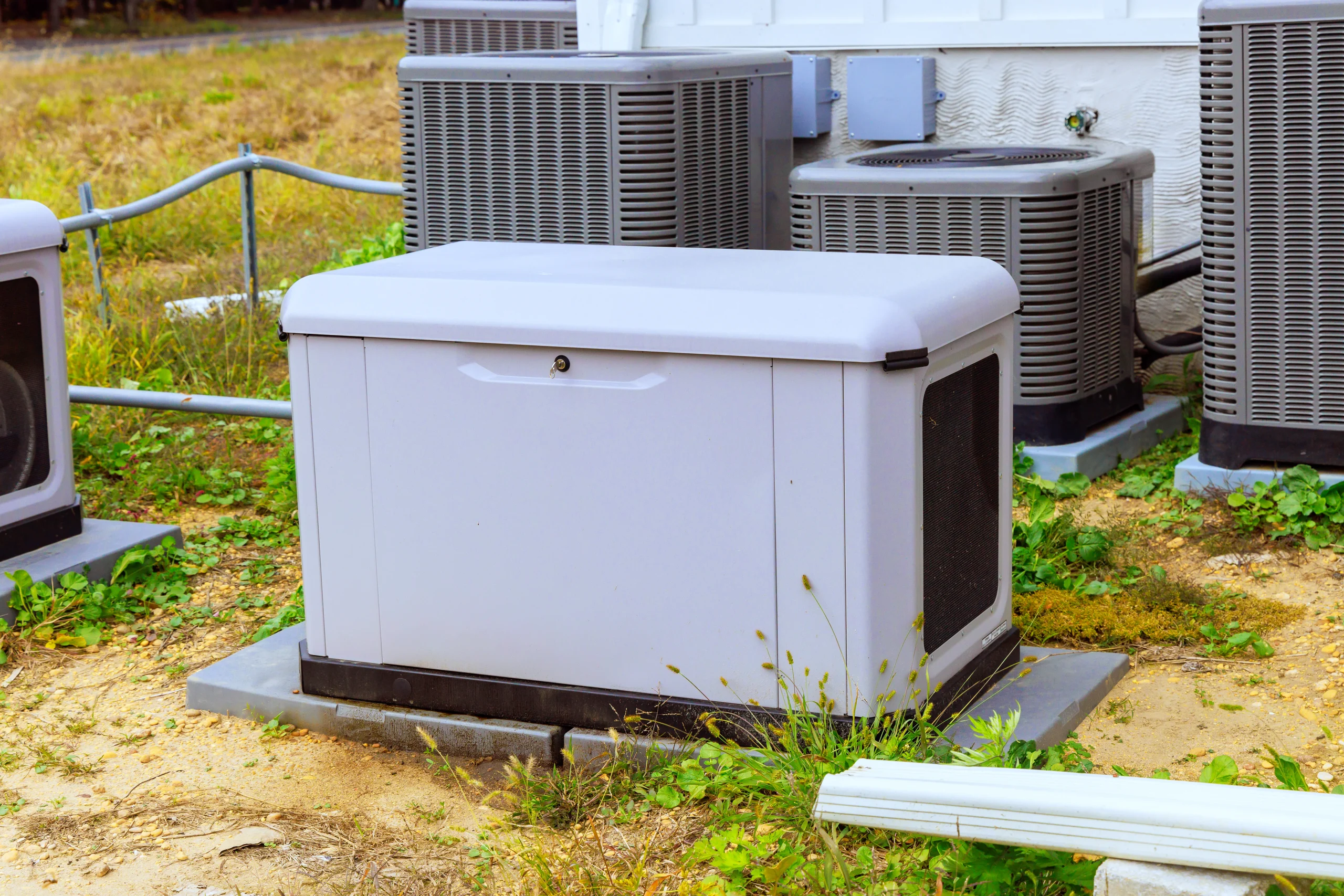
A standby generator sits on a concrete pad near several outdoor air conditioning units, with grass and weeds growing around the area. For installation or service, contact a residential electrician Suffolk County, NY, near this white building.

Whole House Generator Installation Farmingville

What Actually Happens When the Grid Goes Down

You’re sitting at home when the lights flicker and die. Maybe it’s a summer storm, maybe it’s winter ice on the lines. Either way, your neighbor’s house goes dark while yours stays lit.

That’s what a home standby generator installation in Farmingville, NY does. It detects the outage in seconds and switches your home to backup power automatically. You don’t flip a switch or go outside in the rain.

Your refrigerator keeps running. Your heat or AC stays on. Your phone charges. If you work from home, your internet doesn’t drop. If someone in your house uses medical equipment, it doesn’t stop. You keep living normally while everyone else is dealing with the fallout.

Suffolk County ranks 7th in New York for total power outages and percentage of customers affected. That’s not a maybe problem. It’s a when problem. And when it happens, you either have backup power or you don’t.

Licensed Generator Installer Farmingville, NY

We've Been Doing This Since 2004

We’ve been handling electrical work across Suffolk County for over 20 years. We’re not new to this. We’re fully licensed and insured, which matters more than you might think when you’re talking about connecting a generator to your home’s electrical system.

We’ve installed whole home generators in Farmingville, NY and throughout the area long enough to know what works, what doesn’t, and what the local permit process actually requires. Our team shows up in company vehicles, in uniform, with upfront pricing before we start. No surprises on the bill.

We’ve earned the Angie’s List Super Service Award seven years running. That doesn’t happen by accident. It happens because we do the work right, communicate clearly, and back it with a 100% satisfaction guarantee.

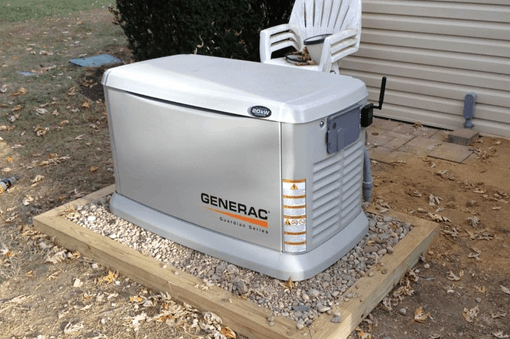
A Generac Guardian Series standby generator, expertly installed by a residential electrician Suffolk County, sits on a gravel platform beside a beige building, with a white plastic chair and scattered leaves nearby.

Backup Generator Installation Process Farmingville

Here's How a Generator Install Actually Works

First, we come out and assess your property. We’re looking at your electrical panel, your power needs, where the generator will sit, and how far it is from your gas line or propane tank. This tells us what size unit you need and what the install will involve.

Then we give you a free estimate with upfront pricing. You’ll know exactly what it costs before anything starts. If you move forward, we handle the permit paperwork with the town, which typically runs a few hundred dollars and is required by code.

Installation day, we set the generator on a concrete pad, connect it to your fuel source, wire it into your electrical system through a transfer switch, and test everything. The transfer switch is what makes it automatic. When power drops, it tells the generator to kick on and tells your home to pull from the generator instead of the grid.

Once it’s running and inspected, we walk you through how it works. Most of the time, you won’t need to do anything. It runs itself, tests itself weekly, and just sits there waiting for the next outage.

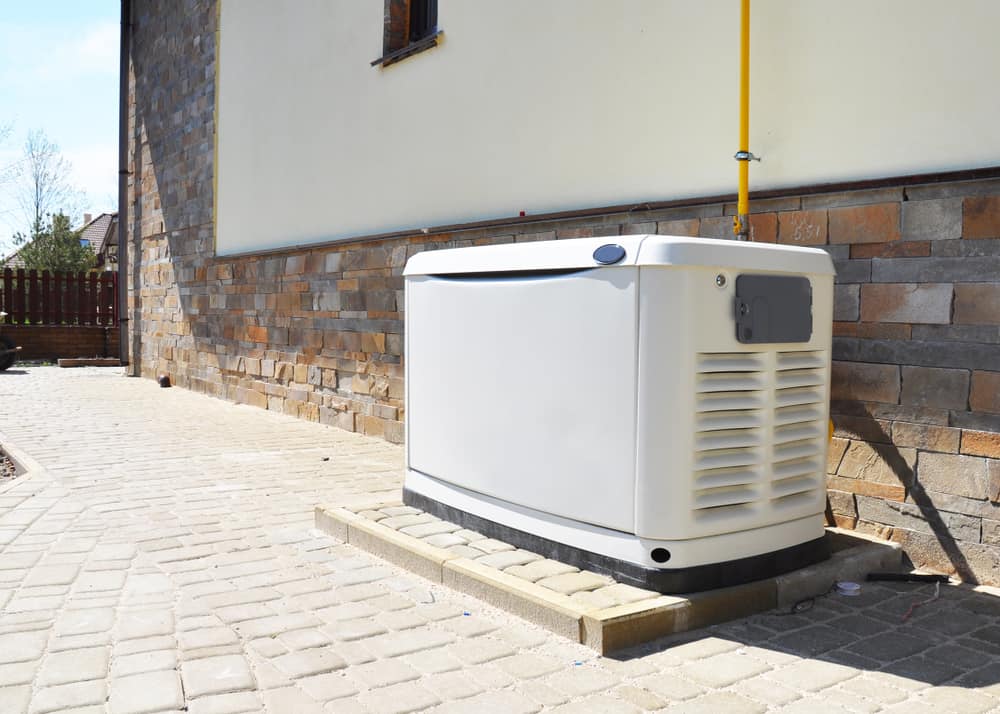
A standby generator is installed on a paved area next to a house with a brick and stone exterior wall; a yellow gas line connects to the unit, professionally set up by a residential electrician Suffolk County, NY.

Explore More Services

About Marra Electric

Generac Whole House Generator Farmingville, NY

What You're Actually Getting With This Install

A whole house generator installation in Farmingville, NY includes the generator unit itself, usually a Generac or similar brand depending on your needs and budget. These are standby units that run on natural gas or propane, not the portable kind you haul out of the garage and refuel by hand.

You also get a transfer switch, which is the brain of the system. It monitors your utility power and automatically switches your home to generator power when needed. Most systems kick on within 10 to 15 seconds of an outage. You’ll barely notice the gap.

We install it on a concrete pad outside your home, usually near your electrical panel and fuel source to keep costs down. We run the electrical connections, the fuel line if needed, and make sure everything meets Suffolk County code requirements. That includes permits and inspections, which we coordinate.

Whole house generator cost in Farmingville, NY typically runs between $6,000 and $11,000 installed, depending on the size of your home and how much power you need. Larger homes with higher electrical loads cost more. Smaller homes with basic needs cost less. Labor generally accounts for $3,000 to $5,000 of that total, and the rest is equipment and materials.

The system can power your entire home or just critical circuits like your fridge, heat, and lights. That’s your call based on budget and priority. Either way, you’re covered when the power drops.

A standby generator sits on a concrete pad next to the exterior wall of a white NY house, near some shrubs and a grassy, partly bare yard with trees in the background.

How long does a home generator installation take in Farmingville, NY?

Most home standby generator installations in Farmingville, NY take one to two days once permits are approved. The actual installation work usually wraps up in a day, but that depends on how complicated the setup is.

If we need to run a new gas line or if your electrical panel needs an upgrade first, that adds time. If the generator sits close to your panel and fuel source, it’s faster. We also need to schedule the town inspection after install, which can add a few days to the timeline depending on their availability.

Permit approval is the bigger variable. Suffolk County requires permits for generator installs, and processing time depends on the town’s workload. We handle the paperwork, but you should expect a few weeks from start to finish when you factor in permitting, installation, and inspection.

It depends on what you want to run during an outage. If you want your whole home powered like normal, you’ll need a larger unit, usually between 18kW and 26kW for most single-family homes in Farmingville, NY. That covers your HVAC system, appliances, lights, and outlets.

If you only care about essentials like your refrigerator, a few lights, your heating system, and maybe one AC unit, you can get by with a smaller generator in the 10kW to 14kW range. That keeps costs lower but means you’ll need to be more selective about what’s running.

We calculate the size based on your home’s electrical load during the site assessment. We look at your panel, ask what you want to keep running, and recommend a unit that fits. Oversizing wastes money. Undersizing leaves you without power where you need it. We aim for the middle.

Yes. Suffolk County requires permits for home generator installations in Farmingville, NY, and the town will inspect the work once it’s done. Permit fees usually run between $200 and $500 depending on the scope of the project.

The permit process exists to make sure the installation meets electrical and safety codes. That protects you. A generator that’s wired wrong or installed without proper clearances is a safety risk and can void your warranty.

We handle the permit application and coordinate the inspection as part of the installation process. You don’t need to deal with the town directly. Once the work passes inspection, you’re good to go. Skipping the permit might seem easier, but it’ll come back to bite you if you ever sell the home or file an insurance claim.

Whole house generator cost in Farmingville, NY typically falls between $6,000 and $11,000 installed. That includes the generator, transfer switch, labor, concrete pad, electrical connections, and fuel line hookup if needed.

Smaller generators that cover essential circuits cost closer to $6,000 to $8,000. Larger units that power your entire home run $9,000 to $11,000 or more, depending on your electrical load. Labor usually accounts for $3,000 to $5,000 of the total, and equipment makes up the rest.

Additional costs can include permit fees, panel upgrades if your current panel can’t handle the transfer switch, or running a new gas line if your existing service isn’t close enough. We give you upfront pricing during the estimate so you know exactly what you’re paying before we start.

A home standby generator installation in Farmingville, NY is permanent. It sits outside your home on a concrete pad, connects directly to your electrical system and fuel source, and turns on automatically when the power goes out. You don’t touch it.

A portable generator is something you store in your garage, haul outside during an outage, fuel up with gasoline, and plug appliances into directly or connect through a transfer switch. It’s manual. You’re starting it, refueling it, and managing what runs off it.

Standby generators run on natural gas or propane, so you don’t need to worry about fuel. Portable units run on gasoline, which means you’re storing gas cans and refilling the tank every few hours. Standby systems cost more upfront but require way less effort when the power drops. Portable generators are cheaper but much more hands-on.

Most manufacturers recommend annual maintenance for home standby generators in Farmingville, NY. That includes changing the oil, replacing the air filter, checking the battery, and testing the system under load to make sure it’s ready when you need it.

Generac whole house generators and similar brands run a self-test every week, usually for about 10 to 15 minutes. That keeps the engine lubricated and the battery charged. But the weekly test doesn’t replace actual maintenance.

If you skip maintenance, you risk the generator failing during an outage, which defeats the whole point of having one. We offer maintenance services and can set you up on a schedule. Most homeowners spend around $200 to $300 per year on professional maintenance, which is a lot cheaper than replacing a generator that seized up because it wasn’t serviced.

Other Services we provide in Farmingville