You bought an EV to simplify your life, not to plan your week around charging stations. A Level 2 home charging station means you plug in when you get home and wake up ready to drive. No more detours to public chargers. No more sitting in parking lots for 45 minutes hoping the station works.
Your portable Level 1 charger barely keeps up with your commute. It takes 20+ hours for a full charge, which means if you drive more than 40 miles in a day, you’re losing ground. A professionally installed Level 2 charger delivers a full charge in 4-8 hours, giving you the freedom to actually use your vehicle the way you intended.
Most Quiogue homes weren’t built to handle the electrical load an EV charger requires. Your panel might max out at 100 or 150 amps, and adding a 40-50 amp continuous draw without the right setup creates real fire risk. That’s why our installation includes a full electrical assessment, proper load calculations, and any necessary panel upgrades to keep your home safe while your car charges overnight.
We’ve been handling residential and commercial electrical work across Suffolk County for over 20 years. We’ve upgraded panels, installed generators, and wired new construction throughout Quiogue and the surrounding Hamptons communities. Our electricians are licensed, insured, background-checked, and trained specifically on EV charging systems, including Tesla Wall Connectors and other Level 2 stations.
You’re not getting a general handyman who watched a YouTube video. You’re getting a team that understands Suffolk County’s electrical codes, permit requirements, and inspection process. We’ve earned the Angie’s List Super Service Award seven years running because we show up on time, explain costs upfront, and finish the job without surprises.
Quiogue homeowners deal with older electrical infrastructure that wasn’t designed for modern loads. We assess your current system, calculate what your home can handle, and upgrade what’s necessary so your EV charger works safely for years.
The process starts with a site assessment. We inspect your electrical panel, measure the distance from the panel to where you park, and determine if your current system can support a Level 2 charger. Most homes need at least a 200-amp service to safely add EV charging, and if yours doesn’t, we’ll explain exactly what upgrade is required and why.
Once we know what your home needs, we provide transparent pricing before any work begins. No surprise bills. No hidden fees. You’ll know the total cost for the charger installation, any panel upgrades, trenching if the charger is mounted outside, permits, and inspections.
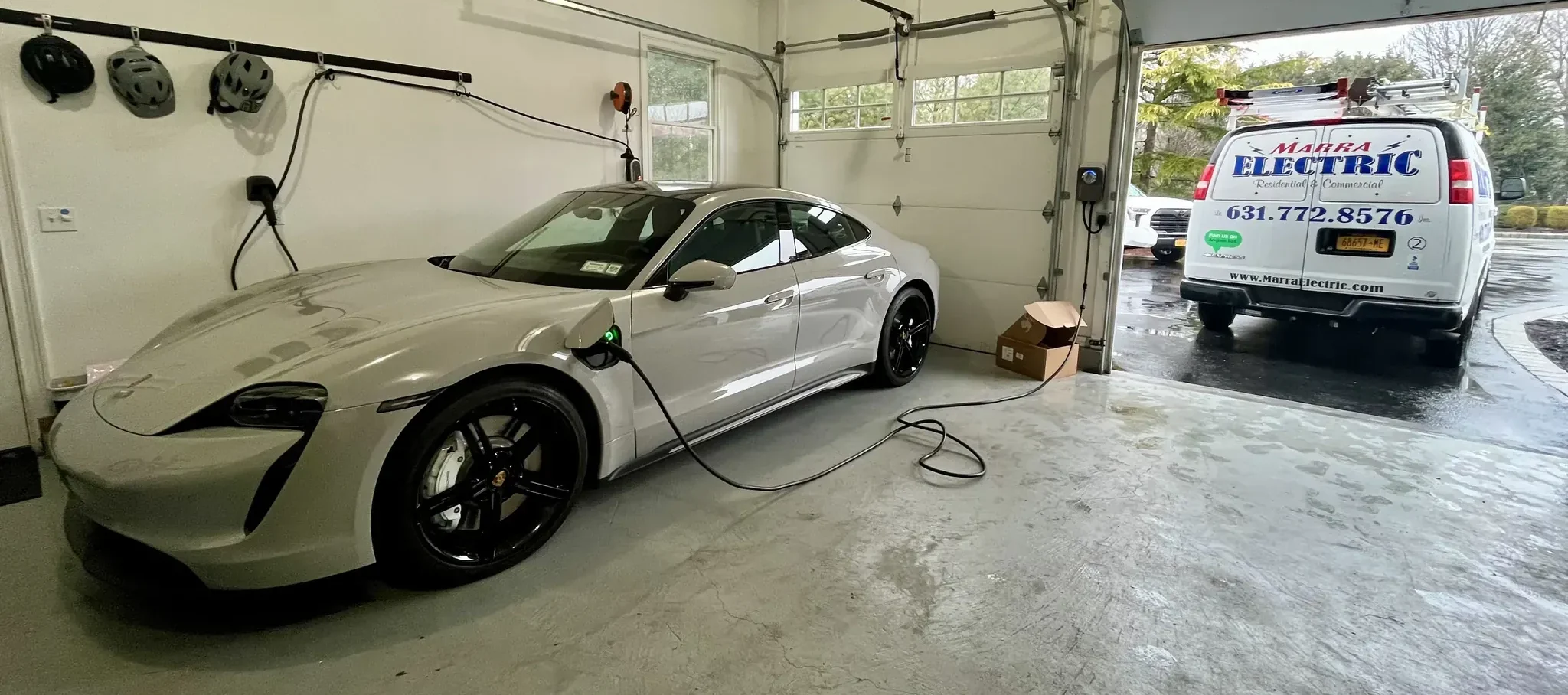
After you approve the estimate, we handle the permit application with Suffolk County, schedule the work, and complete the installation in a single day in most cases. That includes mounting the charging station, running the appropriate gauge wiring, installing the dedicated circuit breaker, ensuring proper GFCI protection, and setting up weatherproof enclosures if needed. We test the system, walk you through how it works, and schedule the county inspection to finalize everything.
You don’t coordinate with multiple contractors or chase down permits yourself. We manage the entire process so you can start charging at home as quickly as possible.
Ready to get started?
Every electric car charger installation in Quiogue, NY includes a complete electrical assessment of your home’s current capacity. We calculate your existing load, check your panel’s condition, and determine whether you need a service upgrade to safely handle the additional 30-50 amps your charger will draw continuously.
The installation covers all wiring from your electrical panel to the charging station location, whether that’s in your garage, on an exterior wall, or near your driveway. We use the correct wire gauge for the amperage, install a dedicated circuit breaker, and ensure everything meets Suffolk County electrical code, including GFCI protection and proper grounding.
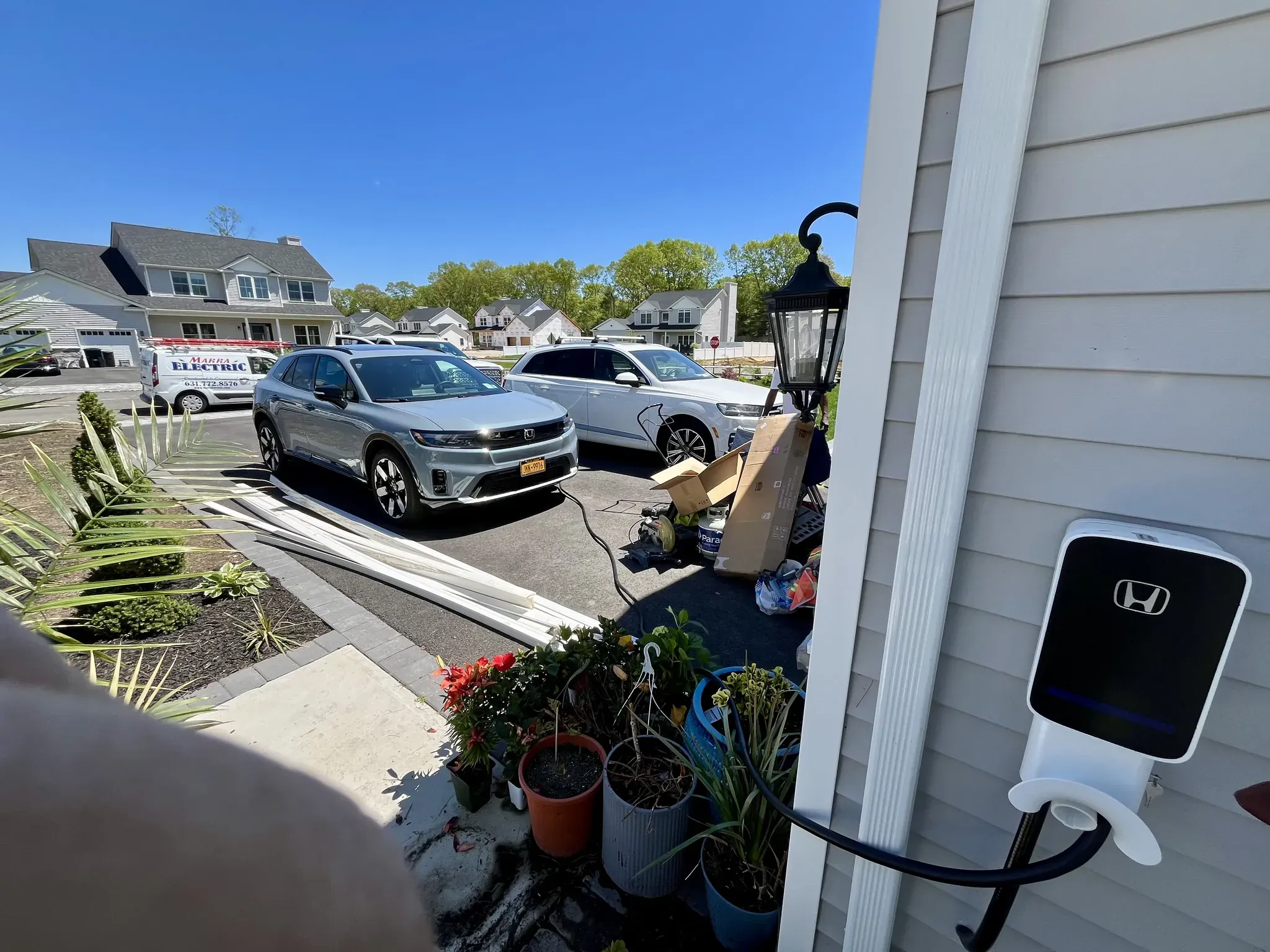
If your charger is mounted outdoors, we install weatherproof enclosures and conduit to protect the wiring from the elements. For installations that require running wiring underground or through walls, we handle the trenching, drilling, and patching so the final result looks clean and professional.
We also manage the permit process with Suffolk County and coordinate the required inspections. New York requires permits for Level 2 EVSE installation, and inspectors verify that the work meets code before you can legally use the system. We handle that paperwork and scheduling so you don’t have to figure out county requirements on your own.
Most complete Level 2 EV charger installations in Quiogue run between $1,000 and $2,500, depending on your home’s current electrical setup and how far the charger is from your panel. If your electrical panel can handle the additional load and the charger mounts close to the panel, you’re looking at the lower end. If you need a panel upgrade from 100 amps to 200 amps, or if we’re running wiring 50+ feet to an outdoor charging station, costs increase.
Panel upgrades typically add $1,500 to $3,000 to the project, but that’s not just for the EV charger. You’re upgrading your entire home’s electrical capacity, which supports everything else you plug in and protects your home from overloads. Trenching for underground wiring adds another $500 to $1,000 depending on distance and ground conditions.
Suffolk County requires permits for this work, which run $50 to $200, plus inspection fees of $100 to $200. We include those costs in your upfront estimate so there’s no confusion about the total investment. You’ll know exactly what you’re paying before we start.
It depends on your current panel’s capacity and how much load you’re already using. Most Level 2 chargers require a dedicated 40 or 50-amp circuit, which draws 30-40 amps continuously while charging. If your home has a 100-amp or 150-amp service and you’re already running central air, electric heat, a dryer, and other major appliances, adding an EV charger will likely overload the system.
Homes built before 2000 in Quiogue often have 100 or 150-amp panels that weren’t designed for modern electrical demands. We run a load calculation during the site assessment to see what your home currently uses and what capacity remains. If there’s not enough headroom, we recommend upgrading to a 200-amp service, which gives you plenty of room for the charger plus future needs.
Skipping the upgrade and installing the charger anyway creates a fire hazard. Your breaker will trip constantly, or worse, the wiring overheats without tripping the breaker. We don’t cut corners on safety, even if it means recommending a larger project than you initially expected.
Most installations are completed in one day, assuming your electrical panel can support the charger and we’re not running wiring more than 50 feet. We typically arrive in the morning, mount the charging station, run the wiring, install the breaker, test the system, and finish by late afternoon.
If your home needs a panel upgrade, the timeline extends to 1-2 days depending on the scope of the upgrade and permit approval times. Suffolk County usually processes electrical permits within a few business days, and we schedule the work as soon as the permit is approved.
The county inspection happens after installation is complete, and that can add a few days to the overall timeline depending on inspector availability. But your charger is functional as soon as we finish the installation. The inspection is a formality to verify code compliance, not a prerequisite to start using the system.
Level 1 chargers plug into a standard 120-volt outlet and deliver about 4-5 miles of range per hour of charging. That’s the portable charger that came with your EV. It works fine if you drive less than 40 miles a day and can leave the car plugged in overnight, but it’s painfully slow for anything beyond light commuting.
Level 2 chargers require a 240-volt circuit, the same voltage your dryer or oven uses, and they deliver 25-30 miles of range per hour. That means a full charge in 4-8 hours instead of 20+ hours. If you drive more than 50 miles a day, take longer trips on weekends, or just want the flexibility to charge quickly, Level 2 is the only practical option.
The installation cost is higher because it requires a dedicated circuit, heavier gauge wiring, and often a panel upgrade. But the time savings and convenience make it worth the investment for most EV owners. You stop planning your life around charging and just plug in when you get home.
Technically, yes, if you’re a licensed electrician. Legally and safely, no, if you’re not. Suffolk County requires permits for Level 2 EV charger installations, and the permit process requires a licensed electrician to pull the permit and sign off on the work. If you install it yourself without a permit, you’re violating local code, which can void your homeowner’s insurance if something goes wrong.
EV chargers draw significant continuous loads, and improper installations cause house fires. Over 51,000 home fires every year stem from electrical issues, and a large percentage of those involve DIY work or unlicensed contractors. If you use the wrong wire gauge, skip GFCI protection, or miscalculate your panel’s capacity, you’re creating a serious hazard.
Even if you have electrical experience, the time and risk usually aren’t worth the savings. A professional installation includes load calculations, proper materials, code-compliant work, permits, and inspections. If something fails, you’re covered by our insurance and warranty. If your DIY install fails, you’re paying to fix the damage and redo the work correctly.
Yes, especially in areas like Quiogue where EV adoption is growing among affluent homeowners. A professionally installed Level 2 charging station signals that your home is updated, energy-efficient, and ready for modern transportation. Buyers with EVs or buyers planning to purchase EVs see it as a major convenience and cost savings.
The investment in a home EV charging station installation in Quiogue, NY typically pays for itself through fuel savings within 1-2 years. EV owners save $1,200 to $1,800 annually on fuel costs compared to gas vehicles, and charging at home overnight costs significantly less than using public charging stations.
Beyond resale value, the upgrade often includes a panel upgrade to 200 amps, which benefits your entire home’s electrical system. That’s an attractive selling point even for buyers without EVs, because it means the home can handle modern electrical demands without constant breaker trips or safety concerns.
Other Services we provide in Quiogue