You bought an EV to simplify your life, not complicate it. But if you’re still planning trips around public charging stations or waiting in line at the handful of spots near Sag Harbor, you’re not getting the convenience you paid for.
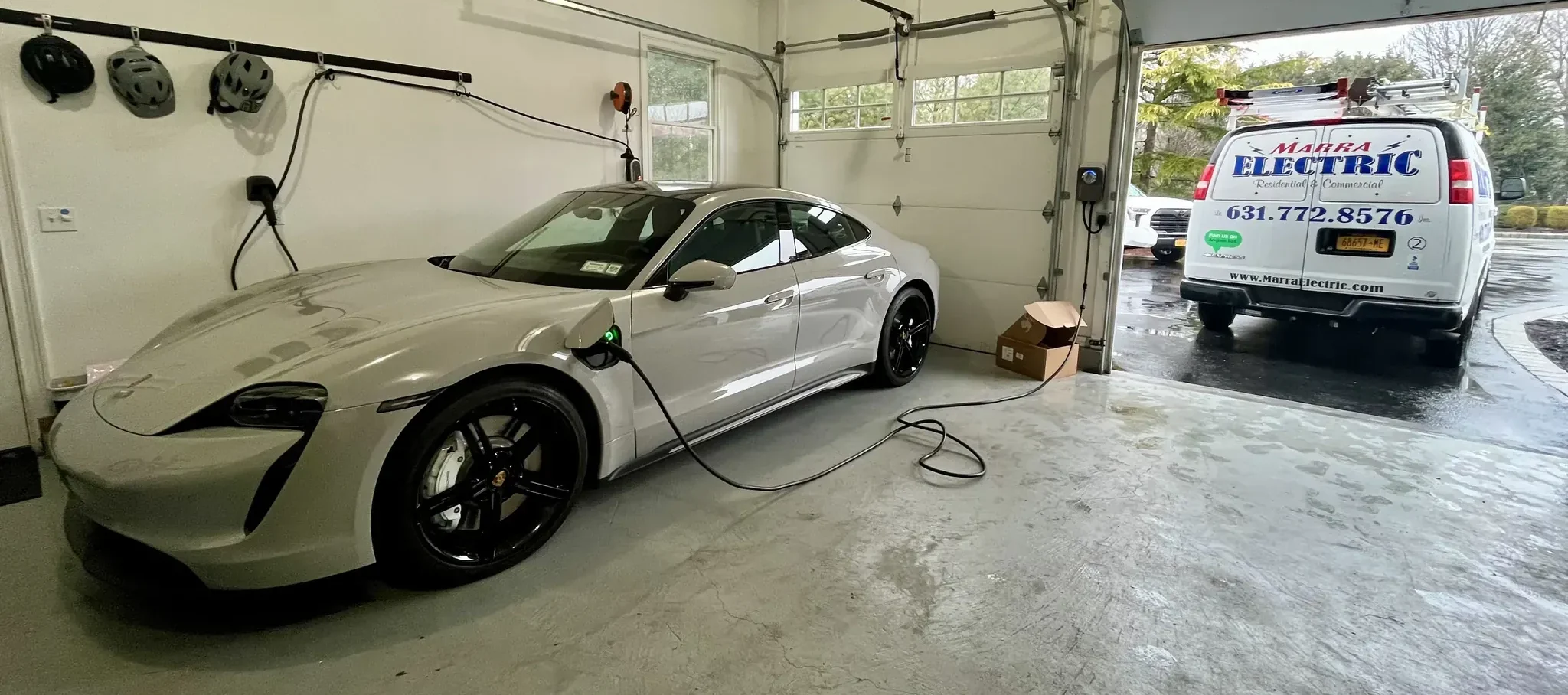
A Level 2 EV charger installation in Sag Harbor puts charging on your schedule. You park, you plug in, and you’re done. No apps to check. No wondering if someone’s hogging the only available port. Just 25 to 40 miles of range added per hour while you sleep or work.
Most homes in Sag Harbor can support a home EV charging station with their current electrical setup. Some older properties need a panel upgrade first, but that’s not just an EV expense. It’s an infrastructure improvement that benefits everything you plug in and adds value to your property.
We’ve been serving Suffolk County since 2004. That’s over 20 years of residential and commercial electrical work, from panel upgrades to generator installs to electric car charger installation in Sag Harbor and surrounding areas.
We know Sag Harbor’s electrical infrastructure. We know which older homes need 100-amp to 200-amp upgrades. We know the local permit process, the inspectors, and what the town building department expects before they sign off on your installation.
You’ll get upfront pricing during your free estimate. What we quote is what you pay. No surprise fees after we start the work. Our technicians show up in company vehicles, wearing uniforms, fully licensed and insured. We’ve earned the Angie’s List Super Service Award seven years running because we do what we say we’ll do.
First, we come out for a free estimate. We’ll look at your electrical panel, measure the distance from the panel to where you want the charger, and check if your current setup can handle the load. If you need a panel upgrade, we’ll tell you exactly what that costs before any work starts.
Once you approve the quote, we handle the permit application with the Sag Harbor building department. We schedule the installation around your availability. Most jobs take three to six hours depending on how far we’re running the line.
We install the charger, mount it securely, run the wiring to code, and test everything. Then we schedule the inspection. We’re there when the inspector shows up, and we don’t leave until you have a fully operational, code-compliant charging station. You get a system that works the day we finish, not weeks later.
Ready to get started?
A complete Level 2 EV charger installation in Sag Harbor includes the charger unit itself, the dedicated 240-volt circuit, proper GFCI protection, weatherproof enclosure if it’s mounted outside, and all wiring run to current electrical code.
We’ll upgrade your panel if needed. Many Sag Harbor homes built before 2000 have 100-amp service, which won’t safely support an EV charger plus your home’s existing electrical load. A 200-amp panel handles it without issue and gives you room for future upgrades.
You also get permit handling and inspection coordination. Suffolk County has different requirements than Nassau or NYC, and we know exactly what Sag Harbor inspectors look for. GFCI protection, proper grounding, correct wire gauge for the distance, weatherproof installation for outdoor units. We build it right the first time so it passes inspection without delays.
PSEG Long Island offers Time-of-Day rates that give you a 40 percent discount during off-peak hours. Charge overnight and you’re paying significantly less per kilowatt-hour than you would at a public station. That adds up over the years you’ll own the vehicle.
A straightforward Level 2 installation typically runs around $1,000 for the complete job if your electrical panel can handle the load and the charger location is reasonably close to the panel. That includes the labor, materials, wiring, and permit fees.
If you need a panel upgrade, add another $2,000 to $3,500 depending on the complexity of the upgrade and your home’s existing wiring. Older homes in Sag Harbor often have 100-amp panels that need to be upgraded to 200-amp service to safely support an EV charger.
Distance matters too. If you want the charger mounted 100 feet from your panel, that’s more wire, more conduit, and more labor than a 20-foot run. We’ll measure during the free estimate and give you an exact price before we start any work. No guessing, no surprises after we open the wall.
Yes. Sag Harbor requires an electrical permit from the town building department for any EV charger installation. It’s not optional, and skipping it can cause problems when you sell the property or file an insurance claim.
The permit ensures the work meets local electrical codes and safety standards. An inspector will check the installation after we finish to make sure everything is grounded correctly, the circuit is properly sized, and the charger is installed safely.
We handle the entire permit process. We submit the application, pay the fees, schedule the inspection, and meet the inspector on-site. You don’t have to deal with the town building department or figure out what paperwork they need. We’ve done this enough times that we know exactly what they want to see.
Most newer homes in Sag Harbor with 200-amp service can handle a Level 2 charger without issue. The charger typically draws 30 to 50 amps depending on the model, and a 200-amp panel has enough capacity to support that load plus your home’s normal electrical usage.
Older homes with 100-amp panels usually can’t. A 100-amp panel is already supporting your HVAC, water heater, kitchen appliances, and everything else you plug in. Adding a continuous 40-amp load from an EV charger pushes it past safe operating limits.
We’ll assess your panel during the free estimate. If you need an upgrade, we’ll explain why and give you an upfront price. A panel upgrade isn’t just about the EV charger. It’s a long-term improvement that increases your home’s electrical capacity and property value.
Most installations take three to six hours depending on the distance from your electrical panel to the charger location and whether we’re mounting it indoors or outdoors. A garage installation 15 feet from the panel goes faster than an outdoor installation 60 feet away.
If you need a panel upgrade, add another half day for that work. We’ll upgrade the panel first, then install the charger circuit and mount the unit. We can often complete both in a single day if we start early enough.
The permit and inspection process adds a few days to the overall timeline, but that’s just scheduling. The actual work happens in one visit. We don’t start the job and then disappear for a week. We show up, complete the installation, clean up, and schedule the inspection before we leave.
Level 1 charging uses a standard 120-volt outlet, the same kind you plug a lamp into. It’s slow. You’re looking at 40 to 50 hours for a full charge on most EVs. That’s fine if you drive 20 miles a week, but it’s not practical for daily use in Suffolk County.
Level 2 charging uses a 240-volt circuit, the same voltage as your dryer or oven. It charges 8 to 10 times faster than Level 1. You’ll add 25 to 40 miles of range per hour depending on your vehicle and charger model. Park at 6 PM with 30 percent battery, and you’ll wake up at 100 percent.
A Level 2 home EV charging station in Sag Harbor is the standard for residential installations. It’s fast enough for daily use, it’s not absurdly expensive to install, and it works with every EV on the market. You plug in overnight and you’re ready to drive the next morning without planning your schedule around charging.
Yes, but probably less than you’re spending on gas. Electricity costs less per mile than gasoline for most vehicles, and PSEG Long Island offers Time-of-Day rates that cut your charging costs by 40 percent if you charge during off-peak hours.
The exact increase depends on how much you drive. If you’re adding 1,000 miles of range per month and your EV gets 3.5 miles per kilowatt-hour, that’s about 285 kWh. At PSEG’s off-peak rate, you’re looking at roughly $40 to $50 per month. Compare that to what you’d spend on gas for 1,000 miles.
Charging at home also saves you the premium rates that public charging stations charge. Some DC fast chargers cost as much per kilowatt-hour as gas costs per gallon equivalent. Your home rate is significantly cheaper, especially if you’re charging overnight when demand is low and rates drop.
Other Services we provide in Sag Harbor