Your breakers stop tripping every time you run the microwave and the AC at the same time. Your lights stay steady instead of flickering when the fridge kicks on. You can charge your EV in your own garage without worrying if your panel can handle it.
That’s what happens when your electrical system actually matches what you’re asking it to do. Most homes in Sayville built before the 2000s are running on 60 to 100-amp panels that were never designed for today’s load. Add a few smart devices, an electric vehicle, modern appliances, and suddenly you’re asking a 40-year-old system to do twice the work.
You don’t need a lecture on voltage. You need someone who can walk in, assess what’s actually going on, tell you what it’ll cost before they start, and get it handled without the drama. That’s the difference between a professional electrician in Sayville, NY and someone just trying to get through the job.
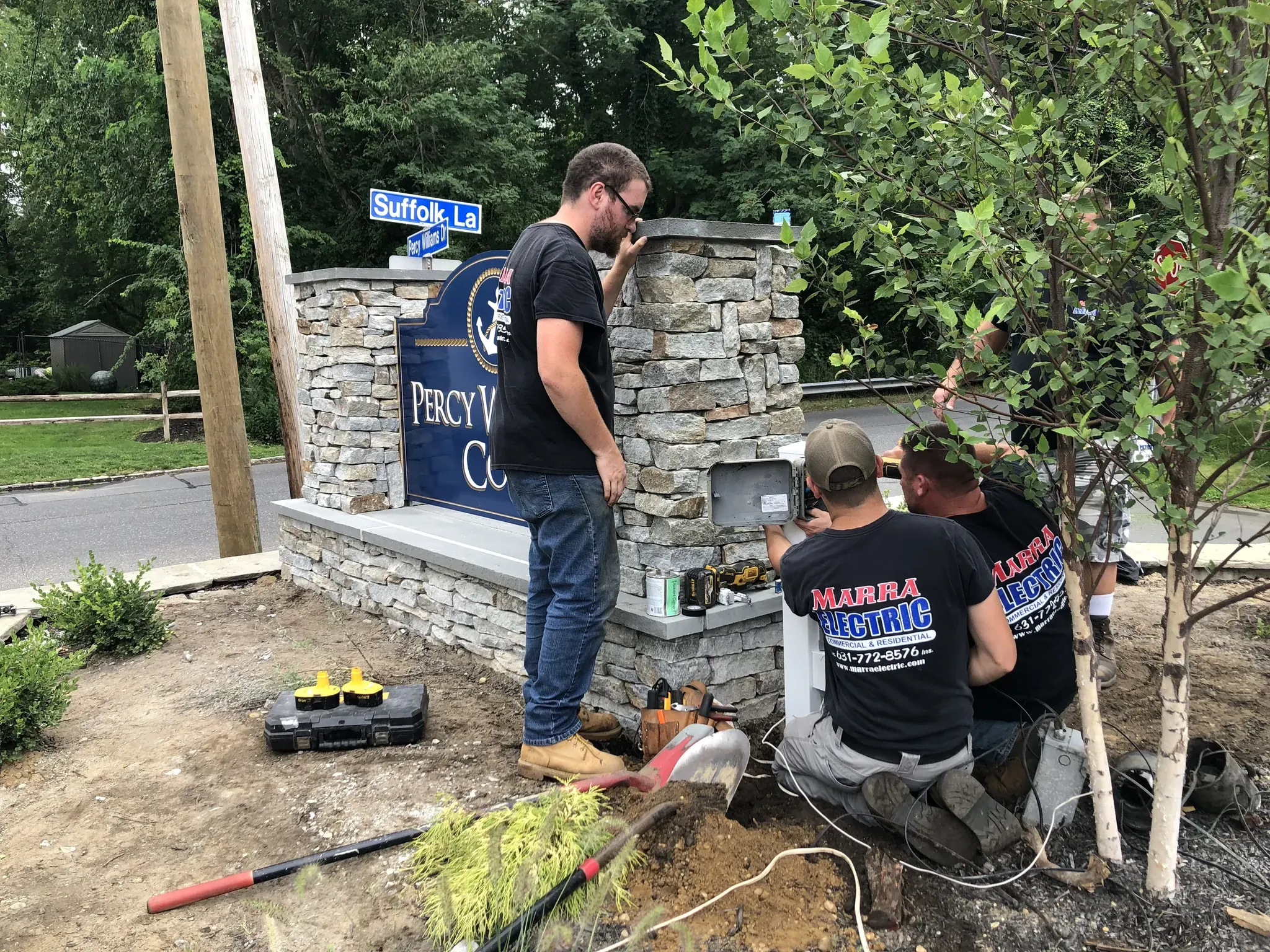
We’ve been serving Sayville and the rest of Suffolk County for over 20 years. We’re fully licensed and insured, and every person who shows up at your door is wearing a uniform and driving a company vehicle. That’s not for show—it’s so you know exactly who’s working in your home.
We’ve earned the Angie’s List Super Service Award seven years running because we do what we say we’re going to do. We show up when we say we will, we tell you the price before we touch anything, and we stand behind the work when it’s done.
Sayville homes deal with specific challenges—coastal air that corrodes outdoor wiring faster, older electrical systems that can’t keep up, and storm season that knocks out power more often than anyone wants to deal with. We’ve seen it all, and we know how to fix it right the first time.
You call or reach out online. We schedule a time that works for you—not just whenever we feel like showing up. When we arrive, we assess what’s going on. If it’s an emergency, we get to work. If it’s a bigger job, we walk you through what needs to happen and give you an upfront price before we start.
No hourly rates that spiral out of control. No surprise charges when the job’s done. You know the cost before we touch a wire. If the job requires a permit—panel upgrades, generator installs, EV charger setups—we handle that too. You’re not chasing down the Town of Islip or dealing with inspections on your own.
Once the work’s done, we test everything, clean up, and make sure you understand what we did. If something doesn’t feel right or you have questions later, you call us. That’s the point of a 100% satisfaction guarantee—it’s not just marketing talk.
Ready to get started?
Panel upgrades are one of the most common jobs we do in Sayville. If your system is tripping breakers constantly or you’re adding an EV charger or generator, your panel probably needs an upgrade. Most older homes are running 60 to 100-amp service. Modern homes need 150 to 200 amps to handle the load. We pull the permits, do the work to code, and make sure your insurance stays valid.
Generator installations keep your power on when storms roll through. Suffolk County sees its share of outages, and a standby generator means your fridge stays cold, your sump pump keeps running, and you’re not sitting in the dark waiting for the utility company. We size it right for your home, handle the gas or propane connection, and set up the transfer switch so it kicks on automatically.
EV charger installation is becoming standard. If you’ve got an electric vehicle or you’re planning to get one, you need a Level 2 charger and the electrical capacity to support it. We assess your current system, upgrade your panel if needed, install the charger where you want it, and handle the permit process with the town. You plug in at home and wake up with a full charge—no more hunting for public charging stations.
Electrical troubleshooting is what we do when something’s wrong but you’re not sure what. Flickering lights, outlets that don’t work, breakers that trip for no clear reason—we track down the issue, explain what’s causing it, and fix it. Sometimes it’s a loose connection. Sometimes it’s a bigger problem. Either way, you’ll know what you’re dealing with before we start the repair.
Panel upgrades in Sayville typically run between $1,500 and $4,000, depending on the size of the upgrade and what your home needs. If you’re going from a 100-amp panel to a 200-amp panel, that’s a bigger job than going from 100 to 150. If your main service line from the street also needs an upgrade, that adds to the cost.
We give you an upfront price after we assess your current setup. That price includes the panel, the labor, pulling the permit, and the inspection. No hourly rates that keep climbing. No surprise fees when the job’s done.
The reason the range is wide is because every home is different. Some panel upgrades are straightforward. Others require more work if the existing wiring is outdated or if the service entrance needs to be relocated. We’ll tell you exactly what your home needs and what it’ll cost before we start.
Yes, for most major electrical work in Sayville, you need a permit from the Town of Islip. Panel upgrades, generator installations, EV charger setups, and any work that involves adding new circuits or changing your service capacity all require permits. Minor repairs like replacing an outlet or a light fixture usually don’t.
Permits aren’t just bureaucracy. They ensure the work is done to code, which protects you legally and keeps your homeowner’s insurance valid. If unpermitted work causes a fire or an issue down the line, your insurance company can deny your claim. That’s a risk you don’t want to take.
We handle the permit process as part of our service. We submit the application, schedule the inspection, and make sure everything passes. You don’t have to deal with the town or worry about whether the work meets code. That’s our job.
Most whole-house generator installations in Sayville take one to three days, depending on the size of the generator and whether we need to run a new gas line or set up a propane tank. If your home already has natural gas service near where the generator will sit, that speeds things up. If we’re installing a propane tank or running a longer gas line, it takes a bit longer.
The actual installation involves setting the generator on a concrete pad, connecting it to your home’s electrical panel through a transfer switch, hooking up the fuel source, and testing the system. We also handle the permit and inspection, which can add a day or two to the timeline depending on the town’s schedule.
Once it’s installed, the generator runs a self-test every week to make sure it’s ready when you need it. When the power goes out, it kicks on automatically within seconds. You don’t flip a switch or do anything—it just works.
A Level 1 charger plugs into a standard 120-volt outlet—the same outlet you use for your phone or your toaster. It’s slow. You’re looking at about 3 to 5 miles of range per hour of charging. If you drive 40 miles a day, you’re plugging in overnight and hoping it’s enough by morning.
A Level 2 charger runs on 240 volts—the same power your dryer or oven uses. It charges 10 to 20 times faster than Level 1, giving you 25 to 30 miles of range per hour. You plug in when you get home, and your car’s fully charged in a few hours. That’s the difference between waiting all night and being ready to go.
Most people who own an EV end up installing a Level 2 charger because Level 1 just doesn’t cut it for daily use. We install the charger, upgrade your panel if needed, and pull the permit with the Town of Islip. You get a dedicated circuit that can handle the load without tripping breakers or overloading your system.
Flickering lights usually mean one of three things: a loose connection somewhere in your electrical system, an overloaded circuit, or a problem with your panel. If it’s just one light, it’s probably a loose bulb or a bad fixture. If it’s multiple lights or your whole house, that’s a bigger issue.
In older Sayville homes, flickering often happens because the electrical system is working harder than it was designed to. You’ve got modern appliances, HVAC systems, and devices pulling power from a panel that was installed decades ago. When something with a high startup draw—like your AC or fridge—kicks on, it pulls so much power that your lights dim for a second.
Loose connections are another common cause, especially in homes near the coast where salt air accelerates corrosion. A corroded connection creates resistance, which causes flickering. We track down where the problem is, tighten or replace the connection, and make sure your system is stable. If your panel is undersized, we’ll tell you that too—because flickering lights are often the first sign that you need an upgrade.
If your breakers trip frequently, your lights flicker when you run multiple appliances, or you’re adding something that draws serious power—like an EV charger, a generator, or central air—you probably need a panel upgrade. Most homes built before 2000 have 60 to 100-amp panels. Modern homes need 150 to 200 amps to handle today’s electrical load.
Another sign is if you’re using power strips and extension cords all over your house because you don’t have enough outlets. That’s not just inconvenient—it’s dangerous. Your panel wasn’t designed to support that much demand, and you’re putting stress on circuits that can’t handle it.
We assess your current panel, look at what you’re running, and tell you whether an upgrade makes sense. Sometimes you just need a few dedicated circuits. Other times, the whole panel needs to be replaced. Either way, you’ll know exactly what your home needs and what it’ll cost before we do anything. Upgrading your panel isn’t just about convenience—it’s about safety, code compliance, and making sure your home can handle the way you actually live.
Other Services we provide in Sayville