Summary:
Something feels off. Maybe there’s a faint burning smell near an outlet. Maybe your breaker tripped again — for the third time this week. Maybe the lights in the kitchen flicker every time the refrigerator kicks on. You’re not sure if it’s a real problem or just an old house doing old house things.
Here’s the honest answer: some of those quirks are harmless. Others are your home’s electrical system telling you something is seriously wrong. We’ve broken down the seven warning signs that require a call to an emergency electrician — not tomorrow, not after the weekend, now.
Why Suffolk County Homes Face Higher Electrical Risk Than Most
The median home in Suffolk County was built in 1970. That means most of the houses in Huntington, Bay Shore, Brentwood, Smithtown, and Patchogue are running electrical systems that are more than 50 years old — systems designed long before central air conditioning, electric vehicle chargers, and modern appliances became standard.
Panels from that era were typically rated for 60 to 100 amps. Today’s homes usually need 150 to 200 amps to operate safely. That gap matters. When an aging system gets pushed past what it was built to handle, the warning signs start showing up — and ignoring them is how small problems become dangerous ones.

What Does an Electrical Emergency Actually Look Like in an Older Home?
Electrical emergencies don’t always look dramatic. There’s rarely a visible flame or a clear moment where something obviously breaks. Most of the time, it’s subtle — a smell that comes and goes, a breaker that keeps tripping the same circuit, an outlet that feels warm when nothing’s plugged into it. These are the things that homeowners in older Suffolk County homes tend to normalize, and that normalization is exactly what makes them dangerous.
A burning smell near an outlet or inside a wall is one of the most serious warning signs there is. It usually means wire insulation is overheating — which is how electrical fires start inside walls before anyone knows there’s a problem. The fact that the smell fades doesn’t mean the problem is gone. Intermittent burning smells often indicate an arcing fault, where electricity is jumping across a gap in damaged wiring. Arcing faults are responsible for more than 28,000 home fires every year in the United States.
Sparking from an outlet — especially a larger spark, or one that happens more than once — is another sign that something is wrong at the connection level. A brief, small arc when you plug something in can be normal. A visible flash, a pop, or repeated sparking is not. The same goes for any outlet or switch that feels warm or hot to the touch. Heat where there shouldn’t be heat means resistance where there shouldn’t be resistance, and that’s a fire hazard.
Then there’s the shock. Any time you feel a tingle or an actual shock from an outlet, a switch, or even a metal appliance, that’s a grounding problem — and grounding problems don’t fix themselves. They get worse.
Circuit Breaker Keeps Tripping? Here's What It's Actually Telling You
A circuit breaker that trips once after you plug in too many things at once is doing exactly what it’s supposed to do. A breaker that trips repeatedly on the same circuit — especially without an obvious cause — is a different story entirely.
Breakers trip because they detect more current than the circuit is rated to handle. When that happens over and over, it means one of a few things: the circuit is genuinely overloaded and needs to be upgraded, there’s a short circuit somewhere in the wiring, or there’s a ground fault — a place where electricity is finding an unintended path. None of those are problems you want to keep resetting your way through. Every time you flip that breaker back without understanding why it tripped, you’re potentially allowing a dangerous condition to continue building.
A breaker that won’t reset at all — one that trips immediately when you try to flip it back — is telling you even more clearly that something is wrong downstream. Don’t force it. Don’t try to bypass it. Call us.
Buzzing or humming from your electrical panel is another sign that shouldn’t be ignored. A healthy panel runs quietly. Noise from inside the panel usually means a breaker is struggling — either it’s failing mechanically, or it’s dealing with a load it wasn’t designed to handle. In homes with Federal Pacific Electric Stab-Lok panels — which were widely installed across Long Island during the 1950s through the 1980s — this is especially serious. Those panels are known to be defective and are a recognized fire hazard. If your home still has one, that’s worth a conversation with us regardless of whether you’re having problems right now.
Flickering lights are worth mentioning here too. A single light that flickers usually just means a loose bulb. Lights that flicker throughout the house — or that dim noticeably when a large appliance starts up — point to something more significant: an overloaded circuit, loose wiring at the panel, or a service capacity issue. In Suffolk County homes running on undersized panels, this is especially common during summer months when central air conditioning is drawing heavy loads alongside everything else.
Emergency Electrical Repair: What to Do Right Now If You See These Signs
If you’re seeing any of these warning signs, the most important thing you can do is stop using the affected outlet, circuit, or appliance immediately. If there’s a burning smell or visible sparking, turn off the circuit at the breaker panel if you can do so safely. If there’s any sign of active fire — smoke, visible flames, heat from the wall — get everyone out of the house and call 911 first.
For everything short of that, call us for emergency electrical repair. Not tomorrow. Not after you look it up online for an hour. These problems don’t resolve on their own, and most of them get worse the longer they’re left alone.
Is It a PSEG Long Island Problem or a Problem Inside Your Home?
This is one of the most common questions we hear, especially after a storm. Suffolk County gets hit hard by nor’easters in the winter and tropical systems in the summer, and PSEG Long Island outages are a regular part of life here. So when part of your house loses power, it’s reasonable to wonder whether the problem is on their end or yours.
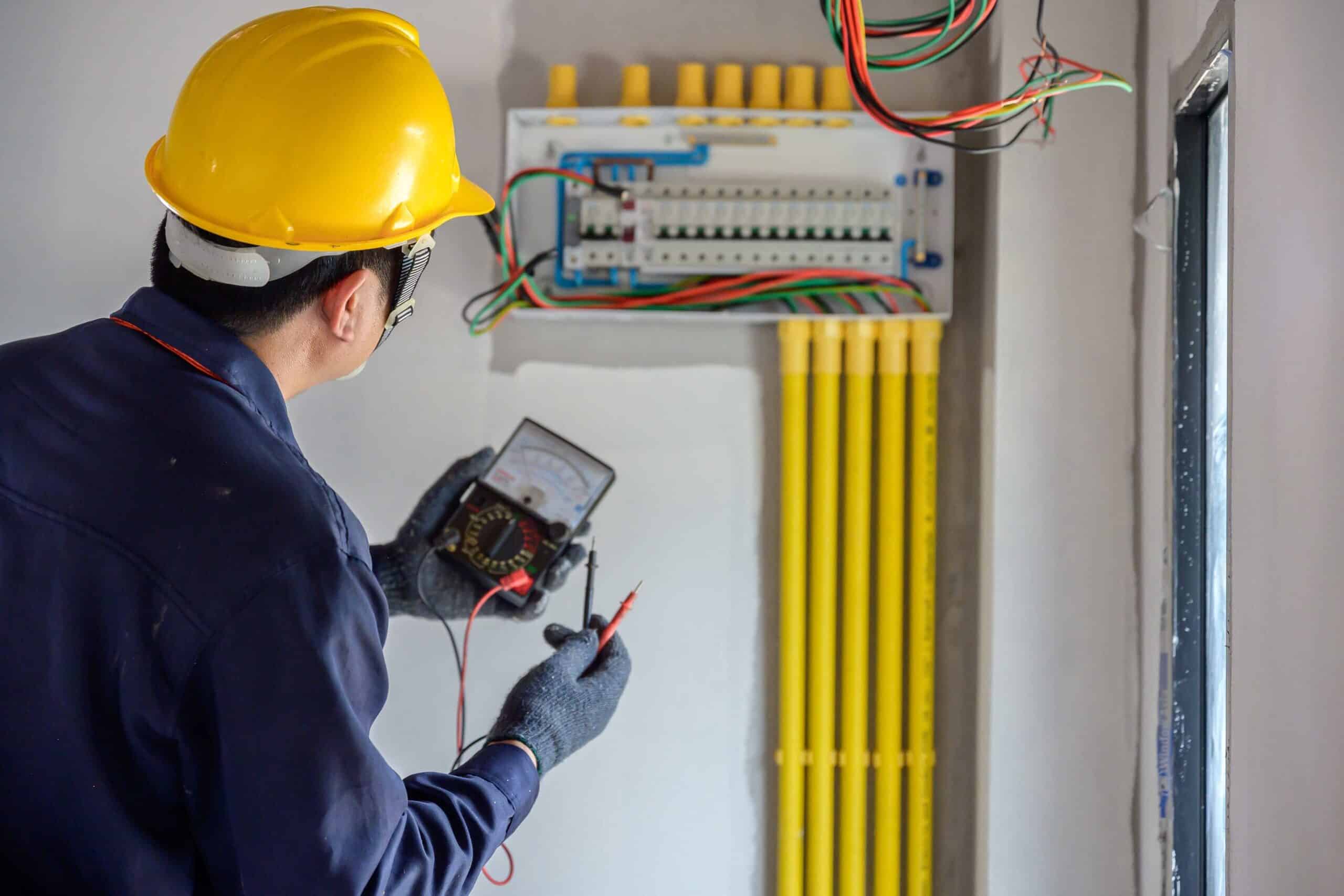
Here’s a straightforward way to think about it: if your neighbors still have power and specific circuits in your home are dead, it’s almost certainly an internal electrical problem. PSEG handles everything up to and including your meter. Everything past the meter — your panel, your wiring, your outlets — is your responsibility, and it requires a licensed electrician, not a utility call.
After a major storm, it’s also worth knowing that power surges — which happen when utility power is restored — can damage electrical panels, appliances, and sensitive electronics. If you lose power during a storm and notice problems when it comes back on (breakers that won’t reset, outlets that stopped working, a burning smell you didn’t notice before), that’s worth having inspected. Hurricane Sandy in 2012 caused widespread electrical damage across Suffolk County, and many of those issues showed up not during the storm, but after power was restored. We handle post-storm electrical troubleshooting regularly for homeowners across the county — from Babylon to Riverhead — and the issues we find are almost always things that weren’t visible from the outside.
A partial power loss — where half your house has power and half doesn’t — is a specific pattern worth knowing about. This usually points to a problem with one of the two legs of service coming into your panel, which is a utility issue, or a failed main breaker or double-pole breaker inside your panel, which is an internal issue. Either way, it’s not something to troubleshoot on your own.
How Do You Know If an Emergency Electrician Is Actually Licensed in Suffolk County?
This question matters more than most people realize. New York State doesn’t issue a single statewide electrician license — licensing is handled at the local level, which means a license from Nassau County or New York City doesn’t automatically authorize someone to work in Suffolk County. When you’re calling someone at 10 p.m. on a Friday night because you smell something burning near your panel, the last thing you want to find out afterward is that the person who worked on your home wasn’t properly licensed for your county.
In Suffolk County, licensed Master Electricians are credentialed through Suffolk County Consumer Affairs. They’re required to carry general liability insurance and workers’ compensation coverage, and they have to complete continuing education every two years to keep their license current. When you hire someone who holds that license, you’re also getting someone who understands the local permit and inspection process — which matters when you eventually sell your home or file an insurance claim.
A few things worth verifying before you let anyone work on your electrical system: ask specifically about their Suffolk County Master Electrician license, confirm they carry active insurance, and check whether they’ll pull permits for any work that requires them. Skipping permits is a shortcut that can create serious problems down the road — problems that show up at the worst possible time, like during a home sale or after a fire.
We hold a Suffolk County Master Electrician license and carry full general liability and workers’ compensation insurance. Every job we do pulls the required permits, and every permit gets inspected by the county. We’ve been serving Suffolk County since 2004, and we’ve earned the Angie’s List Super Service Award seven consecutive years in a row — not because of marketing, but because we show up, do the work right, and don’t leave you guessing about the bill. Every price is agreed on before a single tool comes out. If you’re not satisfied with the work, we come back and fix it — no questions asked, no extra charges.
When to Call an Emergency Electrician in Suffolk County
If you’re smelling burning near an outlet, dealing with a breaker that won’t stay reset, noticing sparks, feeling shocks, or watching your lights flicker every time the AC kicks on — don’t wait it out. These aren’t quirks of an older home. They’re warning signs of a system that’s being pushed past its limits, and in a county where most homes are running on 50-year-old wiring, the risk is real.
The good news is that most electrical emergencies are fixable quickly when caught early. The cost of a service call is a fraction of what a house fire costs — financially, emotionally, and in every other way that matters.
If you’re not sure whether what you’re seeing qualifies as an emergency, call us anyway. We offer free estimates, we’re available 24/7 across all of Suffolk County, and we’ll give you a straight answer about what you’re dealing with. Marra Electric has been doing exactly that for homeowners from Huntington to Riverhead for over 20 years — and we’re not going anywhere.