Summary:
You bought an electric vehicle to make your life easier. Then you plugged into a standard outlet, woke up to 40% charge, and realized something had to change. A Level 2 home charging station fixes that — but figuring out what the installation actually involves can feel like its own project. What does an electrician actually do? Do you need a permit? What if your panel can’t handle it? You may also want to explore available EV charging incentives and tax credits that can help offset installation costs. This guide answers all of that plainly and honestly, so you know exactly what you’re signing up for before you make a single call.
What a Home EV Charger Installation Actually Involves
A home EV charger installation is more than mounting a box on your garage wall. It starts with a real assessment of your home’s electrical system, runs through permitting with your local town, and ends with a final inspection before the charger ever goes live.
The full process typically takes two to three weeks from start to finish — but the actual hands-on work is usually completed in a single day. Most straightforward installations, where the panel has enough capacity and the charger location is close to it, take somewhere between two and four hours. More complex jobs — panel upgrades, detached garages, finished walls — can stretch into a full day.

Step-by-Step: What Happens From Assessment to Final Inspection
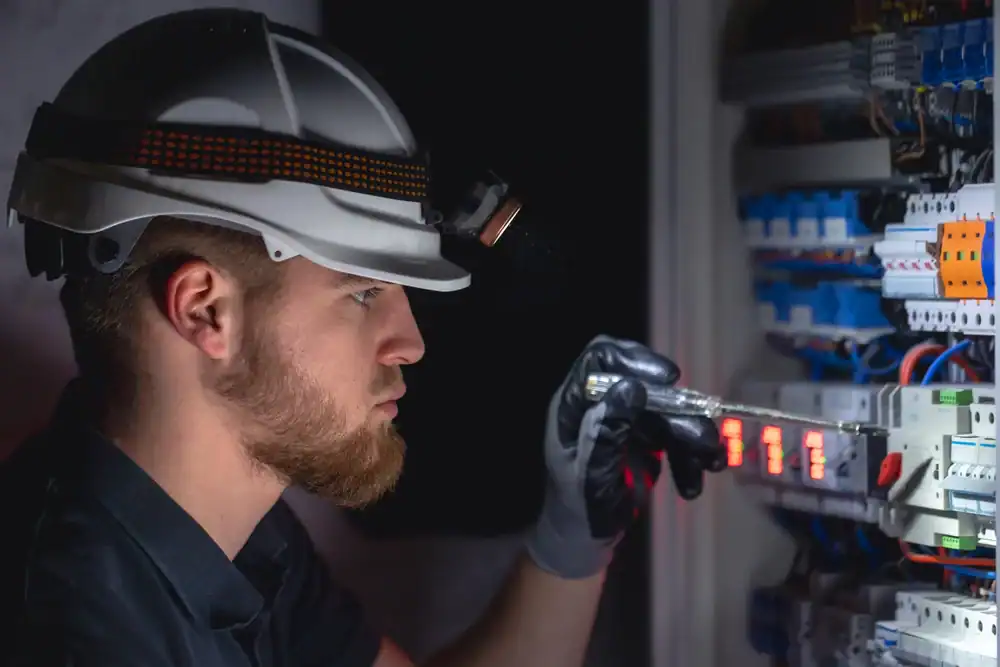
The first thing we do is evaluate your electrical panel. We’re looking at your current load — what your home is already pulling — and whether adding a dedicated 240-volt circuit for EV charging is something your system can safely handle. This isn’t a formality. It’s the step that determines everything else about your project.
If your panel has the capacity, we move into planning the installation layout. That means figuring out the best route for the new circuit, the optimal charger location, and whether the installation is straightforward or involves running wires through finished walls or out to a detached garage. We walk through this with you before anything is quoted or scheduled, so you’re not guessing at costs.
Once we have a clear scope, we pull the permit. In Suffolk County, a Level 2 charger requires a building permit from your municipality — no exceptions. The rules vary from town to town. Babylon, Islip, Huntington, Smithtown, Brookhaven, Riverhead, Southampton, and East Hampton each have their own building departments with their own requirements. We’re registered with local townships across Suffolk County and handle the entire permit process on your behalf. You don’t need to visit town hall or chase down an inspector.
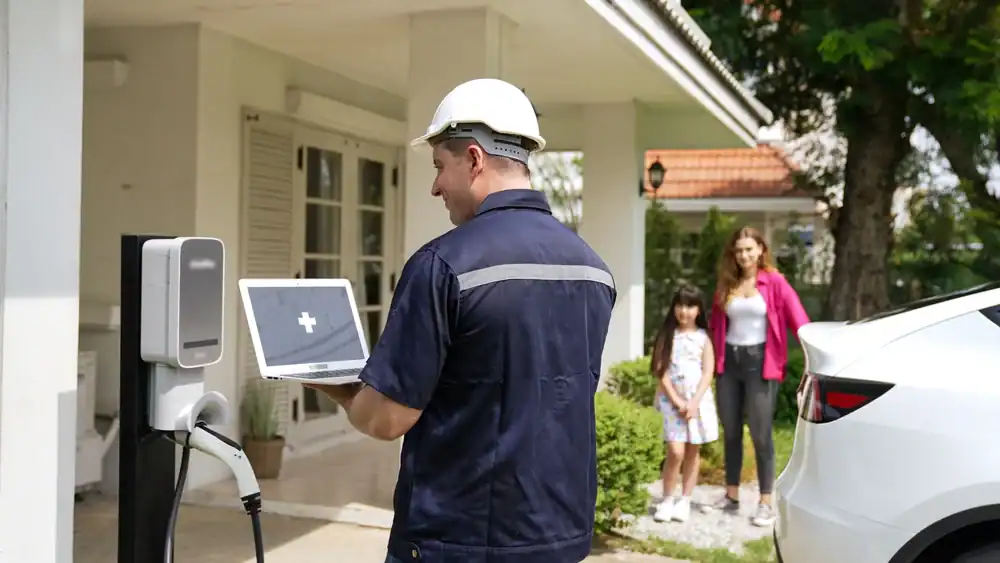
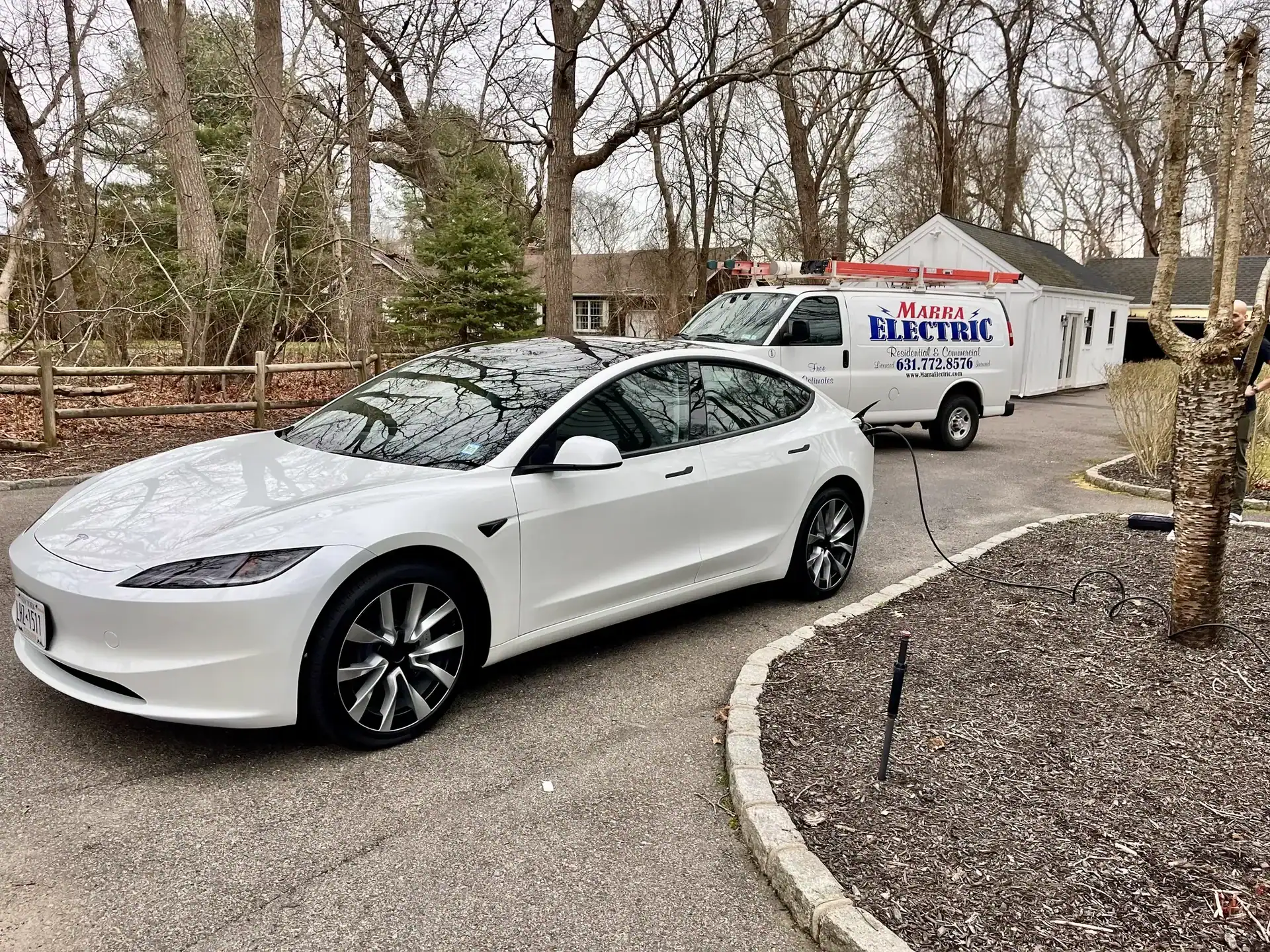
On installation day, we run the dedicated circuit, mount the charger, make all the connections, and verify everything is working correctly before we leave. After that, a final inspection is scheduled — either through the town directly or a certified inspection agency. The inspection confirms the work meets code, which matters for your homeowner’s insurance and for any future home sale.
Does Your Suffolk County Home Need a Panel Upgrade First?
This is the question most homeowners are quietly worried about before they even pick up the phone. The honest answer is: most homes don’t need one, but a meaningful percentage do — and it’s worth understanding why before you assume the worst.
A Level 2 charger runs on a dedicated 240-volt circuit and typically requires a 40- to 50-amp breaker. If your panel is already at 200-amp service and isn’t heavily loaded, you’re usually in good shape. The problem comes up in older homes — and Suffolk County has a lot of them. Much of the county’s housing stock was built during the postwar suburban expansion of the 1950s through the 1980s. Those homes were wired for a completely different era of electrical demand. A 100-amp panel that handled a family’s needs in 1965 is under a lot more pressure today, before you even add a car charger to the mix.
When a panel upgrade is necessary, we handle the full process, including coordination with PSEG Long Island. That coordination matters because upgrading to 200-amp service requires a temporary power disconnection — typically four to six hours. PSEG scheduling for that disconnection isn’t something most homeowners know how to navigate on their own, and delays in that process can push your whole project back. We manage it so you don’t have to.
The cost for a panel upgrade to 200-amp service typically runs between $2,000 and $3,500, including permits and utility coordination. That’s a real number, not a range designed to get you on the phone. It’s also worth knowing that a panel upgrade isn’t just a cost center — it increases your home’s electrical capacity for everything, not just the EV charger, and it adds genuine value to the property.
EV Charger Installation Costs, Permits, and Tax Credits in Suffolk County
Cost is usually the first question, and it deserves a straight answer. A typical Level 2 home EV charger installation in Suffolk County runs around $1,000 for the complete job — charger, labor, circuit, and permits. Permit fees across Suffolk County municipalities generally fall between $50 and $200, with inspection fees adding another $100 to $200 on top of that.
What moves the number up is complexity: a panel upgrade, a long circuit run, a detached garage, or finished walls that require more careful wire routing. We assess all of that during the free estimate so you have a real number before any work begins — not a ballpark that shifts after the fact.

Do You Need a Permit for an EV Charger Installation in Suffolk County?
Yes — and this is one area where cutting corners has real consequences. Across Suffolk County, a Level 2 EV charger installation almost always requires a building permit because it involves a dedicated 240-volt circuit, which qualifies as major electrical work under local building codes.
Skipping the permit might seem like a way to save time or money, but it can void your homeowner’s insurance if something goes wrong. It can also create serious complications when you sell your home — buyers’ attorneys and home inspectors look for unpermitted electrical work, and an unpermitted charger installation can hold up or kill a sale. The permit exists to protect you, not to create paperwork.
We handle every permit application as part of the job. Because Suffolk County is divided into multiple towns and villages — each with its own building department — having a contractor who is already registered locally makes a real difference in how smoothly and quickly the permit process moves. We know the inspectors, we know the forms, and we know what each town’s department expects to see.
After installation, a final inspection is scheduled to confirm the work meets the National Electrical Code, specifically Article 625, which governs EV charging equipment. The inspection is what closes the loop and makes the installation fully legal and insurable. We coordinate that too.
Federal Tax Credits and PSEG Rebates That Can Offset Your Installation Cost
There’s a federal tax credit available right now that most homeowners either don’t know about or assume they won’t qualify for. In 2025, the IRS offers a 30% tax credit on EV charger installation costs, capped at $1,000 for residential installations. That credit applies to the full project cost — labor, hardware, panel upgrade work, and permit fees. To claim it, you file IRS Form 8911 with your taxes for the year the charger was placed in service.
Eligibility is based on census tract location, and IRS guidance published in September 2024 confirmed that roughly two-thirds of Americans qualify. If you’re in Suffolk County and considering an installation before year-end, it’s worth checking your eligibility — the credit applies to the tax year the work is completed, which is why fall installations tend to spike as homeowners try to capture it before December 31st.
On the utility side, PSEG Long Island offers programs for customers looking to reduce their overall energy costs, including incentives that can pair with home EV charging. If you’re thinking about combining a charger installation with solar or other upgrades, PSEG’s net metering programs are worth exploring as part of the broader conversation.
Between the federal credit and available utility programs, the real out-of-pocket cost of a home charging station installation is often meaningfully lower than the sticker price suggests. We can walk you through what’s available when we come out for the free estimate.
Ready to Install a Home EV Charger in Suffolk County? Here's What to Do Next
The process isn’t complicated when you know what to expect. We assess your panel, design the circuit, pull the permit, complete the installation in a day, and schedule the final inspection. Most projects are done start to finish in two to three weeks. Most homeowners don’t need a panel upgrade. And with the federal tax credit, the net cost is often lower than people assume going in.
What matters most is working with someone who knows Suffolk County’s permitting landscape, has a real track record in the area, and gives you a straight price before any work begins — not after. No subcontractors, no surprises, no chasing someone down after the job is done.
If you’re ready to stop relying on public chargers and wake up every morning to a full battery, we offer free estimates and a free panel inspection for every EV charger project across Suffolk County. Give us a call and we’ll tell you exactly what your home needs and what it will cost.