Summary:
Understanding EV Charger Types and Which One You Actually Need
Not all EV chargers work the same way. The charging speed, electrical requirements, and costs vary significantly depending on which type you choose.
Level 1 chargers plug into standard 120-volt household outlets. They’re the slowest option, adding only 3-5 miles of range per hour. If you have a 60 kWh battery, you’re looking at 40-50 hours for a full charge. That might work if you barely drive and can leave your car plugged in for days, but for most Suffolk County residents commuting to work or running daily errands, it’s not practical.
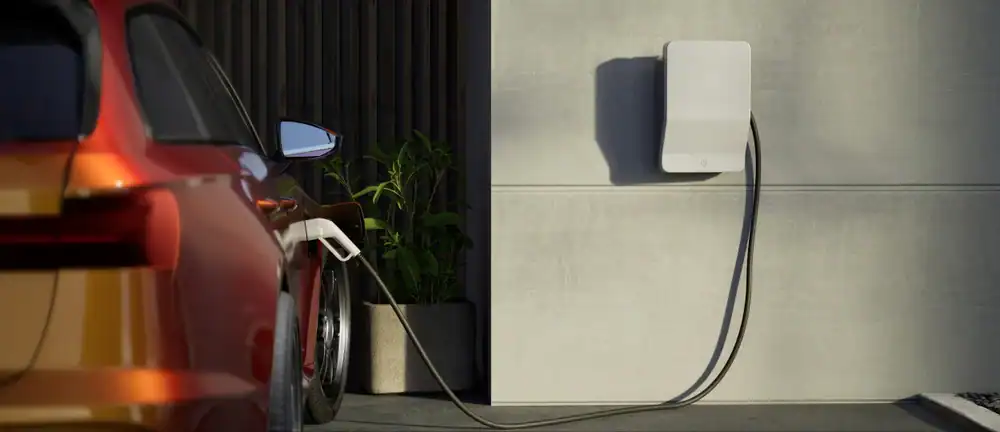
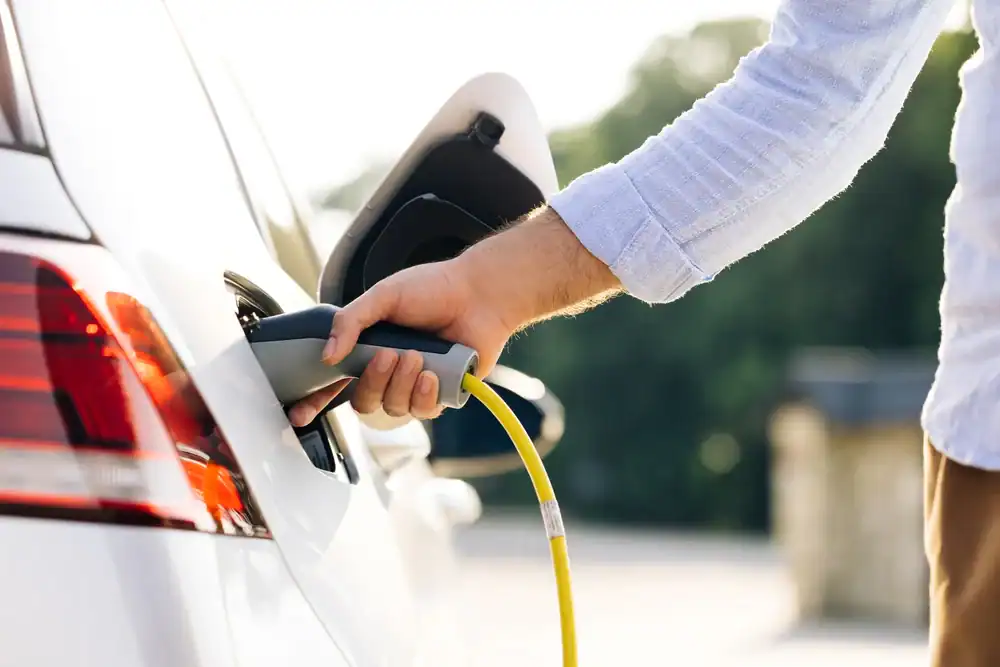
Level 2 chargers run on 240-volt power, the same voltage your dryer uses. These add 25-40 miles of range per hour and can fully charge most electric vehicles in 4-8 hours. This is what most homeowners install because it actually keeps up with real-world driving. You plug in when you get home, and your car is ready the next morning.

How Level 2 Charging Changes Your Daily Routine
Level 2 charging isn’t just faster. It fundamentally changes how you use your electric vehicle.
With a Level 2 charger installed in your garage or driveway, you’re no longer calculating whether you have enough charge to make it through tomorrow. You’re not mapping out which public charging stations are on your route or hoping one is actually available when you need it. You’re definitely not paying premium rates at commercial charging stations or dealing with the hassle of sitting in your car for 30 minutes at a fast charger.
Instead, you pull into your driveway, plug in your car, and forget about it. By morning, you have a full charge. Every single day. It’s as simple as charging your phone overnight, except it’s your car.
For Suffolk County residents, this matters even more. If you’re commuting to Manhattan, that’s easily 100+ miles round trip depending on where you live. Add in evening errands, weekend trips out to the Hamptons, or just normal driving around town, and you need reliable charging that keeps pace with your actual life.
Level 2 charging gives you that flexibility. Forgot to plug in last night? No problem. A few hours of charging during the day gets you back on track. Compare that to Level 1 charging, where forgetting to plug in means you’re scrambling to find a public charger or significantly limiting your driving for the next few days.
The charging speed also means you’re not tied to a rigid schedule. You don’t need to plug in for 48 hours straight to get a full charge. You can top off as needed, charge for a few hours if that’s all you need, or let it run overnight for a complete fill-up. That kind of flexibility eliminates the range anxiety that makes some people hesitate about going electric in the first place.
And here’s something most people don’t think about until they experience it: home charging is significantly cheaper than using public charging stations. You’re paying residential electricity rates, often during off-peak hours when rates are even lower, instead of the premium pricing at commercial chargers. Over time, that adds up to real savings.
Why DC Fast Charging Isn't a Home Solution
You’ve probably seen DC fast chargers at highway rest stops or commercial locations. These can charge an EV to 80% in about 30 minutes, which sounds appealing. So why doesn’t everyone install one at home?
DC fast chargers require massive electrical infrastructure. We’re talking 480-volt systems with equipment costs ranging from $25,000 to $50,000, plus installation costs that can easily hit $50,000 to $150,000. They need utility-grade electrical service, specialized equipment, and ongoing maintenance that makes them impractical for residential use.
They’re also not necessary for home charging. The whole point of home charging is convenience, not speed. You’re parking your car for hours anyway, whether overnight or during the workday. Level 2 charging gives you a full battery in that timeframe without the astronomical costs and electrical demands of DC fast charging.
DC fast charging also puts more stress on your vehicle’s battery over time. Using it occasionally for road trips is fine, but relying on it for daily charging can reduce battery lifespan. Level 2 charging is gentler on your battery while still providing all the charging speed you actually need for daily use.
For Suffolk County homeowners, Level 2 is the sweet spot. It’s fast enough to keep up with daily driving, affordable enough to actually install, and works with your home’s electrical system with reasonable upgrades if needed. That’s why nearly every residential EV charger installation uses Level 2 technology.
The only time you’ll use DC fast charging is on longer road trips when you need a quick top-up while you’re away from home. For everything else, your Level 2 home charger handles it without the complexity, cost, or electrical requirements of commercial-grade fast charging equipment.
What Electric Car Charger Installation Actually Costs in Suffolk County
Let’s talk about money, because this is probably what you’re really wondering about.
The charger itself typically costs $500 to $700 for a quality Level 2 unit. You can find cheaper options, but this price range gets you a reliable charger with the features most people actually use. Professional installation labor runs $400 to $1,200 in most cases, though that number can climb if your home needs electrical upgrades.
Permits in Suffolk County typically cost $150 to $350 depending on which municipality you’re in. Towns like Huntington, Babylon, and Smithtown each have slightly different fee structures, but they all fall within that general range.
Here’s where it gets more variable. If your electrical panel can handle the additional load of a Level 2 charger, you’re looking at the lower end of that cost spectrum. But many Suffolk County homes, especially those built before 2000, have 100-amp electrical service that needs upgrading to safely support an EV charger plus all your other electrical demands.
When You Need a Panel Upgrade and What It Costs
Panel upgrades are one of the biggest variables in EV charger installation costs, so let’s break down when you need one and what it actually involves.
A Level 2 charger draws 30-50 amps continuously. That’s substantial compared to most household circuits that use 15-20 amps intermittently. Your dryer might pull 30 amps when it’s running, but it’s not running for eight hours straight every single night. Your EV charger is.
If you have a 100-amp service panel and it’s already handling your central air, electric water heater, kitchen appliances, and everything else in your home, adding a 40-amp EV charger can push you past safe capacity. That’s not a guess or a maybe—it’s actual math that licensed electricians calculate based on your home’s total electrical load.
Panel upgrades to 200-amp service typically cost $2,000 to $3,500 in Suffolk County. That includes the new panel, permits, labor, and coordination with PSEG Long Island for the temporary power disconnection, which usually lasts 4-6 hours.
Yes, that’s a significant expense on top of the charger installation itself. But here’s the thing: you’re not just upgrading for your EV. You’re upgrading your entire home’s electrical infrastructure to handle modern electrical demands. That upgraded panel supports everything you plug in, not just your car charger.
Think of it as future-proofing your home. As more appliances and systems go electric, that 200-amp service gives you the capacity to handle them without worrying about overloading your system. It’s also something that adds value when you eventually sell your home, because buyers increasingly want homes that can handle electric vehicles and modern electrical loads.
The upgrade process is more involved than a standard charger installation. It requires coordination with PSEG Long Island to temporarily disconnect power, usually scheduled for a specific day when you can plan around being without electricity for several hours. The actual work involves replacing your main service panel, upgrading the meter base if needed, and ensuring all existing circuits are properly transferred to the new panel.
A qualified electrician handles all the utility coordination, permitting, and scheduling to minimize disruption. Most homeowners are surprised how smoothly it goes when handled by someone who does this regularly and knows how to work with local utilities and building departments.
Not every home needs a panel upgrade. If you have a newer home with 200-amp service and available capacity, you might be able to add an EV charger without any panel work. That’s why the first step is always a proper load calculation by a licensed electrician who can tell you exactly what your home needs.
Permits, Inspections, and Why They Actually Matter
Let’s address something that makes some homeowners consider cutting corners: permits and inspections.
Nearly every Level 2 charger installation in Suffolk County requires an electrical permit. This isn’t bureaucratic red tape designed to annoy you. It’s a safety validation that ensures your installation meets electrical codes and won’t create fire hazards or dangerous conditions.
The permit process involves submitting plans to your local building department, paying the permit fee, having the work inspected by a county electrical inspector, and receiving approval that everything was done correctly. Your electrician handles the paperwork and scheduling, so you’re not navigating town hall bureaucracy yourself.
Some Suffolk County municipalities have actually streamlined EV charger permitting because they recognize the importance of supporting electric vehicle adoption. Babylon Town, for example, has expedited review processes for residential charging station installations that meet standard requirements. That means faster approvals and less waiting around.
The inspection itself verifies that your installation uses proper wire gauges, has correct circuit protection, includes appropriate grounding, and meets all safety requirements. The inspector is checking that the work was done right, not trying to find reasons to fail you.
Here’s why this matters more than you might think: permits and inspections protect you in multiple ways. They ensure code compliance, which means your installation is actually safe. They validate your insurance coverage, because insurance companies can deny claims for unpermitted electrical work. And they provide documentation for warranty claims if something goes wrong down the road.
Skipping permits creates liability issues that can cost you thousands if problems arise later. If there’s an electrical fire and investigators discover unpermitted work, your insurance might refuse to cover the damage. If you sell your home and the buyer’s inspector finds unpermitted electrical work, you’re looking at costly remediation or lost sales.
Working with a licensed electrician who handles permits properly means your installation meets all Suffolk County requirements from the start. No delays, no liability issues, no insurance problems. Just a properly installed charger that’s documented, inspected, and safe.
The permit fees—that $150 to $350 we mentioned earlier—are a small price to pay for that peace of mind and legal protection. And when you’re already investing in a home charging station, cutting corners on permits to save a couple hundred dollars makes no sense when it puts your entire investment and your home’s safety at risk.
Getting Your EV Charger Installation Done Right
Installing an electric car charger at home is more straightforward than most people expect, but it’s not a DIY project. You need proper electrical knowledge, experience with local codes, and the ability to handle permits and inspections correctly.
The charger types, costs, and requirements we’ve covered give you a realistic picture of what to expect. Level 2 charging is the practical choice for Suffolk County homeowners. Costs typically range from around $2,000 to $5,000 depending on your home’s electrical situation. Permits and inspections are necessary for safety and legal protection. And installation timelines usually run 2-4 weeks from initial assessment to final activation.
What matters most is working with someone who does this regularly and knows Suffolk County’s specific requirements, municipalities, and common home electrical systems. That expertise makes the difference between a smooth installation and one filled with delays, unexpected costs, and potential safety issues.
If you’re ready to stop relying on slow Level 1 charging or expensive public charging stations, we can assess your home’s electrical capacity, provide upfront pricing, handle all permits and coordination, and install your Level 2 charger correctly the first time. With over 20 years serving Suffolk County, we understand exactly what local homes need and how to navigate the process efficiently.