EV Charger Installation in West Sayville, NY

Charge at Home Without the Guesswork or Risk

Your electrical panel gets evaluated first, your charger gets installed to code, and you wake up to a full battery every morning.
[Add Trustindex Button Here]
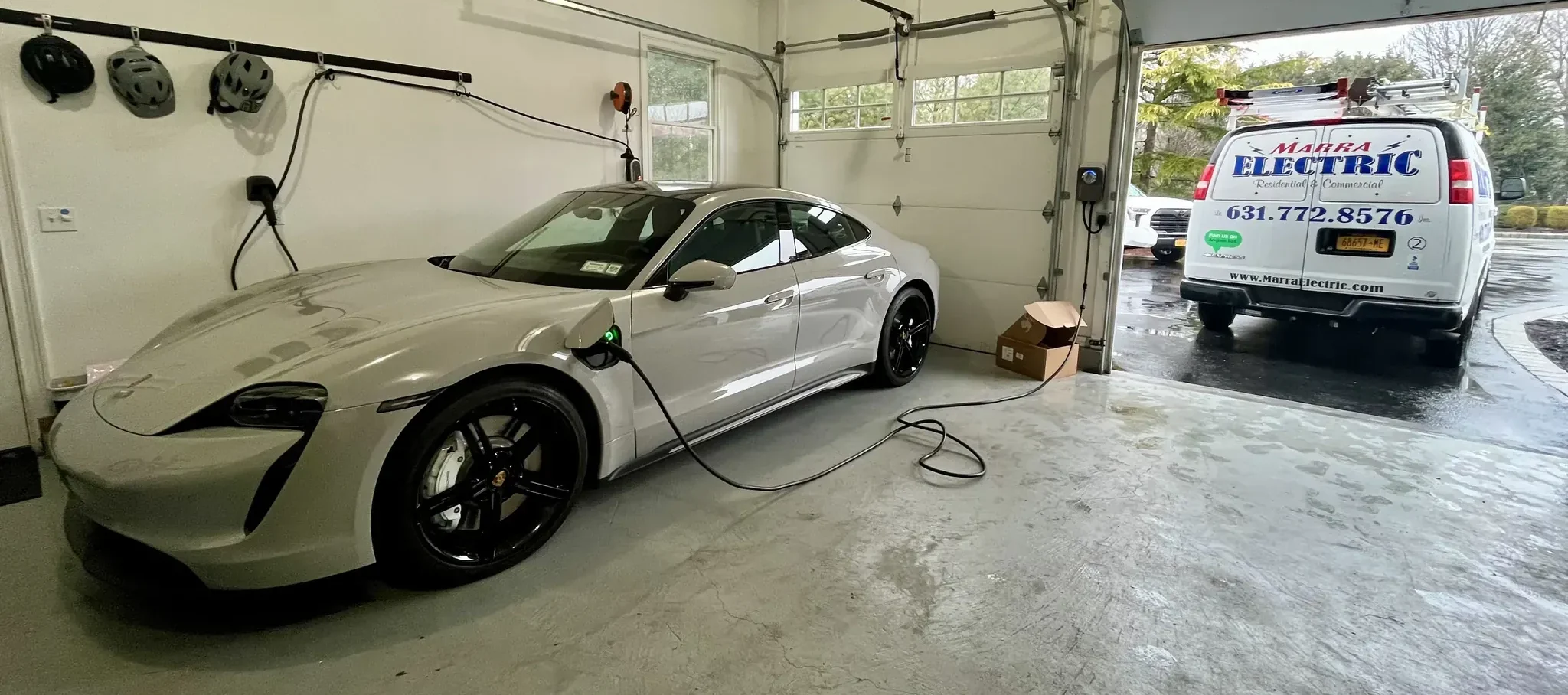
A white electric car charges in a garage, plugged into a wall outlet. Nearby, a cardboard box is on the floor. Outside, a Maria Electric commercial electrician Suffolk County service van is parked in the driveway on a rainy day.
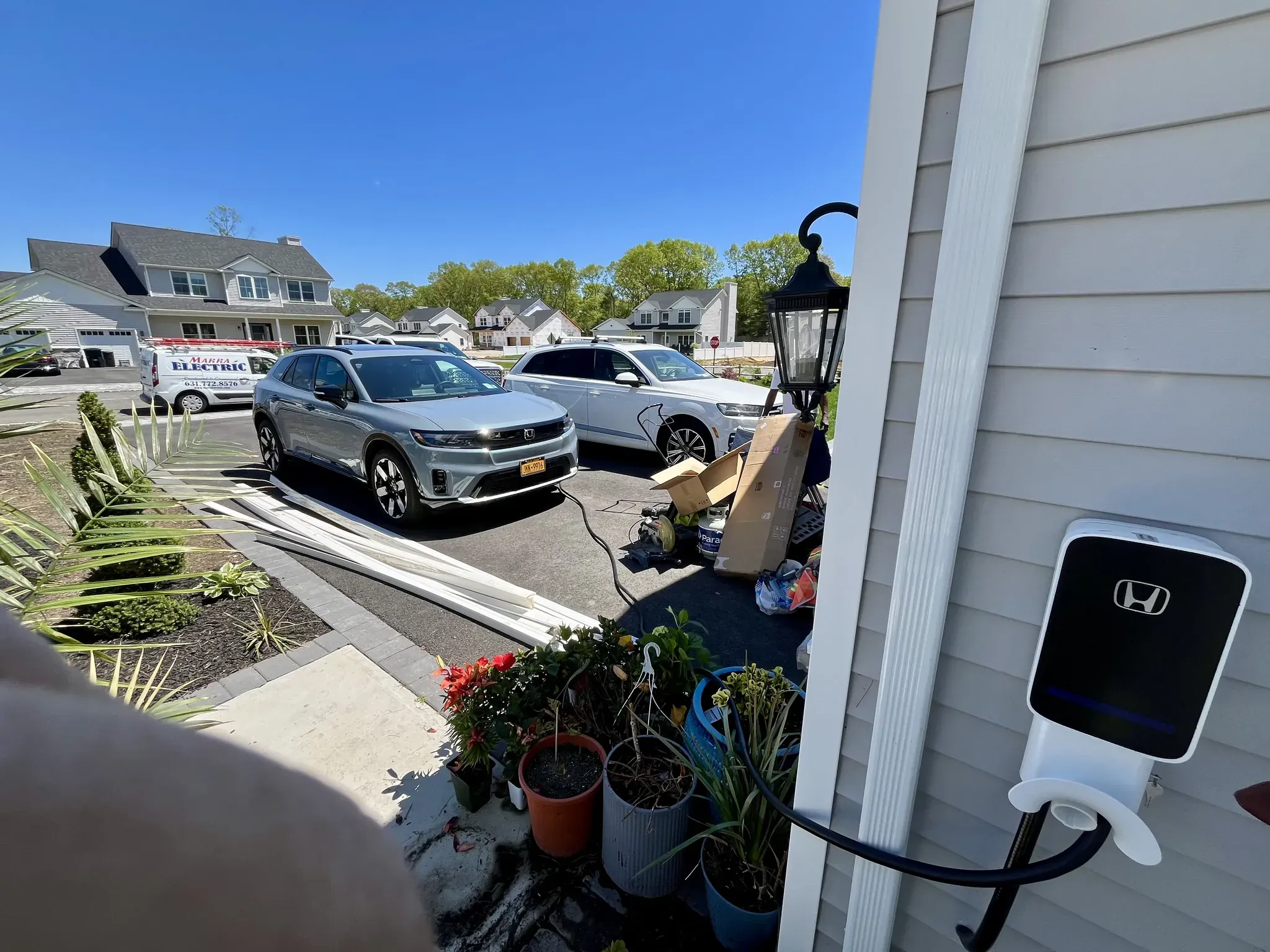
Two silver Honda electric vehicles are parked in a NY suburban driveway near a house. A Honda EV charger, expertly installed by a residential electrician Suffolk County, is mounted on the garage wall. It is a sunny day with plants and boxes nearby.

Home EV Charging Station Installation West Sayville

Stop Planning Your Life Around Public Chargers

You bought an electric vehicle to simplify things. Driving to a charging station, waiting in line, and paying premium rates wasn’t part of the plan.

A Level 2 EV charger installation in West Sayville changes that. You plug in when you get home, and your car charges while you sleep. Most EVs go from empty to full in four to eight hours, adding 25 to 40 miles of range per hour.

That means your daily commute to work or into the city is covered without a second thought. No more range anxiety. No more detours. Just reliable charging that fits your schedule, not someone else’s.

And if you charge during off-peak hours, your electric bill stays lower than what you’d pay at a public station. Over a year, most Suffolk County homeowners save between $1,200 and $1,800 compared to fueling a gas vehicle. That’s real money back in your pocket.

Licensed EV Charger Electrician West Sayville

We've Been Doing This Since Before EVs Went Mainstream

We’ve served Suffolk County since 2004. We’ve handled electrical panel upgrades, generator installs, and commercial work across West Sayville and the surrounding area for over 20 years.

When EV charger installations started becoming a regular request, we didn’t just add it to the list. We got certified, learned the permit requirements specific to Suffolk County, and figured out how to handle the older homes that make up most of West Sayville’s housing stock.

We’ve earned the Angie’s List Super Service Award seven years running because we show up on time, explain what needs to happen before we start, and don’t surprise you with extra charges after the fact. You get upfront pricing, a licensed and insured team, and a 100% satisfaction guarantee on every job.

A black electric car charges in a driveway, the cable plugged in. Two white Mario Electric vans—experts as a residential electrician Suffolk County—are parked on the street before suburban houses with autumn trees.

Electric Car Charger Installation Process West Sayville

Here's What Happens from Start to Finish

First, we evaluate your electrical panel. Many homes in West Sayville were built before 1990 and still run on 100-amp service. If that’s your situation, you’ll need a panel upgrade to 200 amps before we can safely install a Level 2 charger. We’ll tell you that upfront during the free estimate.

Once your panel can handle the load, we install a dedicated 240-volt circuit for your charger. That’s the same voltage your dryer uses, but it needs its own line to avoid overloading your system. We mount the charging unit where you want it—usually in your garage or driveway—and run the wiring through your walls or conduit, depending on your home’s layout.

After installation, we pull the required permits and schedule the inspection with Suffolk County. This isn’t optional. It’s how you know the work meets electrical code and won’t create a fire hazard down the line.

The whole process typically takes one day if your panel is ready. If you need an upgrade, that adds another day or two. Either way, you’ll know the timeline and the cost before we start.

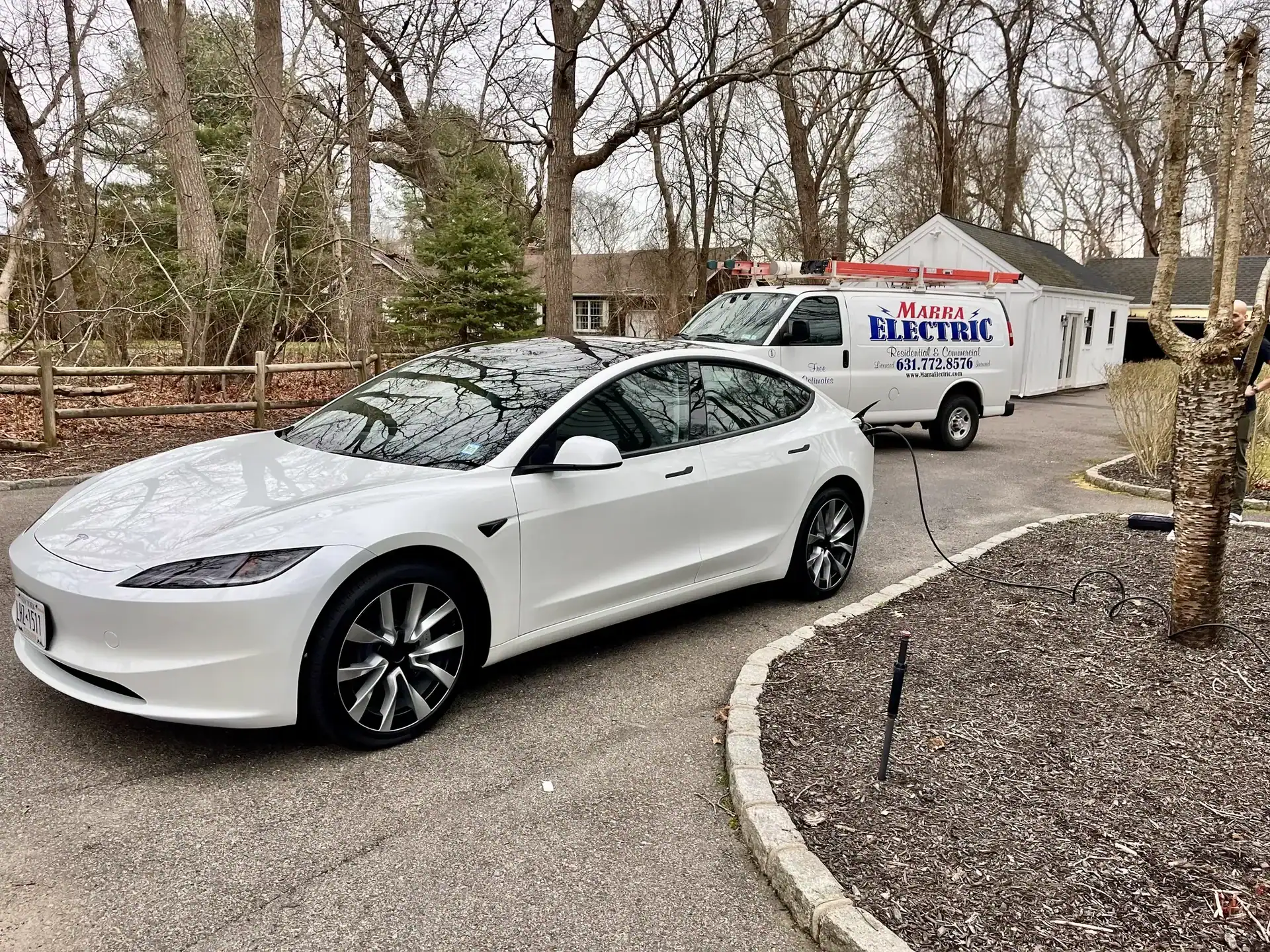
A white electric car is parked in a driveway, plugged in for charging. Nearby, a van labeled “Marra Electric,” a trusted residential electrician Suffolk County NY, is parked near a house surrounded by leafless trees and landscaping.

Explore More Services

About Marra Electric

Tesla Charger Installation West Sayville, NY

What You Actually Get with This Installation

Every EVSE installation in West Sayville includes a full electrical assessment. We check your current panel capacity, measure the distance from your panel to where the charger will go, and calculate whether your system can handle the additional load. If it can’t, we’ll explain what needs to change and what that costs.

You also get a dedicated 240-volt circuit rated for the charger you’re installing. Whether you’re putting in a Tesla Wall Connector, a ChargePoint Home Flex, or another brand, the circuit needs to match the charger’s amperage. We size it correctly so you’re not underpowered or paying for capacity you’ll never use.

The installation includes all necessary permits and the required electrical inspection. Suffolk County has specific codes for EV charger installations, and we handle the paperwork so you don’t have to figure out what forms to file or which office to visit.

And because West Sayville has a mix of older and newer homes, we’re used to working around challenges like limited panel space, outdated wiring, or garages that aren’t attached to the main house. We’ve done enough of these installations to know how to handle the variables without dragging out the timeline.

A white electric car charges in a driveway from a wall-mounted charger, installed by a residential electrician Suffolk County, NY. Nearby are another car and a Manna Electric van. The sunny scene features trees and a house in the background.

How much does a Level 2 EV charger installation cost in West Sayville?

Most Level 2 EV charger installations in West Sayville run around $1,000 for the complete job, assuming your electrical panel can handle the load and you already own the charger. That covers the dedicated 240-volt circuit, labor, permits, and the inspection.

If your home needs a panel upgrade to 200-amp service, add another $2,000 to $3,500. Many homes in West Sayville were built in the 1970s and 1980s with 100-amp panels, which weren’t designed to handle modern appliances plus an EV charger. Upgrading the panel isn’t just about the charger—it future-proofs your electrical system for whatever comes next.

Permit costs in Suffolk County typically range from $50 to $200, and the electrical inspection adds another $100 to $200. We include those costs in your upfront estimate so there’s no confusion about what you’re paying.

Yes. Suffolk County requires a permit for any EV charger installation that involves adding a new 240-volt circuit. This applies whether you’re installing the charger yourself or hiring an electrician.

The permit process ensures the installation meets the National Electrical Code and local requirements. After the work is done, a county inspector comes out to verify everything was installed correctly. This protects you from fire hazards, insurance issues, and problems down the line if you ever sell your home.

We handle the permit application and schedule the inspection as part of the installation. You don’t need to visit the building department or figure out what paperwork to submit. It’s built into the process, and the cost is included in your estimate.

It depends on your current panel size and how much capacity you’re already using. Most Level 2 chargers draw between 30 and 50 amps. If your panel is already near capacity with your HVAC system, water heater, dryer, and other appliances, adding a charger could overload it.

We start every EV charger installation in West Sayville with a load calculation. That tells us whether your panel has room for the additional circuit or if you need to upgrade to a 200-amp panel first. Many homes in the area still have 100-amp service, which worked fine 30 years ago but doesn’t leave much headroom for modern electrical demands.

If you need an upgrade, we’ll explain why and give you a clear cost before moving forward. Panel upgrades aren’t just about the charger—they also give you the capacity to add other upgrades later without running into the same problem.

If your electrical panel is ready and doesn’t need an upgrade, most installations take one day. We typically arrive in the morning, install the dedicated circuit, mount the charger, test everything, and clean up before the end of the day.

If you need a panel upgrade, that adds another day or two depending on the scope of the work. Upgrading from 100-amp to 200-amp service involves replacing the panel, updating the main breaker, and sometimes coordinating with PSEG Long Island to upgrade the meter. We’ll give you a timeline during the estimate so you know what to expect.

After installation, we schedule the required inspection with Suffolk County. Inspections usually happen within a few days, but that depends on the county’s schedule. You can start using your charger as soon as the inspection is complete and signed off.

Level 1 chargers plug into a standard 120-volt outlet—the same kind you use for lamps and phone chargers. They’re slow, adding about three to five miles of range per hour. If you drive 30 miles a day, you’re looking at a 10-hour charge just to break even.

Level 2 chargers run on 240 volts, the same as your dryer or oven. They add 25 to 40 miles of range per hour, which means most EVs go from empty to full overnight. For anyone commuting to work or driving around Long Island regularly, Level 2 is the only practical option.

Level 1 works if you barely drive and have all night to charge. But most people in West Sayville who install an EV charger go with Level 2 because it actually keeps up with their daily driving. It’s faster, more reliable, and doesn’t leave you guessing whether you’ll have enough range in the morning.

Yes. The federal government offers a 30% tax credit on EV charger installations, up to $1,000, through June 2026. That applies to the cost of the charger and the installation labor, including any electrical work needed to support it.

If your installation costs $1,000, you could get $300 back when you file your taxes. If it costs more because you needed a panel upgrade, you’re still capped at the $1,000 maximum credit. But every bit helps, especially if you’re already spending money to upgrade your electrical system.

You’ll need to file IRS Form 8911 with your tax return to claim the credit. Keep your receipts and invoices from the installation—you’ll need them as documentation. We provide a detailed invoice that breaks down the work, so you’ll have everything you need when tax season comes around.

Other Services we provide in West Sayville