Summary:
Suffolk County doesn’t get a gentle storm season. Between summer thunderstorms rolling in off the Atlantic, nor’easters, and the occasional hurricane, the question isn’t really whether the power will go out — it’s how long it’ll stay out and how much damage it’ll do when it does. Most homeowners don’t think about their electrical system until something goes wrong. But the time to think about it is right now, before the first major storm of the season. This guide walks you through what actually matters — surge protection, backup generators, electrical inspections, and when to call an emergency electrician — so you’re not making those decisions at midnight in the dark.
What Suffolk County Homeowners Should Know About Electrical Safety Before Storm Season
Long Island’s storm history isn’t abstract. Hurricane Sandy knocked out power for more than 632,000 Long Island residents — many of them for over two weeks. Flooded basements, spoiled food, families in hotels, sump pumps that couldn’t run because there was no electricity to run them. That’s not a worst-case scenario anymore. It’s a reference point that most Suffolk County homeowners carry with them every time they hear a storm is coming.
What makes the electrical safety conversation especially important here is the age of the housing stock. The median Suffolk County home was built around 1970, which means a significant portion of homes in towns like Huntington, Smithtown, Babylon, and Islip are running on electrical systems that were never designed for the loads we put on them today. Air conditioning, EV chargers, home offices, smart home devices — a 100-amp panel from 1968 wasn’t built with any of that in mind. According to the NFPA, homes with pre-1970 electrical systems carry a 2.7 times higher fire risk than newer construction. That’s a number worth sitting with.

How Aging Electrical Panels Put Suffolk County Homes at Risk
Most homeowners don’t know what kind of panel they have or what condition it’s in. That’s completely understandable — the panel sits in the basement or garage, it does its job quietly, and nobody thinks about it until a breaker trips or something stops working. But an outdated or undersized panel isn’t just an inconvenience. It’s a safety issue.
Homes built in the 1960s and early 1970s sometimes have Zinsco or Sylvania panels — brands that have since been identified as having a documented safety defect. These panels can fail to trip when they should, which means instead of the breaker cutting power during an overload, the wiring overheats. That’s how electrical fires start. Even homes without those specific panels may be running on 100-amp service that simply can’t handle modern electrical demand, especially during summer when air conditioners are running constantly.
There’s also the wiring itself. Homes built between roughly 1965 and 1973 may have aluminum branch circuit wiring, which expands and contracts differently than copper and can loosen connections over time — another fire risk that’s invisible until something goes wrong. Most homes of that era have no AFCI breakers, which the current National Electrical Code now requires in many living areas specifically because they detect the kind of arcing that causes fires before they start.
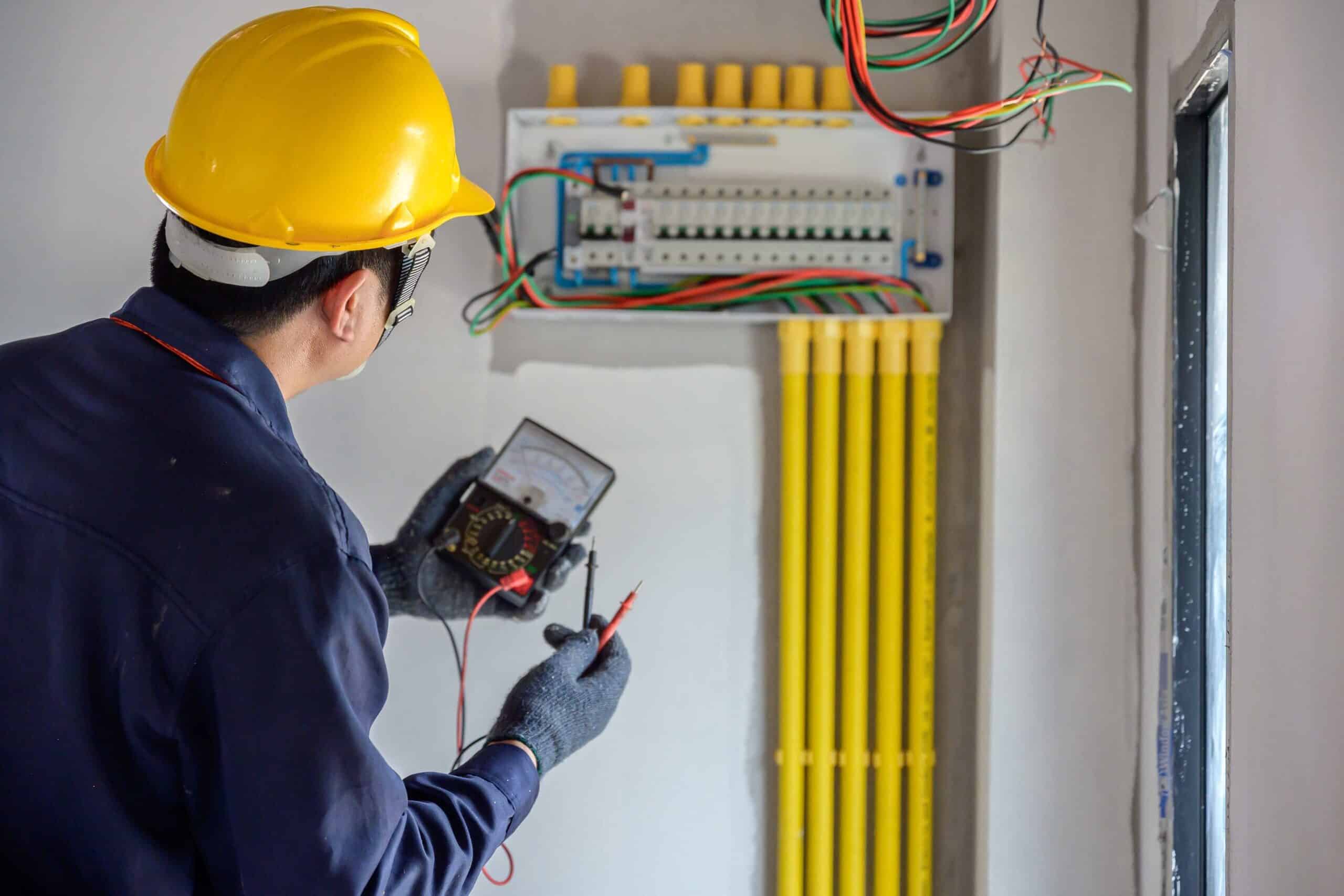
The point isn’t to alarm you. It’s to say that a pre-season electrical inspection — a licensed electrician going through your panel, your wiring, your outlets — is one of the most useful things you can do before summer storm season. It’s not about finding problems for the sake of finding them. It’s about knowing where you stand before a storm makes the decision for you.
Why Whole-Home Surge Protection Matters More Than a Power Strip
Here’s something most homeowners don’t know: the surge that damages your appliances often doesn’t happen during the storm. It happens when PSEG Long Island restores power afterward. When the grid reconnects, the voltage can spike — and anything plugged into an outlet in your home is exposed to that spike at the exact moment you think the danger has passed.
A standard power strip with a surge rating offers some protection for individual devices, but it’s not the same as whole-home surge protection. A whole-home surge protector is installed directly at your electrical panel. It intercepts incoming surges before they ever reach your wiring, which means your refrigerator, HVAC system, washer, dryer, televisions, and computers are all covered — not just the ones you thought to plug into a surge strip.
The cost of whole-home surge protection is a fraction of what it costs to replace a refrigerator, an HVAC unit, or a home theater setup. And in a coastal county like Suffolk, where summer storms are frequent and the grid takes a beating, it’s one of the more straightforward investments you can make. Salt air also accelerates corrosion on outdoor electrical components — service entrances, outdoor outlets, junction boxes — which can create additional vulnerability points that a licensed electrician can identify and address during an inspection.
Minor surges happen constantly, not just during storms. Every time your air conditioner cycles on, it creates a small voltage fluctuation. Over time, these minor surges cause what’s sometimes called “electronic rust” — cumulative degradation that shortens the lifespan of your appliances by years. Whole-home surge protection addresses all of it, not just the dramatic lightning-strike scenarios.
Backup Generator Installation and Power Outage Solutions for Long Island Homes
If you lived through Sandy, you already know why people install generators. If you didn’t, the math is simple: a multi-day outage in July means spoiled food, no air conditioning, and — for the many Suffolk County homes with basements — a sump pump that can’t run. One flooded basement can cost tens of thousands of dollars in water damage. A generator installation starts to look very different when you frame it against that number.
The question most homeowners have isn’t whether a generator is worth it. It’s which type makes sense and what the process actually looks like. That’s worth breaking down clearly.

Portable Generator vs. Standby Generator: What's the Actual Difference?
Portable generators are what most people picture — a gas-powered unit you pull out of the garage when the power goes out, run an extension cord from, and use to keep a few things running. They’re relatively affordable upfront, which is why a lot of homeowners have them. But they come with real limitations and real risks that are worth understanding before you rely on one.
The most serious risk is carbon monoxide. Portable generators produce CO — a colorless, odorless gas that kills people every year, including right here on Long Island. PSEG Long Island’s own safety guidelines require that portable generators be kept at least 20 feet from any window, door, or vent. Running one in the garage — even with the door open — is dangerous. That’s not a theoretical warning. It’s a documented cause of death during every major storm event.
There’s also the back-feed problem. If you connect a portable generator directly to your home’s wiring without a transfer switch, you can send electricity back into the utility lines — which can electrocute PSEG line workers who are trying to restore power in your neighborhood. This is why a licensed electrician must install a proper transfer switch as part of any generator setup, whether portable or standby.
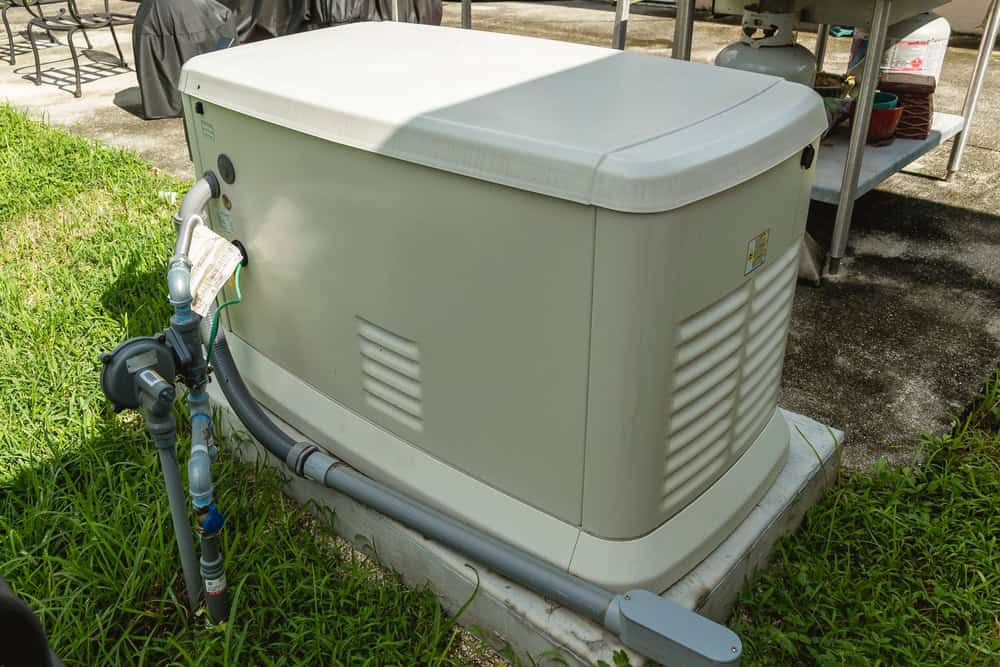
A whole-home standby generator is a different category entirely. It’s a permanently installed unit — typically fueled by natural gas or propane — that’s connected to your home’s electrical system through an automatic transfer switch. When the power goes out, it detects the outage and starts automatically, usually within seconds. You don’t have to do anything. It runs whether you’re home or asleep or out of town, and it can power your entire home — including central air conditioning — depending on the size of the unit.
For most Suffolk County homes, a 20kW standby generator handles the full load including central AC. Larger homes, or homes with higher electrical demand, may need a 22kW or larger system. Sizing matters — an undersized generator running at or near capacity constantly will wear out faster and may not cover everything you need it to cover.
What Does Backup Generator Installation Actually Involve in Suffolk County?
This is one of the most common questions we hear, and it’s a fair one. Generator installation isn’t just setting a unit in the yard and plugging it in. In Suffolk County, it involves permits — and the permitting process runs through each individual town’s building department. Babylon, Islip, Huntington, Smithtown, Brookhaven, Southampton — each has its own process, its own timeline, and its own inspection requirements. An electrician who knows these local processes can move things along. One who doesn’t can cause delays that push your installation well past storm season.
Beyond permits, a standby generator installation involves a licensed electrician installing the automatic transfer switch, coordinating the gas line connection, positioning the unit to meet setback and clearance requirements, and completing the final inspection. There’s also PSEG Long Island’s interconnection requirements to account for. It’s a multi-step process, and from start to finish — including permit approval — it typically takes two to three months. That’s why the time to start is now, not after the first storm of the season.
We’ve been doing generator installations in Suffolk County since 2004, which means we know the permit offices, we know the PSEG requirements, and we know the specific challenges that come with installing in coastal communities where salt air has already done a number on some of the existing infrastructure. When we come out for an estimate, we’re not just looking at the generator — we’re looking at your panel capacity, your gas supply, your property layout, and what it’s actually going to take to do the job right. You’ll know the full cost before we start. That’s not a marketing line — it’s how we’ve operated for over 20 years, and it’s why our customers keep calling us back.
How to Find a Licensed Electrician in Suffolk County Before Storm Season Hits
The honest answer is: don’t wait until a storm is in the forecast. Generator installers book out fast once storm season ramps up, and surge protection or inspection appointments fill in quickly too. The homeowners who are prepared are the ones who made the call in April or May, not the ones scrambling in August.
If your home was built before 1980, a pre-season electrical inspection is worth scheduling regardless of whether anything seems wrong. If you’ve never had whole-home surge protection installed, this summer is a good time to change that. And if you’ve been on the fence about a standby generator since Sandy, the math hasn’t changed — it’s still the most reliable way to keep your home running when PSEG’s restoration timeline is measured in days, not hours.
We at Marra Electric have been serving Suffolk County homeowners since 2004. We’re licensed, insured, and available around the clock for emergencies. Every estimate is free, every price is upfront, and every job is done by our own team — not a subcontractor. If you want to know where your home stands before storm season, give us a call.