
Summary:
You probably don’t think about power surges until something stops working. The refrigerator that quit after a storm. The TV that flickered and never came back. The HVAC control board that needed a $600 repair for no obvious reason. These aren’t coincidences — they’re the kind of damage that builds up quietly, or sometimes happens all at once, when your home’s electrical system isn’t protected. If you live in Suffolk County, the risk is more specific than most people realize, especially in older homes that may benefit from whole-home rewiring. Here’s what’s actually going on.
What Causes Power Surges in a Home?
A power surge happens when the voltage running through your home’s wiring spikes above its normal level. Standard household current runs at 120 volts, and anything that pushes that significantly higher — even briefly — can damage or degrade sensitive electronics over time.
The part that surprises most homeowners: roughly 60 to 80 percent of surges are created inside the home itself, not by lightning or the grid. Every time a large appliance kicks on or cycles off, it pulls a burst of power that sends a small voltage spike back through your wiring. That spike travels to every outlet and circuit in the house. It happens dozens of times a day, and most people have no idea.
How Your HVAC System and Appliances Create Surges Every Single Day
Your central air conditioner is one of the biggest culprits. When the compressor kicks on — which happens multiple times an hour on a hot Long Island summer day — it draws a large amount of current all at once. That sudden demand creates a voltage spike that ripples through your home’s electrical system. The same thing happens when your refrigerator compressor cycles, when your washing machine shifts between cycles, and when your dishwasher’s heating element kicks in.
Each individual spike may be small. But they’re relentless. Over months and years, this kind of repeated low-level surge damage degrades the sensitive components inside your electronics and appliances — the control boards, the processors, the circuit boards — until things start failing earlier than they should. Your $1,800 refrigerator that dies at year six instead of year fourteen. Your smart thermostat that starts acting erratic. Your home office computer that crashes without warning.
This is called cumulative surge damage, and it’s the most common type. There’s no dramatic event, no storm, no obvious cause. Things just start wearing out faster than they should, and most homeowners never connect the dots.
External surges — the ones that come from the utility grid — are less frequent but far more destructive when they happen. A lightning strike near a power line, a transformer failure, or a switching event during utility maintenance can send a massive voltage spike directly into your home. These are the surges that kill appliances instantly rather than slowly. And on Long Island, they’re not hypothetical.
Why PSEG Long Island Surges Are a Real Risk in Suffolk County
PSEG Long Island is the utility provider for all of Suffolk County, and their grid has a documented history of sending damaging surges into homes during routine maintenance operations. In Massapequa, a switch failure during pole work caused a surge that fried appliances in as many as eight homes. One resident described it simply: “There was a big pop and everything just went.” Another said it felt like being back in Sandy.
In Huntington, a transformer lost its neutral connection during PSEG work on Carlow Street. The resulting surge destroyed microwaves, refrigerators, ovens, computers, garage door openers, and video doorbells across multiple homes. When residents filed damage claims, PSEG denied them.
That last part matters. A lot of Suffolk County homeowners assume that if PSEG causes a surge, PSEG will pay for the damage. That’s not how it works. PSEG’s tariff requires homeowners to prove the utility was negligent — a legal standard that’s difficult and expensive to meet. In practice, most homeowners absorb the cost themselves.
PSEG even acknowledges the restoration risk on their own safety page, advising customers to unplug electronics before the power comes back on because the restoration process itself can cause surges. The utility is telling you to protect yourself from the moment their power returns. That’s not reassurance — that’s a disclaimer.
The takeaway is straightforward: you can’t rely on PSEG to cover your losses, and you can’t predict when a grid event will happen. The only protection you actually control is what’s installed in your own home.
How Whole House Surge Protection Actually Works
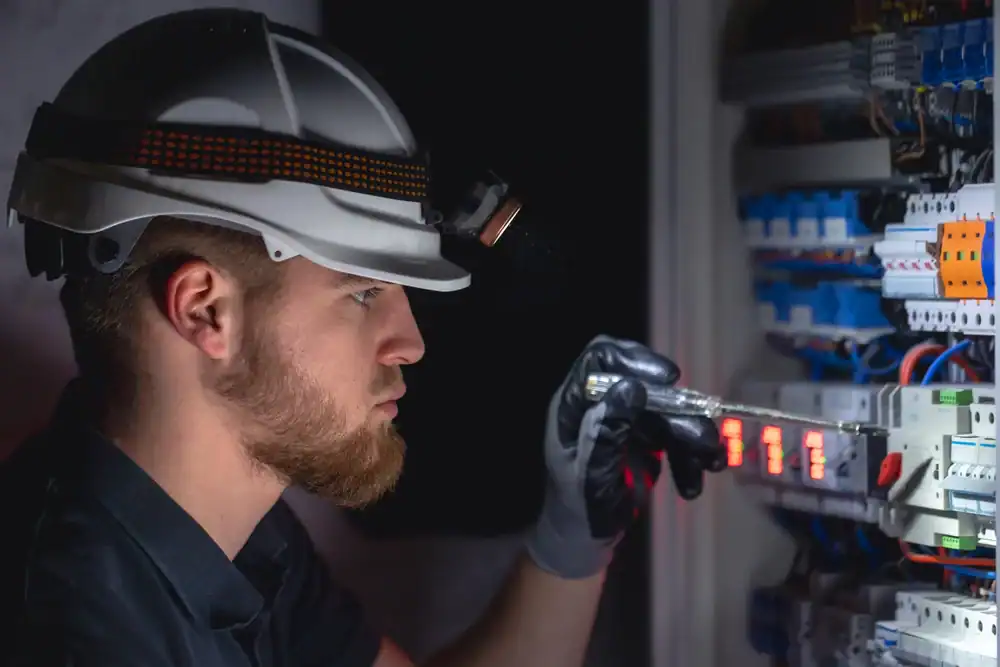
A whole house surge protector — technically called a surge protective device, or SPD — is installed directly at your electrical panel. When a voltage spike enters your home, the device detects it and redirects the excess energy safely to ground before it can reach your circuits, outlets, or appliances.
This is fundamentally different from a plug-in surge protector strip. A strip only protects the devices plugged directly into it. Your HVAC system, built-in refrigerator, EV charger, pool equipment, and hardwired lighting are completely untouched by a strip — no matter how good it is. A whole-house SPD at the panel protects every circuit in the home, including everything that’s hardwired.

Why Plug-In Surge Protector Strips Aren't Enough for Most Suffolk County Homes
Surge protector strips work using components called metal oxide varistors, or MOVs. When voltage spikes above a safe threshold, the MOVs absorb the excess energy. The problem is that MOVs wear out. After absorbing a certain number of surges — sometimes just one large one — they stop providing protection entirely. Most strips give you no reliable way to know when that’s happened. The strip still powers your devices normally. The indicator light, if there is one, may still glow. But the protection is gone.
This is a bigger issue than most people realize. A strip you bought three years ago and plugged your TV and computer into may have already exhausted its protection capacity after the last nor’easter knocked out power on your street. You wouldn’t know. And the next surge goes straight through to your equipment.
There’s also the coverage gap. Think about everything in your home that isn’t plugged into a strip. Your central air conditioner. Your refrigerator. Your washer and dryer. Your water heater with a digital control panel. Your EV charger. Your smart home hub. Your pool pump. None of these are protected by a plug-in strip, because they’re either hardwired or plugged into standard outlets you’ve never thought about. In a home with modern appliances and electronics — which describes most households in Suffolk County — the financial exposure from a single serious surge can easily run into the thousands.
A whole-house SPD at the panel handles all of it. It’s rated to handle surges as high as 80,000 amps, far beyond what any strip can manage, and it protects every circuit simultaneously. We recommend a layered approach: a whole-house device at the panel for broad protection, combined with quality point-of-use strips for your most sensitive electronics like computers and home theater systems. That combination gives you coverage at every level.
Is Surge Protection Required by Code in New York — and Does It Apply to Your Home?
This is one of the questions we get asked most often, and the answer has changed in recent years. The 2020 National Electrical Code, specifically Article 230.67, now requires a surge protective device for all services supplying residential dwelling units. That requirement applies to new installations and to existing services being replaced. In plain terms: if you’re upgrading your electrical panel in New York, surge protection is no longer optional — it’s part of the code.
The 2023 NEC expanded this further, extending the requirement to additional occupancy types and making clear that the industry now treats surge protection as a baseline safety measure, not an add-on. The code committee’s reasoning is worth noting: modern homes are full of sensitive electronics, smart safety devices, and digital appliance controls that are genuinely vulnerable to voltage fluctuations in a way that homes from 30 years ago simply weren’t.
This matters for Suffolk County homeowners specifically because of the age of the local housing stock. Nearly 67 percent of homes in Suffolk County were built before 1980 — wired for an era when a typical household might have had a television, a refrigerator, and a few lamps. Today’s homes run smart thermostats, EV chargers, home office setups, whole-home audio systems, and appliances with sophisticated digital controls. The electrical demands are completely different, and the vulnerability to surge damage is significantly higher.
If your home doesn’t have a whole-house surge protector and you haven’t had your panel upgraded recently, there’s a reasonable chance you’re running without protection that the current code now considers standard. A licensed electrician can assess your panel, confirm whether an SPD is in place, and install one correctly if it isn’t. Installation at the panel requires working with live electrical connections — this isn’t a DIY project, and attempting it without proper licensing creates both safety risks and code violations that can affect your homeowner’s insurance.
Surge Protection in Suffolk County: What to Do Next
The short version: most power surges start inside your home, your plug-in strips probably aren’t doing what you think they are, and PSEG isn’t going to cover your losses if a grid event damages your appliances. A whole-house surge protector installed at your electrical panel is the most practical, cost-effective way to protect everything in your home — hardwired or not.
For homeowners across Suffolk County, the risk is real and specific. Aging wiring, a utility grid with a documented history of surge events, and homes packed with sensitive electronics make this more than a theoretical concern. The good news is that the solution is straightforward, the installation is fast, and the cost is a fraction of replacing even one major appliance.
If you want to know whether your home is protected, we offer free estimates and have been handling electrical safety for Suffolk County homeowners since 2004. Give us a call — we’ll take a look at your panel, tell you exactly what you have, and give you a straight answer on what it would take to fix it.