
Summary:
You’ve found a house you love. The layout works, the neighborhood is right, and you’re ready to move. But before you get too far down the road, there’s one thing that can quietly derail the whole deal — or worse, follow you into the house and become your problem the moment you get the keys.
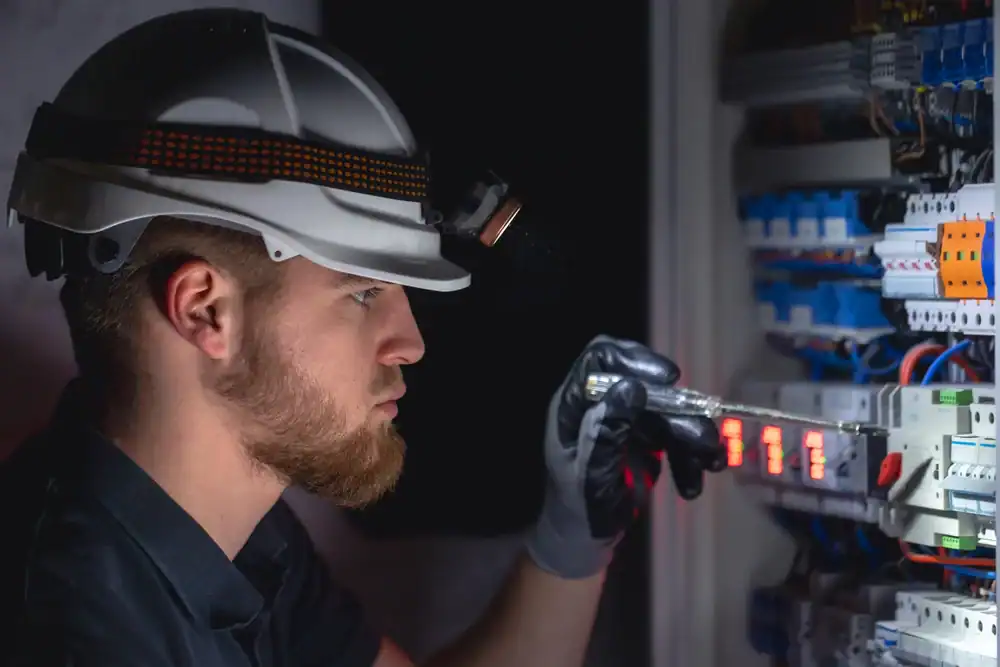
The electrical system. Most buyers assume the home inspection covers it. It doesn’t — not really. A general home inspector checks boxes. A licensed electrician opens the panel, tests circuits, and can tell you whether the wiring in that 1962 Cape Cod in Bay Shore is a manageable fix or a full rewire waiting to happen. A professional home electrical inspection can give you a clearer picture of the system’s condition before you commit.
Here’s what to look at before you commit.
Why Older Homes in Suffolk County Need a Closer Electrical Look
Suffolk County’s average home is about 49 years old. New York State, as a whole, has the oldest owner-occupied housing stock in the country — with a median age of 64 years. That means a large share of the homes on the market right now were built when aluminum wiring was common, 60-amp fuse panels were standard, and GFCI outlets didn’t exist yet.
The post-war construction boom that built out communities like Brentwood, Deer Park, Bay Shore, and Huntington Station left behind thousands of Cape Cods and ranch homes that are now 60 to 80 years old. They’re solid houses. But their electrical systems were designed for a completely different era of living — one without central air conditioning, EV chargers, or the electrical load of a modern kitchen.
That’s not a reason to walk away from an older home. It’s a reason to know exactly what you’re buying.
What a General Home Inspector Won't Catch
This is the misconception that costs buyers the most money. A general home inspection is required in most real estate transactions, so buyers assume it covers the electrical system thoroughly. It does — to a point.
A home inspector will look at visible outlets, check the panel for obvious issues, and flag anything that looks out of place. But they are not licensed electricians, and their scope has real limits. They’re not going to identify aluminum wiring by sight. They won’t open a junction box in the attic to see if the connections are safe. They won’t test every circuit or tell you whether the panel has the capacity to support a modern electrical load.
When they find something they can’t fully assess, the report says “recommend further evaluation by a licensed electrician” — which sends you right back to square one, usually under time pressure with a closing date approaching.
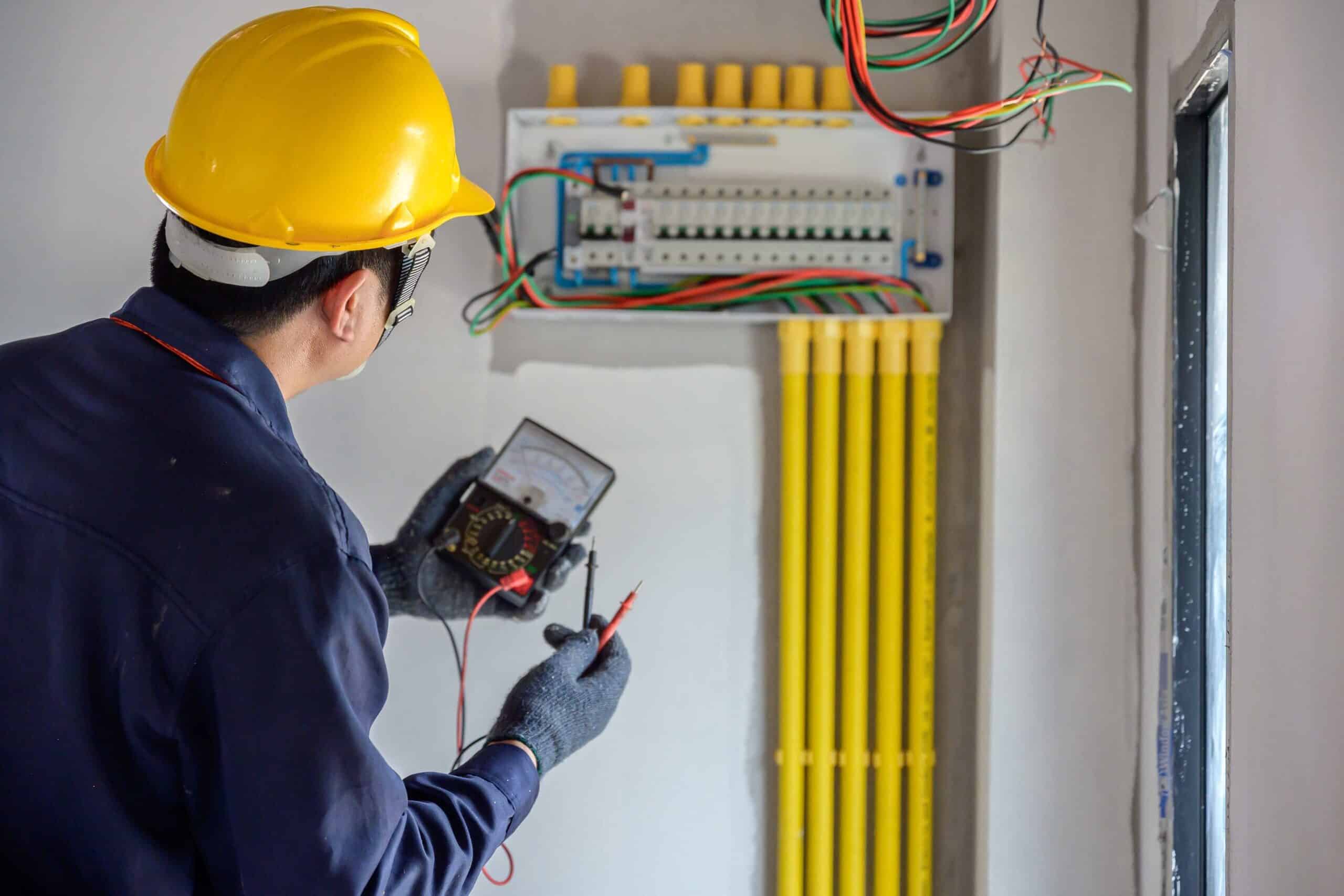
A licensed electrician doing a pre-purchase inspection goes much deeper. We’ll look at the service entrance where power comes into the house, inspect the panel for signs of overheating, corrosion, or improper wiring, check outlets throughout the home for grounding and proper function, look for hazardous wiring types in the attic, basement, and crawl spaces, and verify whether GFCI and AFCI protection is in place where code requires it.
The result is a written report that tells you what’s wrong, how serious it is, and what it would cost to fix — information you can actually use in a negotiation before you close.
One more thing worth understanding: in Suffolk County, electrical permits are pulled through individual town building departments — Babylon, Brookhaven, Huntington, Islip, Riverhead, and the rest each have their own process. Unpermitted electrical work is common in older homes, and it can become your liability the moment the deed transfers. A licensed electrician who knows the county’s permit landscape can flag that risk before it becomes yours.
Wiring Types That Show Up in Long Island's Older Homes
The wiring in an older Suffolk County home tells you a lot about what era it was built in — and what risks it might carry. There are a few types that come up regularly in pre-purchase inspections here, and each one has different implications.
Knob-and-tube wiring was the standard from roughly the 1880s through the 1940s. It uses ceramic knobs to anchor wires and ceramic tubes to protect them where they pass through framing. The wire itself has no ground conductor, and the insulation becomes brittle with age. It’s not automatically a crisis, but it’s a problem — especially if someone has added insulation over it (which can cause heat buildup) or extended it with modern wire in ways that weren’t done properly.
Many insurance carriers in New York will refuse to write a policy on a home with active knob-and-tube wiring, or will charge significantly higher premiums.
Aluminum wiring became common in the mid-1960s and early 1970s when copper prices spiked. The issue isn’t the wire itself — it’s what happens at the connections. Aluminum expands and contracts more than copper with temperature changes, which causes connections to loosen over time. Loose connections arc. Arcing starts fires.
Homes built before 1973 with aluminum wiring are reported to be significantly more likely to have a hazardous connection than copper-wired homes. An electrician can identify aluminum wiring quickly, and there are remediation options — but you need to know it’s there before you buy.
Cloth-covered wiring from the 1940s through the 1960s is another flag. The rubber insulation under the cloth jacket degrades over decades, and what’s left can crack or crumble. It’s not inherently dangerous if it’s intact and undisturbed, but older cloth-covered wiring that’s been disturbed, overloaded, or spliced improperly is a real hazard.
Any of these wiring types in a home you’re considering buying is worth a proper evaluation — not a guess, and not a reassurance from a seller who says “it’s been fine for years.”
The Electrical Panel: What to Look For Before You Buy
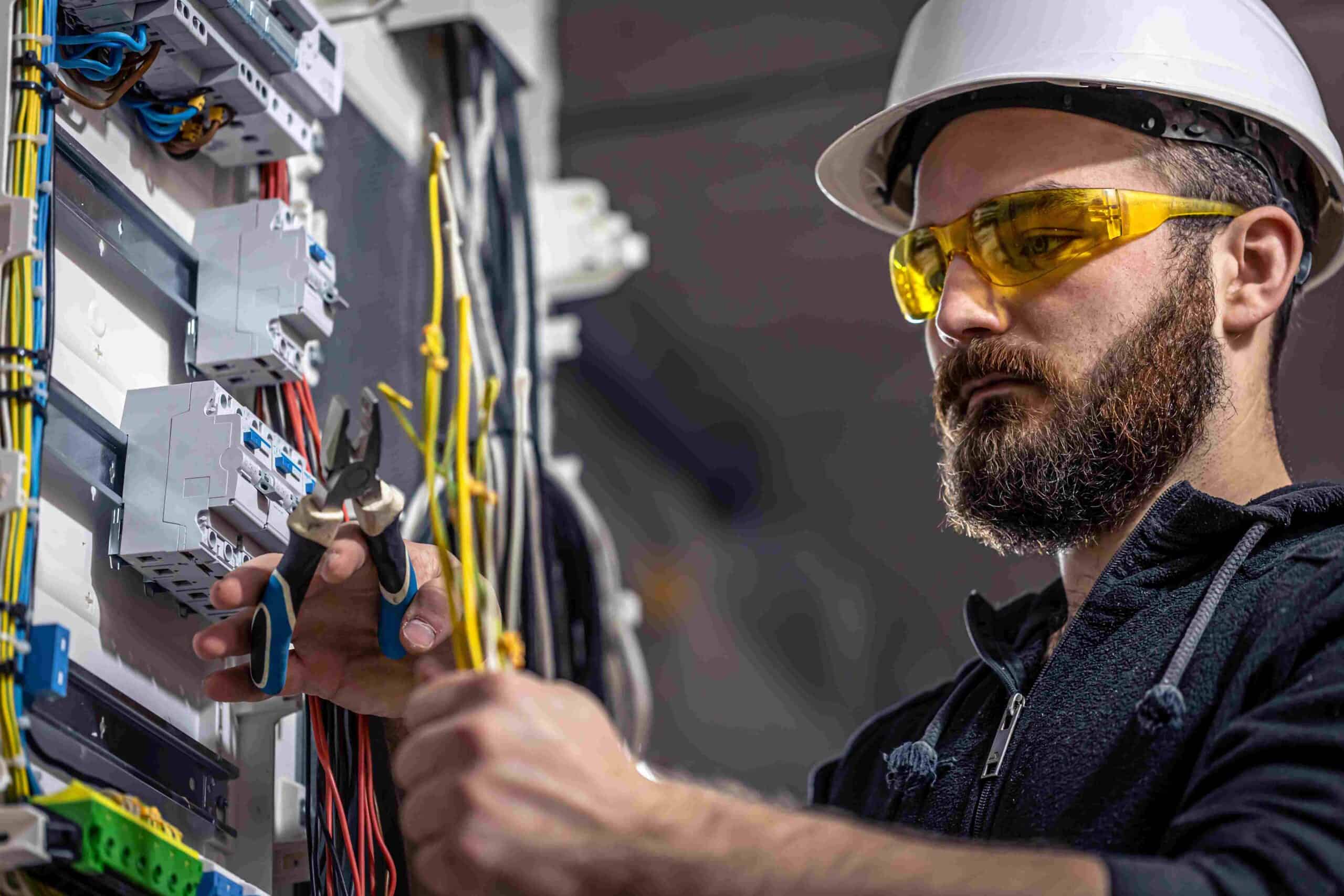
The electrical panel is the first thing we check on a pre-purchase inspection, and it’s often where the most important findings are. A panel that’s undersized, damaged, or from a manufacturer with known safety issues can affect your ability to insure the home, your ability to add circuits, and — at worst — your family’s safety.
The two things buyers most often don’t know to ask about are panel capacity and panel brand. Both matter, and neither shows up clearly in a general home inspection report.
Is a 60-Amp or 100-Amp Panel Enough for Your Suffolk County Home?
Many homes built before the 1980s in Suffolk County came with 60-amp or 100-amp electrical service. In the 1960s, that was plenty. A typical household ran a refrigerator, a few lights, and maybe a window air conditioner. Today’s homes are a different story — central HVAC systems, electric dryers, dishwashers, home offices, and increasingly, EV chargers and whole-home generators all draw significantly more power.
A 60-amp panel is almost certainly undersized for modern use, and many insurance companies won’t write a policy on a home with one. A 100-amp panel is workable in a smaller home without heavy electrical loads, but if you’re planning to add an EV charger or any significant appliance, it may need to be upgraded. A 200-amp service is the current standard for most single-family homes.
The panel brand matters too. Federal Pacific Electric (FPE) Stab-Lok panels and Zinsco panels are two names that should immediately prompt a closer look. Both have documented histories of breaker failures — meaning the breaker doesn’t trip when it should, allowing a circuit to overheat. These panels were installed in enormous numbers of homes built in the 1960s and 1970s, which means they show up regularly in Suffolk County pre-purchase inspections.
If a home you’re considering has one of these panels, you’re looking at a replacement — and you’ll want to know that before you make an offer, not after you’ve signed a contract.
When we inspect a panel, we’re looking at the breaker labeling (is it accurate?), the wiring connections inside the panel (are they neat, properly sized, and secure?), any signs of overheating like scorch marks or melted insulation, whether there’s been any double-tapping (two wires on a single breaker terminal, which is a code violation in most configurations), and whether the panel has the physical space and amperage to support the home’s current and future needs.
GFCI and AFCI Protection — What's Required and What's Missing
Two terms come up in almost every pre-purchase electrical inspection, and buyers often don’t know the difference between them or why they matter. GFCI and AFCI protection are both required by modern electrical code — but they protect against different hazards, and older homes almost universally lack one or both.
GFCI stands for ground fault circuit interrupter. You’ve seen these outlets — they’re the ones with the small “test” and “reset” buttons, typically found in bathrooms, kitchens, garages, and outdoor areas. A GFCI outlet monitors the flow of electricity and shuts off instantly if it detects a ground fault — meaning current is flowing somewhere it shouldn’t, like through a person.
They became required by code in bathrooms in 1975, kitchens in 1978, and have been gradually expanded to cover more areas of the home in every NEC update since. A home built in 1965 almost certainly has no GFCI protection anywhere. That’s not a dealbreaker, but it’s a known deficiency that needs to be addressed.
AFCI stands for arc fault circuit interrupter. This one is less well-known but arguably more important for fire prevention. AFCI breakers detect the electrical signature of an arc fault — the kind of sparking that happens inside walls when wiring is damaged, connections are loose, or a nail has been driven through a wire during a renovation. Arc faults are one of the leading causes of electrical fires in homes, and they’re invisible until something catches.
AFCI protection has been required in bedrooms since 1999 and has been expanded to cover most living areas in more recent code updates. Most homes built before 2000 have no AFCI protection at all.
When we do a pre-purchase inspection on an older Long Island home, we document exactly which areas have GFCI and AFCI protection and which don’t. Adding GFCI outlets is relatively straightforward and inexpensive. Upgrading to AFCI breakers is more involved but very doable. Either way, you want to know the full picture before you close — because once you own the home, the cost of bringing it up to standard is entirely yours.
There’s one more thing worth mentioning in the context of Suffolk County specifically: after Hurricane Sandy in 2012, a significant number of homes in coastal communities across the county sustained flooding and electrical damage. Some of those homes had repairs done quickly and not always properly. If you’re buying in a waterfront or low-lying area — Bay Shore, Amityville, Copiague, parts of Islip — it’s worth asking specifically about any post-storm electrical work and whether it was permitted and inspected.
Getting an Electrical Inspection Before Closing on a Suffolk County Home
Buying a home in Suffolk County is a major financial commitment — the median home value here is over half a million dollars. An electrical inspection before closing is one of the few things that can protect that investment, give you real negotiating leverage, and make sure you’re not inheriting a problem that was invisible during the showing.
The homes in this county are old enough that nearly every pre-purchase inspection we do turns up something worth knowing about — whether it’s a panel that needs to be replaced, wiring that needs to be evaluated, or simply a list of code updates that should happen before you move in. None of that is unusual, and none of it has to be a dealbreaker. But you need the information to make a good decision.
If you’re under contract on a home in Suffolk County and want a thorough electrical inspection from a licensed electrician who knows this county’s housing stock, reach out to Marra Electric. We’ll tell you exactly what’s there, what it means, and what it would take to fix it — with upfront pricing and no pressure.