Summary:
Most people don’t think about their electrical panel until it becomes a problem. A breaker trips for the third time this week. A home inspector flags the panel during a sale. An electrician tells you the new EV charger you want isn’t happening without an electrical hookup or upgrade first.
If any of that sounds familiar, you’re not alone. Suffolk County has a massive stock of homes built between the 1950s and 1970s — and a huge number of them are still running on electrical systems designed for a refrigerator, a stove, and a few lamps. The world has changed. The panel hasn’t.
Here’s what you actually need to know.
Why So Many Suffolk County Homes Have Outdated Electrical Panels
Long Island’s suburban boom happened fast. After World War II, towns like Bohemia, East Islip, Commack, and Sayville filled up with new homes practically overnight. Those homes were wired for the era — 60-amp or 100-amp service, basic circuits, no central air, no home office, no electric vehicle sitting in the driveway.
That was fine then. It’s not fine now. The average modern home draws dramatically more power than those panels were ever designed to handle, and the gap between what older panels can deliver and what today’s households in Suffolk County actually need keeps getting wider every year.
Federal Pacific and Zinsco Panels: Why These Are Still in Long Island Homes
If your Suffolk County home was built or renovated between the 1950s and the 1980s, there’s a real chance it has a Federal Pacific Electric (FPE) or Zinsco panel. These brands were everywhere during Long Island’s housing boom — and a significant number of them are still in service today.
The problem isn’t just age. It’s that these panels have documented safety failures that go beyond normal wear. FPE’s Stab-Lok breakers have been shown to fail to trip during an overload in more than 25% of cases — meaning the breaker that’s supposed to cut power when something goes wrong simply doesn’t. Zinsco panels have a different but equally serious issue: the breakers can fuse to the bus bar over time, so even when the breaker looks like it’s off, electricity is still flowing. In 2002, a New Jersey court found both companies guilty of fraud for failing to test their products to the required safety standards.
What makes this particularly relevant for Suffolk County homeowners is the timeline. The exact era when these panels were installed aligns almost perfectly with when most of the county’s housing stock was built. If you’ve never had your panel inspected and your home is more than 40 years old, it’s worth finding out what’s in there.
Beyond the specific brand issues, there’s the broader reality of age and coastal exposure. Homes near the South Shore, the Great South Bay, or anywhere close to the water deal with salt air and humidity that accelerate corrosion inside electrical components. A panel that might last decades in a drier, inland climate can degrade faster here. That’s a physical reality of living on Long Island, not just a theoretical concern.
The short version: if you have an FPE or Zinsco panel, or if you genuinely don’t know what brand your panel is, a professional inspection is the right first move. Not because something is definitely wrong, but because finding out costs nothing and the alternative — finding out after a fire — costs everything.
How Modern Electrical Loads Have Outgrown Older Home Panels
A 100-amp panel was a reasonable standard for a 1960s household. Central air conditioning was rare. Electric water heaters were uncommon. Nobody had a home office running three monitors, a gaming console, and a smart TV simultaneously. And electric vehicles weren’t even a concept most homeowners were planning around.
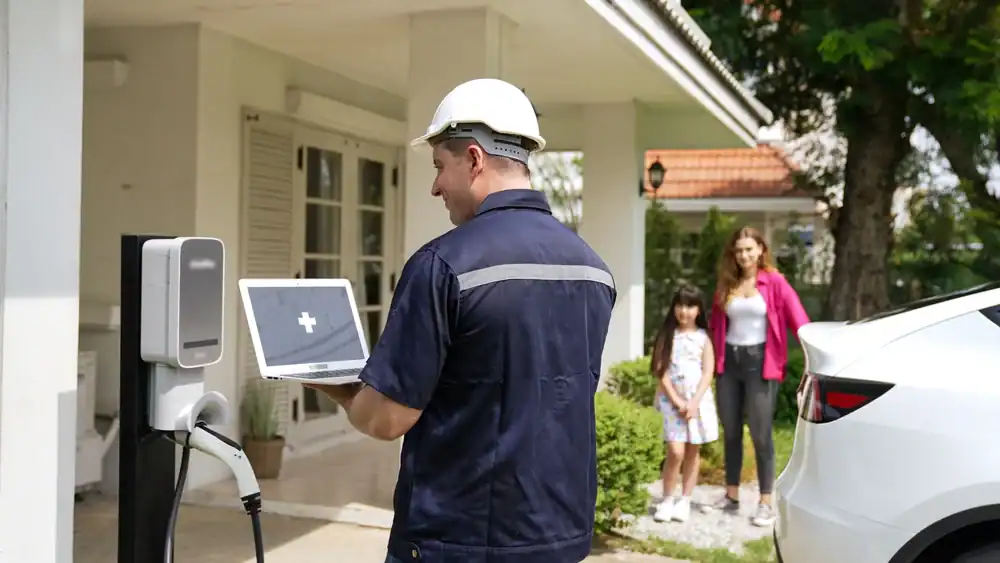
Today, a single Level 2 EV charger draws 30 to 50 amps continuously — more than most individual circuits in an older home are even rated for. Add central HVAC, an electric dryer, a modern kitchen, and the general baseline of connected devices in any active household, and a 100-amp panel isn’t just strained. It’s genuinely undersized for the life being lived inside that home.
This is why breakers trip. Not because something is broken, but because the panel is doing exactly what it’s supposed to do — cutting power when the load exceeds what it can safely carry. The problem is that this keeps happening because the panel’s capacity hasn’t kept up with demand. Resetting the breaker doesn’t fix anything. It just buys time until the next trip.
Upgrading to a 200-amp electrical service doesn’t just solve today’s problem. It gives you room to add an EV charger, a whole-home generator, updated HVAC, or whatever comes next without immediately running into the same ceiling again. NYSERDA, New York’s energy research authority, specifically notes that a 200-amp panel is typically sufficient to power a fully electric home — which is increasingly the direction that New York State’s energy policy is pushing residential properties anyway.
If your home is running on a 100-amp panel and you’re already tripping breakers regularly, the panel isn’t going to get better on its own. And if you’re planning any kind of upgrade — EV charger, generator, new HVAC, kitchen renovation — a panel assessment should be the first conversation, not an afterthought.
What an Electrical Service Upgrade Actually Involves in Suffolk County
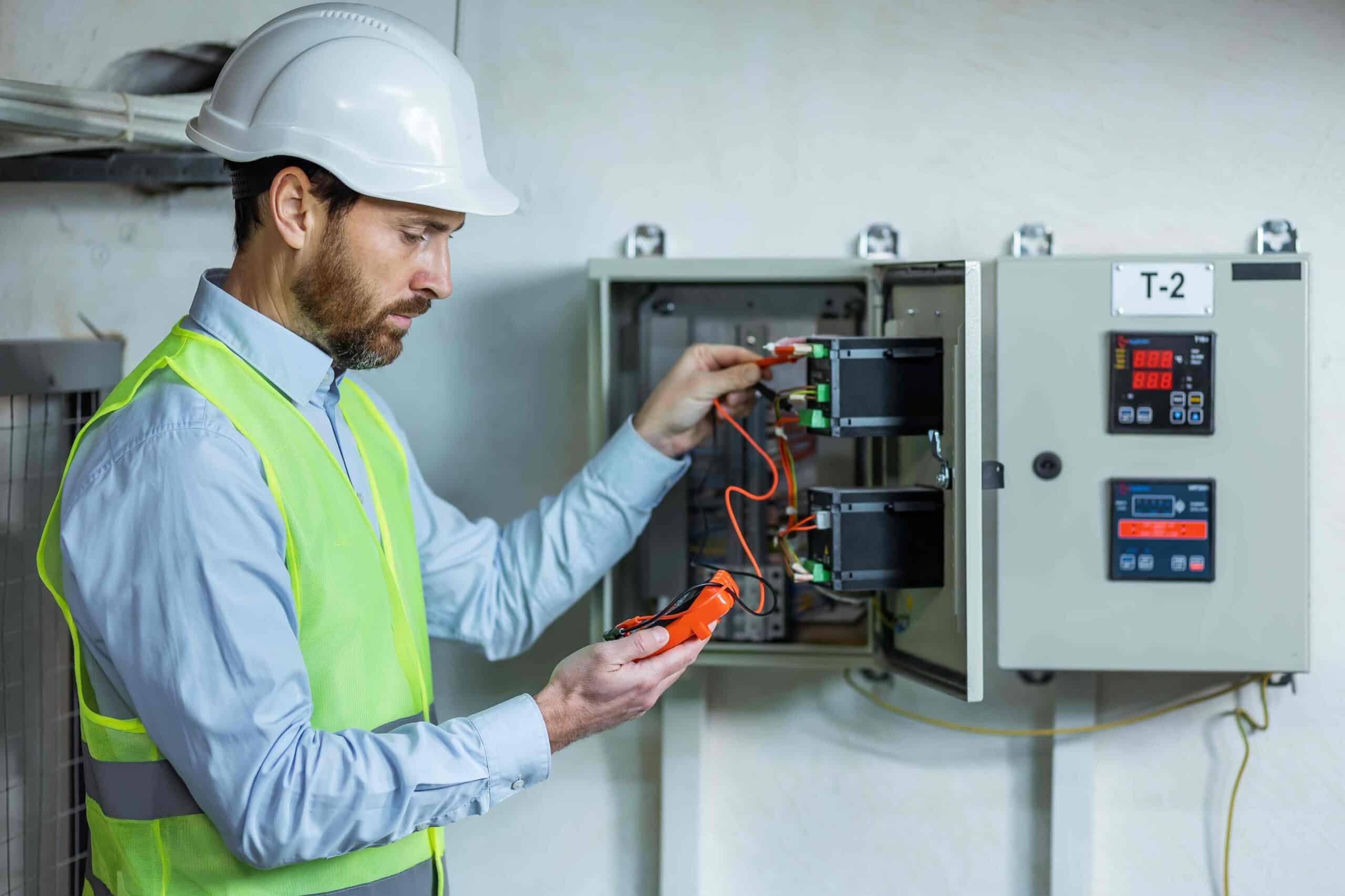
One of the most common misconceptions about a panel upgrade is that it’s just swapping out the box. It isn’t. A proper electrical service upgrade involves a load calculation to determine what your home actually needs, coordination with PSEG Long Island to disconnect and reconnect your service, permit filing with Suffolk County, the installation itself, and a final inspection before power is restored.
The good news is that none of that falls on you to manage. Our licensed electricians handle the entire process — from pulling the permit through Suffolk County’s online system to scheduling the PSEG disconnect and getting the inspector out for sign-off. Suffolk County’s digital permitting process typically runs 20 to 30 business days for approval, which is faster than many comparable jurisdictions.

Do You Need a Permit for an Electrical Panel Upgrade in Suffolk County?
Yes — and this isn’t optional or a formality you can skip to save time. Electrical panel upgrades in Suffolk County require a permit, and the work must be inspected and approved before your utility provider reconnects your power. That inspection is what confirms the installation meets current National Electrical Code standards and is safe to energize.
The reason this matters beyond legal compliance is practical: unpermitted electrical work can void your homeowner’s insurance coverage. If a fire starts and an adjuster discovers the panel was replaced without a permit, the claim can be denied. It can also derail a home sale — inspectors routinely check for permit records, and unpermitted work on something as significant as the main panel is a serious red flag for buyers and their lenders.
Any licensed electrician operating in Suffolk County will pull the permit as a standard part of the job. If someone offers to do the work without one — or suggests skipping it to move faster — that’s a signal to walk away. The permit isn’t bureaucratic overhead. It’s the mechanism that protects you.
Suffolk County’s online permitting system has made this process more straightforward than it used to be. Applications are submitted digitally, approvals typically come through in three to four weeks, and the inspection scheduling is handled by the contractor. From the homeowner’s perspective, the main requirement is being available for the inspection — everything else is managed on your behalf.
One more thing worth knowing: PSEG Long Island requires a licensed electrician to coordinate the service disconnect and reconnect. This isn’t something a homeowner can arrange independently, and it’s not something an out-of-area contractor unfamiliar with Long Island’s utility process will handle smoothly. Local experience with PSEG’s scheduling and requirements makes a real difference in how quickly the job gets done and how few delays you run into.
How Much Does an Electrical Panel Upgrade Cost in Suffolk County?
Cost is usually the first question, and it’s a fair one. The honest answer is that it depends on the scope — what you have now, what you’re upgrading to, and whether the work involves just the panel or the full service entrance as well.
For a standard upgrade from a 100-amp panel to a 200-amp panel, most Suffolk County homeowners are looking at somewhere in the range of $1,500 to $2,500 for the panel replacement itself. If the job involves upgrading the meter socket, service wire, and panel together — what’s called a full electrical service upgrade — the range typically runs from $3,000 to $5,000. Replacing an older fuse box with a modern circuit breaker panel tends to fall at the higher end of that range because of the additional work involved in bringing everything up to current code.
What drives costs up isn’t usually the panel itself — it’s the condition of the existing service entrance, whether grounding and bonding need to be brought up to current standards, and how much coordination the PSEG disconnect and reconnect requires. A proper load calculation before the job starts helps avoid mid-project surprises, because we know exactly what’s needed before the first wire is touched.
The thing most homeowners understandably worry about is the bill changing after work begins. That concern is legitimate. The way to protect yourself is to get a written price before any work starts, and to confirm that any changes to scope will be discussed and approved before they’re added to the job. That’s how we operate at Marra Electric, and it’s the standard any reputable contractor should be held to.
One cost consideration that often gets overlooked: the cost of not upgrading. Homeowner’s insurance companies are increasingly reluctant to cover homes with certain outdated panel brands — FPE and Zinsco in particular. Some will refuse to issue or renew a policy outright. Others charge significantly higher premiums. When you factor that in alongside the fire risk and the impact on home resale value, the upgrade often looks different financially than it does at first glance.
When to Call a Licensed Electrician About Your Panel
If your breakers trip regularly, your home is more than 40 years old, you’re planning to add an EV charger or generator, or you simply don’t know what brand of panel you have — those are all good reasons to have it looked at. A panel inspection doesn’t commit you to anything. It just tells you where you stand.
The homes in Suffolk County have a lot of character and a lot of history. They also have electrical systems that, in many cases, haven’t been touched since the Nixon administration. That’s not a crisis for every homeowner — but it’s worth knowing, not guessing.
If you’re in Suffolk County and you want a straight answer about whether your panel is safe, adequate, and ready for what you’re asking of it, reach out to us at Marra Electric. We’ve been doing this work in this county since 2004, we handle everything from the permit to the PSEG coordination, and we’ll give you a clear price before we start anything.