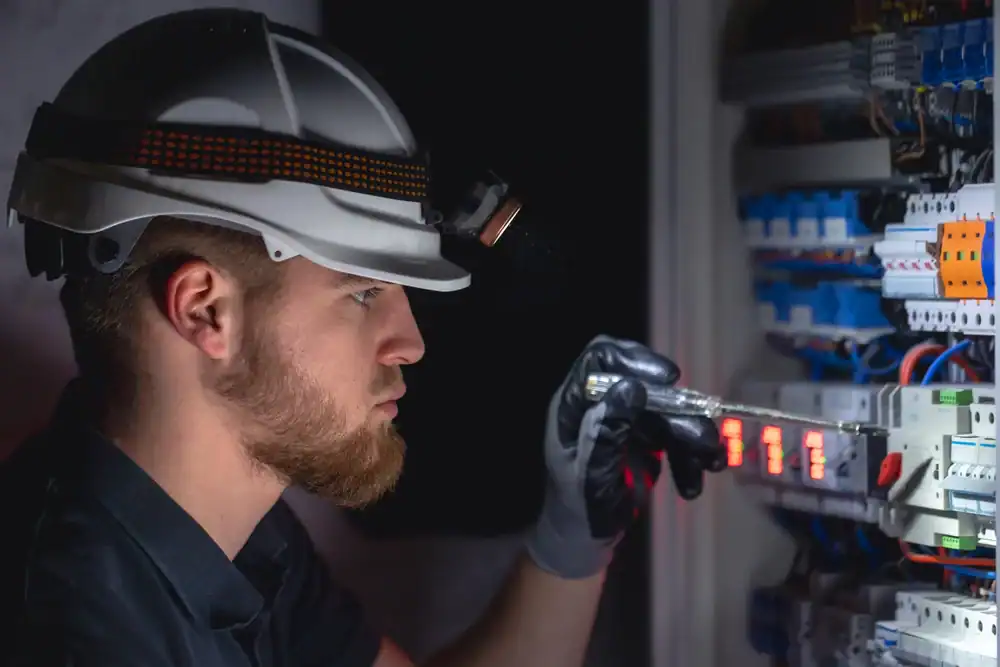
Person using a multimeter to test electrical equipment mounted on an exterior wall with connected cables and conduits in Suffolk County, NY.

Top-Rated Electrician Services in Suffolk County, NY

Summary:

When electrical problems strike your Suffolk County home, you need more than just quick fixes—you need solutions that last. We understand the unique challenges facing local homeowners, from aging electrical systems to modern power demands. With over 20 years of serving Suffolk County residents, we’ve built our reputation on transparent pricing, quality workmanship, and genuine customer care. Whether you’re dealing with flickering lights, need a panel upgrade, or want to install an EV charger, we’re here to help.
Table of contents
Your electrical system powers everything that matters in your Suffolk County home. When something goes wrong—whether it’s a tripped breaker, flickering lights, or a complete power failure—you need an electrician who understands both the problem and the solution. Most electrical issues start small but escalate quickly when ignored. That flickering light could signal loose wiring. Those frequent breaker trips might mean your system is overloaded. And that warm outlet? It’s a fire hazard waiting to happen. Here’s what you’ll discover about choosing the right electrical contractor for your Suffolk County home, and why the decisions you make today can save you thousands tomorrow.

Common Electrical Problems in Suffolk County Homes

Suffolk County homeowners face unique electrical challenges that most people don’t realize until it’s too late. Nearly 67% of homes in our area were built before 1980, when electrical systems were designed for much lower power demands than we have today.

Your grandparents’ electrical panel wasn’t built to handle central air, electric vehicle chargers, home offices, and the dozens of devices we plug in daily. This mismatch between old infrastructure and modern needs creates the perfect storm for electrical problems.

The good news? Most issues give you warning signs before they become expensive emergencies.

Why Your Breakers Keep Tripping (And What It Really Means)

When your circuit breaker trips, it’s doing exactly what it’s supposed to do—protecting your home from electrical overload. But if you’re constantly resetting breakers, especially in the kitchen or living areas, your electrical system is telling you something important.

Most Suffolk County homes built before 1990 have electrical panels designed for 60-100 amps. Today’s homes typically need 150-200 amps to safely operate modern appliances. When you try to run your microwave, coffee maker, and toaster at the same time, you’re asking your electrical system to do something it simply wasn’t built for.

This isn’t just inconvenient—it’s potentially dangerous. Overloaded circuits generate heat, and heat is the leading cause of electrical fires. Professional load calculations can determine whether your frequent breaker trips result from insufficient panel capacity or circuit overloading.

The solution might be as simple as redistributing loads across different circuits, or you might need a panel upgrade. Either way, addressing the root cause prevents those 3 AM emergency calls when your system finally gives up completely.

Don’t ignore breakers that trip frequently. They’re your electrical system’s way of asking for help before something more serious happens.

Flickering Lights: When to Worry and When to Act

Flickering lights aren’t just annoying—they’re often the first sign of electrical problems that can escalate into expensive repairs or safety hazards. In Suffolk County homes, flickering typically points to one of three issues: loose connections, overloaded circuits, or aging wiring.

If lights flicker when you turn on major appliances like the air conditioner or microwave, your electrical system is struggling to handle the power demand. This voltage drop exceeding 3% indicates circuits operating beyond safe capacity—a common problem when modern electrical demands strain systems designed for 1960s-1970s usage levels.

Loose connections are more serious. They create resistance, which generates heat, which can lead to fires. You’ll often notice this in older homes where connections have loosened over decades of thermal expansion and contraction.

The worst-case scenario involves aluminum wiring, common in homes built during the 1960s-1970s. Aluminum expands and contracts differently than copper, creating loose connections over time. These connections can overheat and cause fires, which is why many insurance companies require special outlets and installation techniques for homes with aluminum wiring.

Professional electrical testing measures voltage at outlets under various load conditions, identifying circuits that cannot maintain stable 120V supply when appliances operate simultaneously. This testing reveals which circuits require attention before they become safety hazards.

If your lights flicker consistently, especially when combined with warm outlets or burning smells, don’t wait. These symptoms often indicate serious wiring problems that pose significant safety risks if left unattended.

Modern Electrical Upgrades That Actually Matter

Suffolk County homeowners are investing in electrical upgrades that do more than just fix problems—they prepare homes for the future while solving today’s challenges. The most impactful upgrades address both safety concerns and modern lifestyle needs.

Smart electrical upgrades aren’t just about having the latest technology. They’re about creating electrical systems that can handle everything from electric vehicle charging to home automation while keeping your family safe and your energy costs manageable.

The key is knowing which upgrades provide real value versus those that are just expensive additions with minimal benefit.

EV Charger Installation: Preparing for Electric Vehicle Ownership

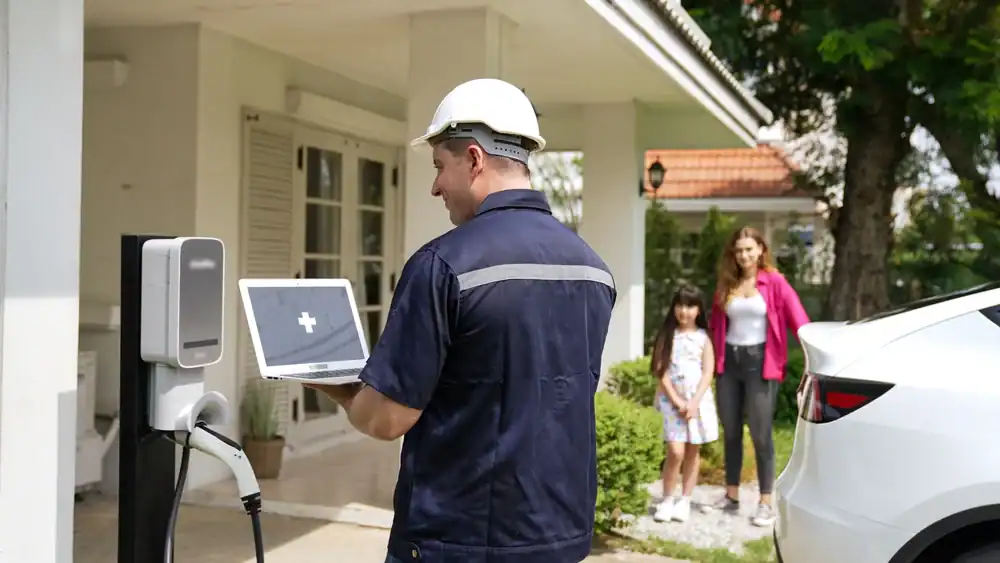
Electric vehicle adoption is accelerating across Suffolk County, and home charging installations have become one of our most requested services. Installing an EV charger isn’t just about convenience—it’s about maximizing your investment in electric transportation while adding value to your property.

Level 2 chargers, which operate on 240-volt circuits, can fully charge most electric vehicles overnight. This means you wake up every morning with a “full tank” without ever visiting a gas station. The time savings alone make home charging worthwhile, but the financial benefits are equally compelling.

Charging at home costs significantly less than using public charging stations. With Suffolk County’s average electricity rate of 27 cents per kWh, you’ll pay roughly $12-15 to fully charge most electric vehicles. Compare that to $30-50 at commercial charging stations, and the savings add up quickly.

However, EV charger installation requires careful electrical planning. Your existing panel must have adequate capacity, and the installation requires a dedicated 40-60 amp circuit. Many homes need electrical upgrades before EV charger installation becomes possible.

Professional assessment determines whether your current electrical system can handle the additional load. If your panel cannot accommodate EV charging, we’ll upgrade your electrical panel to the required capacity before installing your charger.

The installation process involves running an independent circuit to your chosen charging location, typically your garage or driveway. We work with you to determine the optimal placement for both convenience and electrical efficiency.

Tax credits and rebates are available for EV charger installations, making this upgrade even more attractive. Beyond the financial benefits, having a home charging station distinguishes your property and positions it as forward-thinking for potential buyers.

Generator Installation: Power Security for Suffolk County Homes

Long Island residents understand power outages. Whether from summer storms, winter weather, or aging infrastructure, losing power isn’t a question of if—it’s when. Standby generators provide automatic backup power that keeps your home functioning when the grid fails.

Modern standby generators start automatically within seconds of detecting power loss. Automatic transfer switches seamlessly shift your home’s electrical load from utility power to generator power, then back again when utility service resumes. You might not even realize the power went out.

The peace of mind extends beyond convenience. Extended power outages can cost families hundreds of dollars in spoiled food, and many choose expensive hotel stays until their homes become safe for children or elderly family members. Generator installation eliminates these emergency expenses while keeping your family comfortable and secure.

Sizing your generator correctly requires professional load calculations. We assess your home’s essential electrical needs—refrigeration, heating/cooling, lighting, and critical outlets—then recommend generator capacity that matches your priorities and budget.

Installation involves electrical connections, gas line connections (for natural gas units), and proper placement for both safety and noise considerations. We handle permits, inspections, and utility coordination to ensure your generator meets all local codes and safety requirements.

Maintenance keeps generators reliable when you need them most. Regular service includes oil changes, filter replacements, and system testing to verify everything operates correctly. Many homeowners discover generator problems only when the power goes out—exactly when you can’t afford equipment failure.

Whole-house generators provide complete home backup, while smaller units focus on essential circuits. The choice depends on your priorities, budget, and electrical capacity. Either option beats sitting in the dark wondering when power will return.

Generator installation is an investment in your family’s comfort, safety, and financial security. When your neighbors are dealing with outage-related expenses and inconvenience, you’ll have reliable power keeping your home running normally.

Choosing the Right Electrical Contractor in Suffolk County

Your home’s electrical system deserves professional attention from contractors who understand both the technical requirements and the local challenges Suffolk County homeowners face. The right electrical contractor combines technical expertise with transparent communication and genuine customer care.

Look for contractors with proper licensing, insurance, and local experience. Ask about warranties, emergency availability, and upfront pricing. Most importantly, choose contractors who take time to explain problems and solutions rather than rushing to the most expensive option.

When electrical problems arise—and they will—having a trusted relationship with experienced electrical contractors makes all the difference. Don’t wait for emergencies to find reliable help. For professional electrical services throughout Suffolk County, contact us to discuss your electrical needs and discover why local homeowners have trusted us for over two decades.

No Comments

Sorry, the comment form is closed at this time.