Summary:
Your PSEG bill keeps climbing. You’ve got a house full of devices that don’t talk to each other. And somewhere between the YouTube tutorials and the product reviews, you started wondering whether any of this is actually worth it — or whether you’d just be adding more frustration on top of what’s already there.
That’s a fair place to be. Smart home technology has real potential, but it only delivers when the electrical work behind it is done correctly. We’ve been doing residential electrical work across Suffolk County since 2004, and we can tell you — the homes that get the most out of these upgrades are the ones that started with a solid foundation.
What Smart Home Electrical Upgrades Actually Involve
Smart home upgrades aren’t just about swapping bulbs or plugging in a hub. The ones that actually work — the ones that make your mornings easier, your energy bills lower, and your home more comfortable — involve real electrical work. New circuits, smart switches wired correctly, lighting systems integrated with dimmers and automation controls, and in many cases, a panel that can actually handle the added load.
The technology side gets most of the attention, but the electrical infrastructure underneath it is what determines whether any of it performs the way it’s supposed to. Getting that part right is where we come in.
Do I Need an Electrician to Install Smart Switches?
Technically, smart switches are sold as DIY-friendly. And for some homes, in some situations, a confident homeowner can pull it off. But here’s the part the product packaging doesn’t mention: most modern smart switches require a neutral wire at the switch location — and a large portion of the homes we work in across Suffolk County simply don’t have one.
If your home was built before the 1990s — which covers a significant share of the housing stock in communities like Bay Shore, Deer Park, Brentwood, Lindenhurst, and Centereach — there’s a real chance your switch boxes are wired the old way. No neutral wire means the smart switch either won’t work at all, will flicker, or will require a workaround that only a licensed electrician should be doing.
There’s also the question of three-way switches — the kind that control a single light from two locations, like at the top and bottom of a staircase. Smart three-way setups require specific wiring configurations that catch a lot of DIYers off guard mid-project.
Beyond the wiring itself, unpermitted electrical work in Suffolk County can create real problems when you go to sell your home. Each of the county’s ten towns — Babylon, Brookhaven, Huntington, Islip, Smithtown, and the rest — has its own building department and inspection process. Work that bypasses that process doesn’t just create liability; it can complicate your closing. We pull the required permits on every applicable job, so you’re covered.
The short answer: for a single smart plug or a smart bulb, you probably don’t need us. For anything involving your switch boxes, your wiring, or your panel — you do.
How Smart Lighting Installation Works in an Older Suffolk County Home
Smart lighting is the upgrade most homeowners start with, and for good reason. It’s visible, immediately useful, and the energy savings are real. LED smart lighting uses up to 90% less energy than incandescent bulbs, and for a home with 40 or more fixtures, that can translate to meaningful savings when you’re paying Long Island electricity rates.
But the installation process in an older home is more involved than most people expect. The first thing we do is assess your existing wiring and switch locations. If your home doesn’t have neutral wires at the switches, we identify that upfront and walk you through the options — whether that’s running new wiring, using a compatible no-neutral smart switch, or taking a different approach entirely depending on your layout and goals.
From there, it’s about designing a system that actually works the way you want it to. That means thinking through which rooms benefit most from automation, where dimmers make sense versus standard on/off switches, and how everything integrates with whatever ecosystem you’re using — whether that’s Alexa, Google Home, or Apple HomeKit. We’re not locked into one brand or one approach. We recommend what fits your home and your habits.
Outdoor lighting is another area where smart upgrades deliver a lot of value, especially for Suffolk County homeowners with larger properties. Motion-activated lights, automated landscape lighting, and timed exterior fixtures all require proper weatherproof wiring and dedicated circuits done to code. It’s not complicated work, but it’s not something you want done wrong — both for safety reasons and because outdoor electrical issues are one of the more common causes of home fires.
The goal with any smart lighting project is a system that works reliably, integrates cleanly, and doesn’t require you to troubleshoot it every other week. That’s what a properly installed system looks like.
Is Your Electrical Panel Ready for a Smart Home Upgrade?
This is the question most homeowners don’t think to ask — and it’s often the most important one. Smart home systems, EV chargers, home offices, and modern appliances all draw more power than the homes they’re installed in were originally designed to handle. If your panel is running at or near capacity, adding smart home technology on top of it isn’t just inefficient — it’s a safety issue.
We assess your panel before we recommend anything else. If an upgrade is needed, we tell you that upfront, explain why, and give you a written quote before any work starts. No surprises.
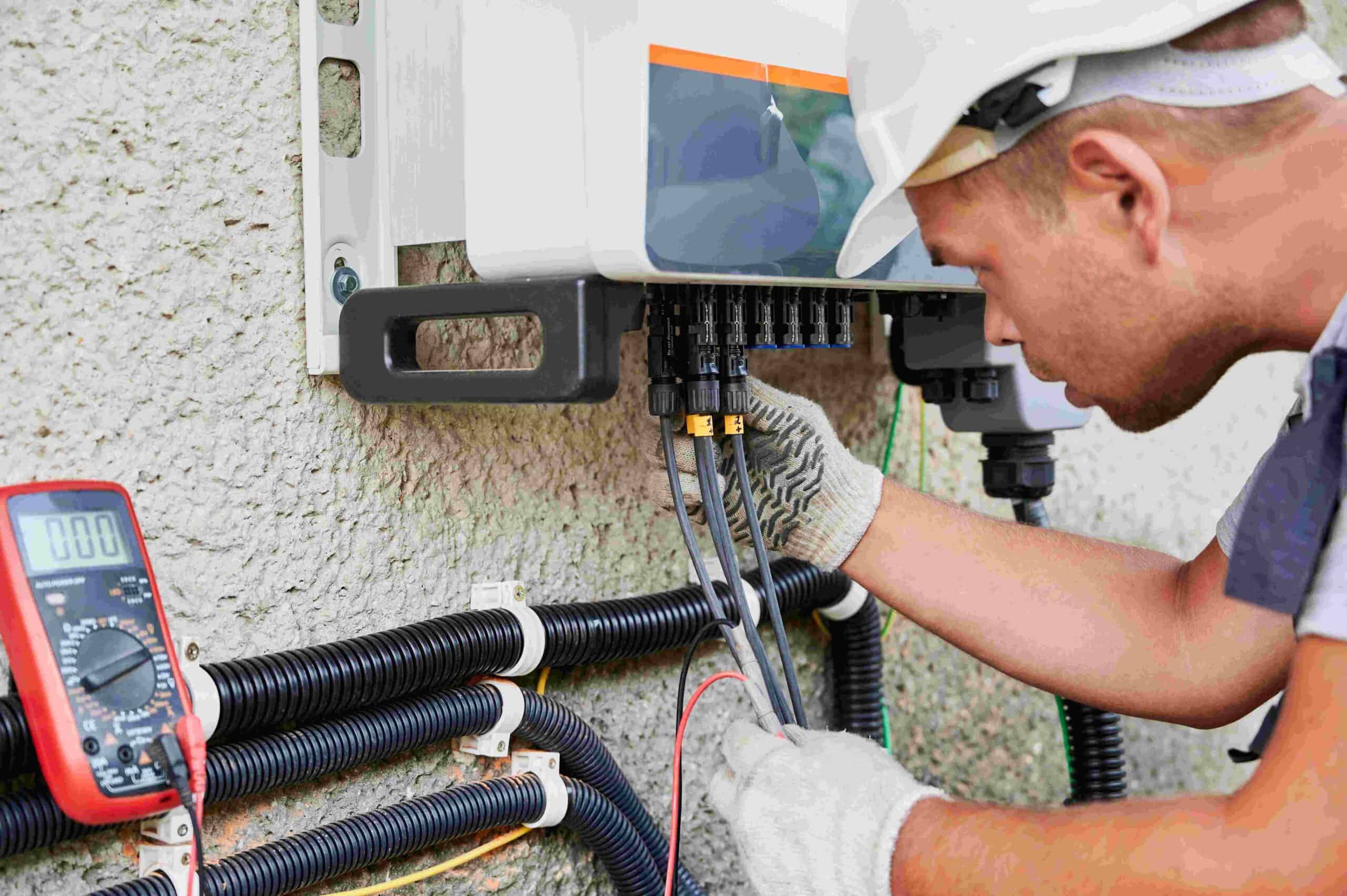
Signs Your Suffolk County Home May Need a Panel Upgrade Before Going Smart
A lot of the homes we work in across central and western Suffolk County — places like Commack, Holbrook, Ronkonkoma, and Hauppauge — were built during the post-war suburban boom of the 1950s through the 1970s. Those homes were wired for a fraction of the electrical load a modern household puts on a system. A 100-amp panel that was perfectly adequate in 1965 is often working too hard today, before you add a single smart device.
The signs aren’t always obvious. Breakers that trip more often than they should. Lights that dim when you run the microwave. An older Federal Pacific or Zinsco panel — both of which have well-documented safety issues and should be replaced regardless of what you’re adding to the home. These are things we look for during every assessment.
If you’re planning to add smart home systems, an EV charger, or both — and a lot of Suffolk County homeowners are doing exactly that as EV adoption continues to grow — a panel upgrade isn’t an obstacle. It’s the right starting point. The good news is that planning for future needs during a panel upgrade is far less expensive than going back in later. If solar is something you’re thinking about down the road, for example, preparing your panel for that during an upgrade now costs a fraction of what it would cost to retrofit later.
We also want to flag something that comes up more often than people expect: homes with aluminum wiring. It was commonly used in residential construction during the late 1960s and early 1970s, and it requires specific handling and compatible devices. If your home has it and you’re not sure, we can identify it during an assessment and tell you exactly what it means for your upgrade plans.
The bottom line is that a smart home built on an inadequate or aging electrical system isn’t really a smart home — it’s a liability waiting to surface. Getting the infrastructure right first is what makes everything else work.
Can Smart Home Upgrades Actually Lower My PSEG Long Island Bill?
Yes — but the degree to which they do depends heavily on how the system is set up and what it’s connected to. Plug-in smart bulbs alone won’t move the needle much. A properly integrated system that automates your lighting, manages your power consumption, and eliminates the energy waste that happens when nobody’s paying attention — that’s where the real savings come from.
Research consistently shows that smart home automation can reduce energy consumption by 20–30% when it’s implemented correctly. On Long Island, where residential electricity rates are among the highest in the continental United States, that percentage represents more actual dollars saved per month than it would almost anywhere else in the country. A household spending $250–$300 a month on electricity during peak seasons could realistically see that number drop by $50–$90 with a well-designed system.
PSEG Long Island also offers residential energy efficiency rebates for qualifying lighting upgrades and home improvements, which can offset a portion of your upfront installation costs. We’re familiar with what’s available and can help you understand what might apply to your project — it’s worth factoring in before you assume the cost is out of reach.
There’s also the resale angle, which matters more than people tend to give it credit for. Smart home upgrades are estimated to increase a home’s resale value by up to 5%, and in Suffolk County’s active real estate market, professionally installed smart lighting and automation systems are features that buyers notice. If you’re planning to sell in the next few years, the right upgrades now can pay back more than their cost at closing.
One thing we always tell homeowners: the energy savings conversation and the home value conversation point in the same direction. Investing in smart home electrical upgrades that are done correctly, permitted properly, and built on solid infrastructure is one of the better ways to spend home improvement dollars in this market.
Finding the Right Electrician for Smart Home Work in Suffolk County
Smart home technology is only as good as the electrical work supporting it. The devices get all the attention, but what determines whether your system is reliable, safe, and actually worth what you paid for it is what’s happening inside your walls, at your panel, and behind every switch plate.
We’ve been doing this work across Suffolk County since 2004 — from Babylon to Riverhead, from straightforward lighting upgrades to full panel replacements ahead of whole-home automation projects. Every job starts with a written quote reviewed with you before anything starts, and every job is backed by a 100% satisfaction guarantee.
If you’re thinking about smart home upgrades and want a straight answer about what your home actually needs, reach out to us. We’ll give you an honest assessment and a clear path forward — no pressure, no surprises.