Summary:
Most commercial electrical problems don’t start as emergencies. They start as something easy to ignore — a breaker that trips once a month, a section of lighting that flickers when the HVAC kicks on, a panel that’s been “working fine” since the building was built in 1979. That’s why scheduling a commercial electrical inspection can help identify potential issues before they become costly disruptions. Then one day it isn’t fine anymore, and you’re scrambling. If you manage a commercial property or run a business in Suffolk County, NY, this page is for you. We’ll walk through what commercial electrical work actually involves, when it’s time to make the call, and what separates a contractor who protects your building from one who just fixes the symptom and leaves.
What We Do as a Commercial Electrical Contractor
Commercial electrical work covers a wide range — new construction wiring, panel upgrades, lighting installation, circuit additions, generator hookups, EV charger setups, and emergency repairs. It’s not the same as residential work, and that distinction matters more than most people realize.
Commercial buildings run at higher voltages, often use three-phase power distribution, and carry significantly more load than any home. The code requirements are stricter, the permit process is more involved, and the consequences of getting it wrong — failed inspections, code violations, liability exposure — fall on you, the property owner or manager.
How Is Commercial Electrical Work Different from Residential?
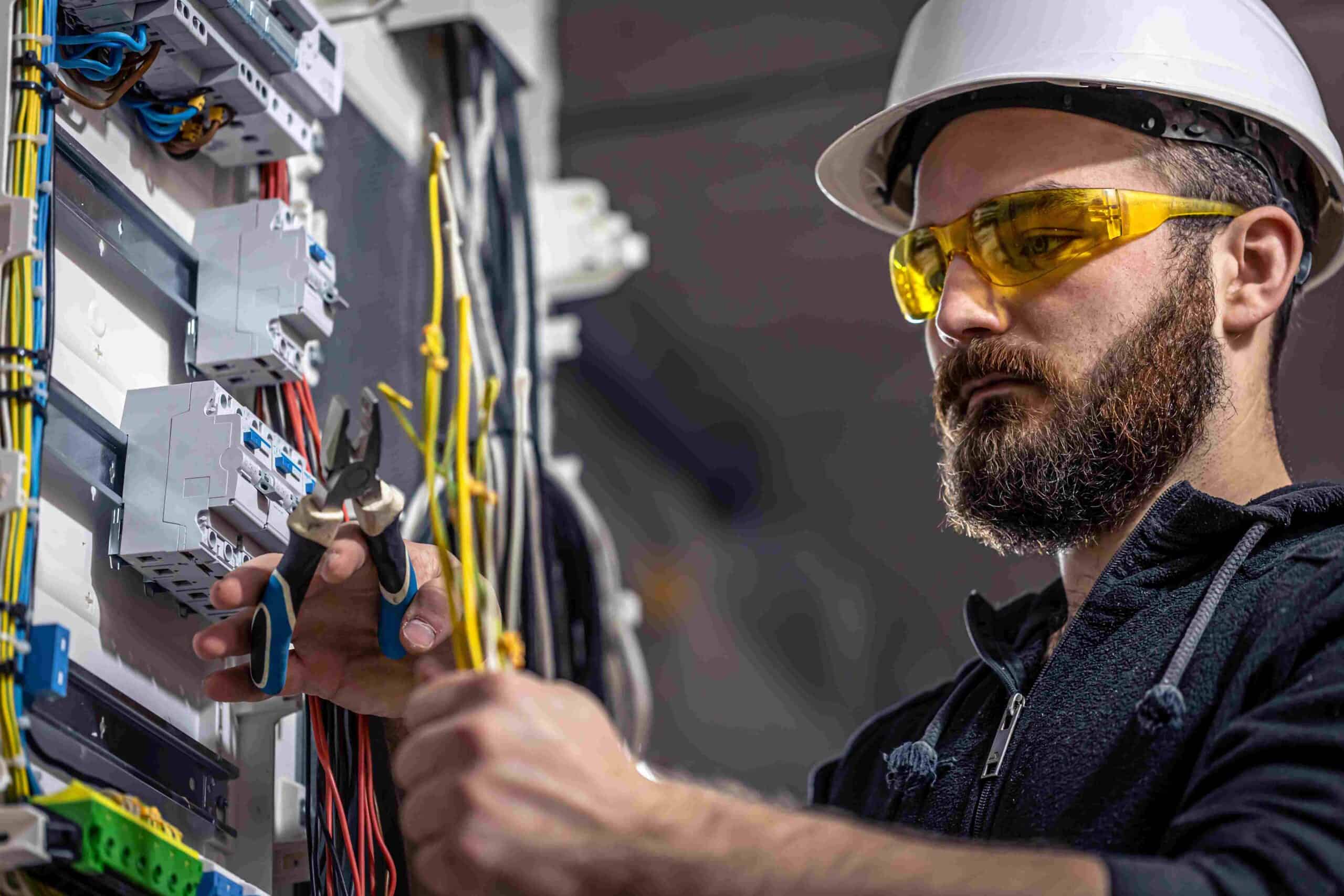
A licensed electrician who does great work in homes isn’t automatically the right person for your office building or retail space. Commercial systems are built and regulated differently, and a contractor without commercial experience can create problems that don’t show up until an inspection — or worse, until something fails.
On the technical side, commercial wiring often involves three-phase power, larger service panels, dedicated circuits for heavy equipment, and load calculations that account for everything running at once. Get the load calculation wrong and you’re looking at tripped breakers, overheated wiring, or a panel upgrade you didn’t budget for.
On the regulatory side, commercial electrical work in Suffolk County requires permits pulled through the relevant town building department — whether that’s the Town of Islip, Town of Babylon, Town of Brookhaven, or another municipality. Each town has its own process, its own inspection schedule, and its own inspectors who know what they’re looking for. A contractor who doesn’t navigate that process regularly will slow your project down and may leave you with work that doesn’t pass on the first try.
Then there’s the liability question. Unpermitted work in a commercial building doesn’t just create a code violation — it can void your property insurance, create disclosure obligations if you sell or lease the space, and expose you to liability if something goes wrong afterward. The permit isn’t a bureaucratic inconvenience. It’s what protects you.
We’ve been pulling permits and passing inspections across Suffolk County since 2004. That kind of local familiarity — knowing which forms a specific building department wants, how long inspections typically take in a given town, what details inspectors flag — is the kind of thing that only comes from doing this work in the same market for two decades.
Warning Signs Your Commercial Building Needs an Electrician Now
Some electrical issues are obvious. A complete power failure, a sparking outlet, or a burning smell from a panel — those get addressed immediately. But the situations that cause the most damage are the ones that get ignored for months because they seem manageable.
Breakers that trip regularly are not a minor inconvenience. They’re a signal that a circuit is being asked to carry more load than it was designed for. That’s either a wiring issue, an equipment issue, or a capacity issue — and none of those fix themselves. The same goes for outlets or switches that run warm to the touch. Heat where there shouldn’t be heat is a warning sign of resistance in the wiring, which is one of the more common causes of electrical fires in older commercial buildings.
Flickering or dimming lights — especially when large equipment starts up — usually point to voltage fluctuations or an overloaded circuit. In a busy commercial space, that kind of instability affects more than just the lights. It can damage sensitive equipment, disrupt operations, and signal that the electrical system is being pushed beyond what it was built to handle.
Older buildings carry their own set of concerns. A significant portion of commercial properties across Suffolk County — in towns like Babylon, Islip, Huntington, and Smithtown — were built in the 1960s through 1980s. Those buildings often have electrical systems that were never designed for today’s loads: modern HVAC equipment, commercial kitchen appliances, server rooms, EV chargers, and everything else that draws power in a 2025 business environment. If your building is in that age range and the electrical system has never been evaluated, that’s worth knowing before something forces your hand.
The cost of addressing these issues proactively is almost always lower than the cost of an emergency repair — and far lower than the cost of downtime.
Common Commercial Electrical Services We Provide in Suffolk County
Not every commercial electrical job is a crisis. A lot of what we handle is planned work — buildouts, upgrades, lighting retrofits, generator installations — that businesses schedule because they’re expanding, renovating, or getting ahead of a problem they’ve already identified.
Understanding what’s involved in the most common services helps you have a better conversation with any contractor, ask the right questions, and know whether the scope and pricing you’re being quoted actually makes sense.
Commercial Panel Upgrades and Electrical Service Upgrades
The electrical panel is the backbone of your building’s power distribution. When it’s undersized, outdated, or failing, everything downstream is affected. Panel upgrades come up frequently in Suffolk County commercial properties — particularly in buildings that were wired decades ago and are now being asked to support loads their original systems weren’t designed for.
A panel upgrade isn’t just swapping out hardware. It starts with a load calculation — an assessment of everything the building currently draws and what it will need to draw after the upgrade. That calculation determines the right service size, the number of circuits required, and whether the utility feed from PSEG Long Island needs to be upgraded as well. Skipping that step leads to panels that are still undersized, which is a problem you don’t want to discover six months after the work is done.
The permit and inspection process for a commercial panel upgrade in Suffolk County varies by town. In the Town of Islip, where our shop in Bohemia is located, the process involves specific documentation and scheduling that a contractor unfamiliar with the local building department will likely get wrong on the first attempt. That costs time, which costs money.
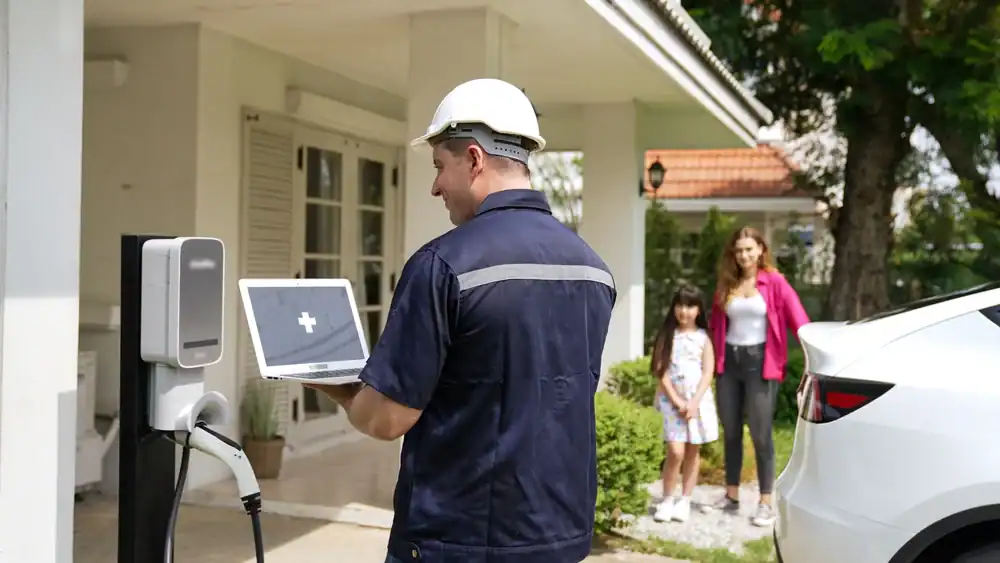
Beyond panels, electrical service upgrades often come up when businesses add significant new loads — a commercial kitchen expansion, a new server room, a fleet of EV chargers, or a large standby generator. Each of those requires a careful look at the existing service capacity before any equipment goes in. We’ve completed a significant number of EV charger installations for commercial properties across Suffolk County, and the load assessment is always the first conversation.
The other thing worth knowing: generator installation for commercial properties is a separate but related service. A properly installed standby generator — tied into your electrical system through a transfer switch — means your business keeps running when PSEG Long Island goes down. After what Hurricane Sandy did to this region in 2012, that’s not a hypothetical concern for most Suffolk County business owners. It’s a real operational decision.
Commercial Lighting Installation and Electrical Repairs
Lighting is one of the most visible parts of any commercial space — and one of the most frequently upgraded. LED retrofits have become common across Suffolk County as businesses take advantage of energy savings and, in many cases, rebates available through PSEG Long Island for qualifying commercial efficiency improvements. The work involves more than swapping bulbs. A full commercial lighting installation includes fixture selection, circuit assessment, proper load balancing, and in some cases, new wiring to support modern lighting systems that weren’t anticipated when the building was originally wired.
Office electrical services come up constantly for businesses that are reconfiguring space — adding workstations, building out a new suite, or converting a floor plan. That typically means new circuits, additional outlets, data and phone wiring, and sometimes a dedicated panel for a specific area. Done right, it’s clean work that supports how the space actually functions. Done wrong, it’s a tangle of extension cords and overloaded circuits that becomes a liability.
On the repair side, we handle everything from straightforward troubleshooting — finding why a circuit keeps tripping, diagnosing a failed outlet, tracking down an intermittent fault — to more involved work like rewiring a section of a building or replacing aging wiring that’s no longer safe. The troubleshooting piece is where experience matters most. We diagnose problems efficiently and fix the actual cause, not just the symptom that’s visible.
For businesses in areas like the Hauppauge Industrial Park, the Route 110 office corridor in Melville, or the commercial strips along Sunrise Highway, electrical maintenance isn’t optional — it’s part of operating a building responsibly. Scheduled maintenance catches issues before they become failures, extends the life of the electrical system, and gives you documentation that the work has been done properly. That documentation matters for insurance, for lease renewals, and for any future sale of the property.
How to Find a Reliable Commercial Electrician in Suffolk County, NY
The short version: verify the license, check the reviews, and make sure you get a written estimate before any work starts. A contractor who can’t provide proof of licensing and insurance upfront isn’t worth your time, regardless of the price.
Beyond the basics, look for someone with real commercial experience in Suffolk County specifically — not just a residential electrician who handles the occasional business call. Local knowledge of the permit process, the building departments, and the utility infrastructure matters in ways that only become obvious when something goes sideways.
We’ve been doing commercial electrical work across Suffolk County since 2004 — panel upgrades, buildouts, lighting installations, generator hookups, EV charger setups, emergency repairs, and everything in between. Every job comes with upfront pricing, a written estimate, and a 100% satisfaction guarantee. If you have a commercial electrical issue you’ve been putting off, or a project you’re ready to move on, reach out to us and let’s figure out what you’re actually dealing with.