Summary:
Your lights dip when the central air kicks on. A breaker you’ve reset three times this month trips again. The panel in the basement was there before you bought the house, and nobody has ever told you whether that’s a problem. If you own a home in Suffolk County, from Bohemia to Bellport, you’ve probably wondered what counts as a real warning and what’s just an old house being an old house. Some signs mean you should call tonight. Others mean you should plan something in the next month or two. Here are five, sorted by how fast they need attention.
How To Know When Your Suffolk County Home Needs An Electrical Panel Upgrade
Your electrical panel takes the power PSEG Long Island delivers and splits it among every circuit in the house. When it’s undersized, worn out, or a brand with a bad track record, the electrical system tells you in small ways first. The tricky part is that “it’s never been a problem” is exactly how most panel trouble sounds right up until it isn’t.
A lot of homes in Suffolk County were built before 1990, when nobody was planning for central air, a finished basement, and a car that plugs in. The gap between what the house was wired for and what you ask of it today is what we look for. Two of the five signs below need a call right away. The other three give you time to plan. And if one circuit fix solves it, we’ll tell you that instead of pushing a full replacement.
Which Electrical Panel Warning Signs Mean You Should Call Tonight?
The first is anything that says the panel itself is running hot. That means a burning or hot-plastic smell near it, a buzzing or crackling sound, a cover that’s warm to the touch, or brown and black scorch marks around a breaker. Don’t wait on any of these. Shut off what you safely can, stay back from the box, and call our 24/7 emergency line at 631-772-8576.
The second is a breaker that keeps tripping. One trip when you run the microwave and a toaster oven together is normal—that’s the breaker doing its job. A breaker that trips again and again, won’t reset, or feels hot to the touch is telling you something. Sometimes the panel is the problem. Just as often it’s one bad circuit or a worn-out appliance, and a new panel wouldn’t change a thing. That’s why we diagnose before we recommend anything. We’d rather tell you a single circuit needs work than sell you a bigger box.
What you should never do is swap in a larger breaker to make the tripping stop. The wiring and the panel are built for a set load, and a bigger breaker removes the protection while the overload stays right where it was. It’s the fix people try first, and it’s the one electricians dread finding.
Summer is when older panels get pushed hardest. When central air, a dryer, and a dishwasher all run on a hot July afternoon, a panel that was fine in April can start complaining. If your tripping only shows up then, mention it when you call. It helps us tell capacity from a single bad circuit.
Dimming Lights, Federal Pacific Panels, And Fuse Boxes: When To Upgrade
These next two signs rarely feel urgent, which is why people sit on them for years. The third is lights that dim or flicker when the AC, washer, or dryer starts up. A dying bulb flickers on its own schedule. Dimming that lines up with an appliance turning on means your electrical system is straining to supply the load. It isn’t an emergency, but it’s a capacity warning, and it tends to get worse as you add more to the house.
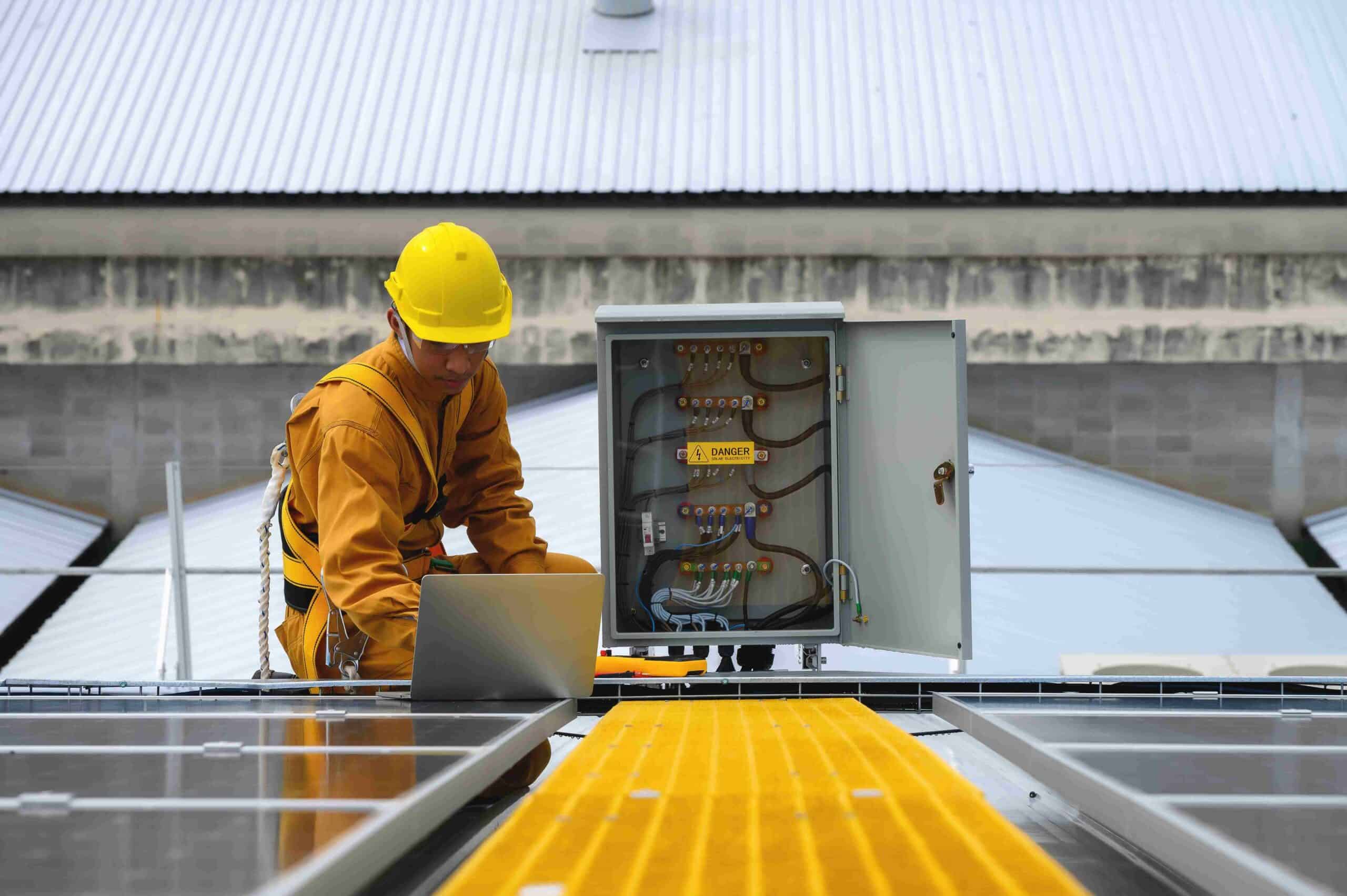
The fourth is what’s actually inside your panel. Open the door and read the label. Federal Pacific Stab-Lok and Zinsco panels went into a lot of homes built between roughly 1950 and 1990, and mid-century Suffolk County has plenty of them. The Federal Pacific problem is documented: breakers that may not trip when they should. You’ll see some websites call these “recalled panels,” but there was no formal recall, so there’s no free replacement program waiting for you. Zinsco’s known issue is breakers that can stay live even when switched off. A fuse box belongs in the same conversation. It may have worked for decades, but it wasn’t built for how much you plug in now.
Nothing about that calls for panic, but it’s worth having someone look instead of assuming. If you’re in one of the postwar neighborhoods in Islip, Babylon, Huntington, or anywhere else across Suffolk County, check the label this weekend. The same goes if a home inspector or your insurance company has flagged the panel. And “it’s worked for 40 years” doesn’t settle anything. The panel hasn’t changed since the house was built, but what’s plugged into it has.
Planning An EV Charger Installation In Suffolk County? Check Your Panel First
The fifth sign comes from your plans, not your panel. If you’re adding an EV charger, central air, a heat pump, a hot tub, or a major renovation, the panel has to carry it. Plenty of Suffolk County homeowners first hear this when an installer says, “you’ll need a bigger panel for that.” It’s fair to wonder whether that’s real or an upsell.
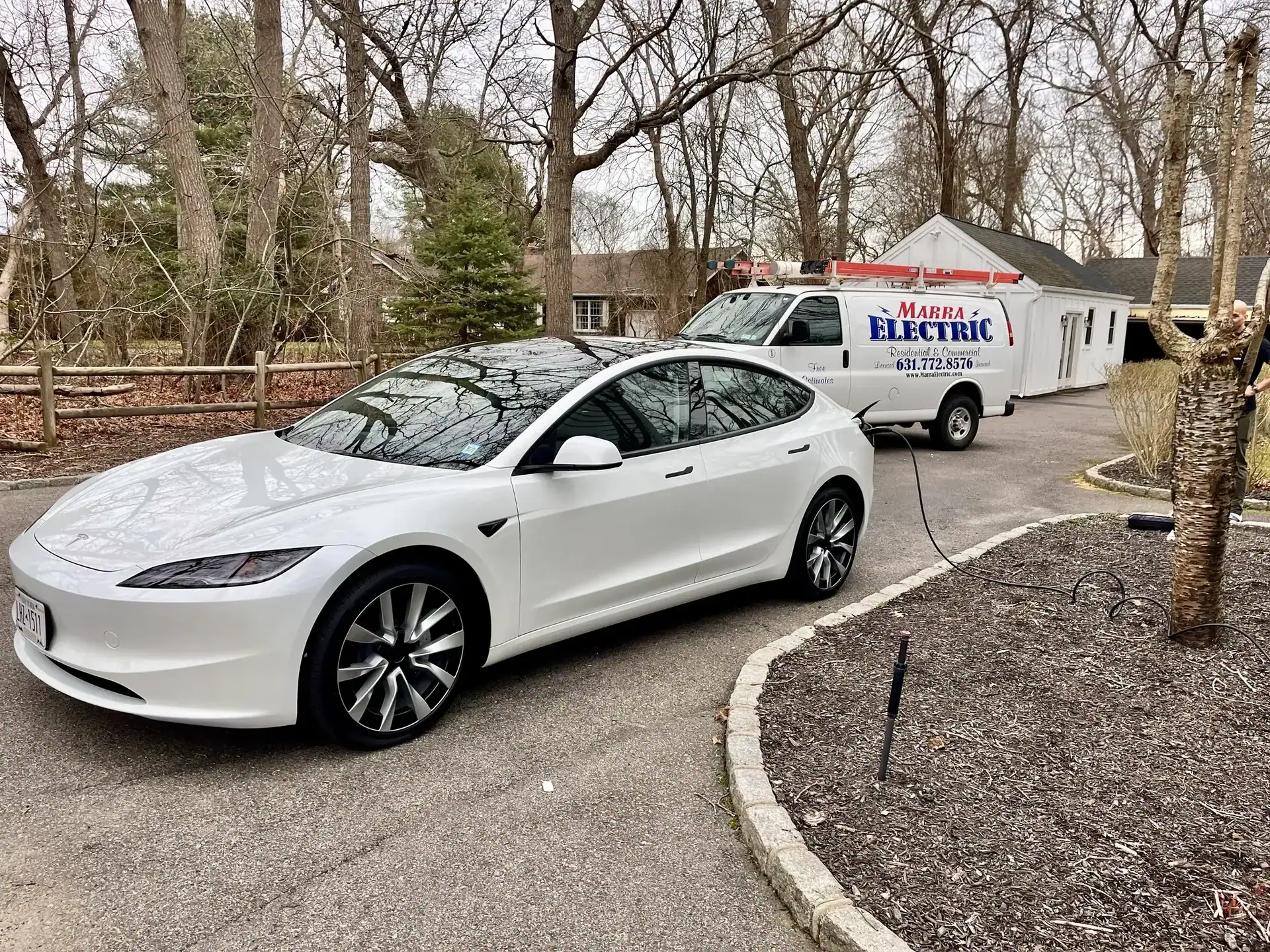
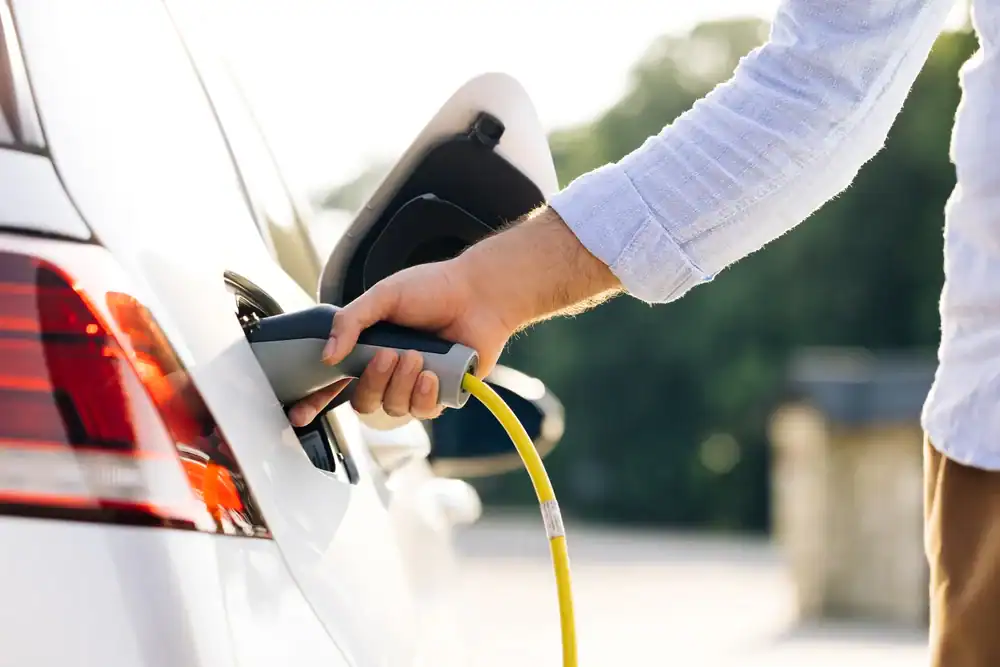
Sometimes your existing panel has room, and sometimes it doesn’t. A load calculation settles it with math instead of a guess. We’re a Tesla and ChargePoint certified installer, and we check the panel as part of every EV charger installation. One Angi customer had us take a home from 150 to 200 amps and add the charger as a single project. That customer wrote that Dan explained what to expect and stopped by afterward to make sure everything was right.
What Does An Electrical Panel Upgrade In Suffolk County Involve?
Most people picture someone swapping one gray box for another. The job is bigger than that, and knowing the steps helps you judge any quote you receive. It starts with the load calculation, which tells us how much power your house really needs, including the EV charger or heat pump you’re planning. If a contractor quotes a panel without ever asking what you plan to run, that’s worth noticing.
Next comes the permit. In Suffolk County it’s pulled through your town’s building department, and the details can differ from one town to the next. Then we coordinate with PSEG Long Island, who disconnect and reconnect power at the meter. Power is off while the panel is swapped, and we tell you ahead of time when that will happen so it doesn’t catch you mid-dinner.
After the new panel goes in comes the electrical inspection, and it matters more than people expect. PSEG requires a copy of the inspection certificate for any service change, so a passed inspection is what gets your service properly reconnected. A good job ends with every breaker labeled and that inspection passed.
How long all of this takes depends on your town’s permit process and PSEG’s schedule, so we won’t hand you a number we don’t control. When we come out for the free estimate, we’ll tell you what we know about your address and what to expect.
Who Can Legally Upgrade Your Panel In Suffolk County And What Should Your Quote Include?
New York has no statewide electrician license, so it’s handled locally. Suffolk County requires a Master Electrician license to pull permits for this kind of work, and you can check any electrician through Suffolk County Consumer Affairs at 631-853-4600 before they come into your home. We’re a fully licensed and insured electrical contractor, and we’re glad when people check. Homeowners can technically do their own electrical work here as long as they pull permits and pass inspection, but a main panel is a poor place to practice. Even with the main breaker off, the wires coming in from the utility stay live.
A good written quote names the permit, the inspection, and the PSEG coordination, because those are the things that quietly disappear from a cheap number. If you collect three estimates for the same job and one comes in far below the others, find out what’s missing. And if anyone suggests skipping the permit to save time, walk away. Without the permit there’s no inspection certificate, and without the certificate PSEG won’t finish the job.
Our estimates are free, and you’ll know the total cost before we start, with no surprise bills at the end. We’ve been working out of Bohemia since 2004, and our crew arrives in uniform and in marked vehicles, so you know who’s at your door. Our Angi profile shows 191 reviews at 5.0, we’ve earned the Angie’s List Super Service Award seven years running, and we’re BBB Accredited with an A+ rating. We also back our work with a 100% satisfaction guarantee.
Ready For An Electrical Panel Upgrade In Suffolk County? Start With A Free Estimate
Here’s the short version. A burning smell, buzzing, a warm panel, or a breaker that trips over and over means call now. Dimming lights, a Federal Pacific, Zinsco, or fuse box panel, and a big new load like an EV charger mean you have time, but not forever. In every case, the right answer starts with someone checking your panel instead of guessing.
If you’re not sure which group you’re in, Marra Electric can come take a look. We’ll tell you straight whether you need a full electrical panel upgrade or a smaller fix, give you the price in writing before any work begins, and handle the permit, PSEG Long Island, and the inspection. And if it’s the middle of the night and something smells wrong, our emergency line is open 24/7.