Summary:
You’ve got a breaker that keeps tripping, an EV on order, or a renovation that’s about to ask more of your house than it can give. So you search for an electrical contractor in Suffolk County and get a wall of names that all say “licensed and insured.” Fair question: what does that actually mean out here?
Here’s the twist. New York has no statewide electrician license, so the rules that matter are Suffolk County’s. Below, we lay out how to check credentials, what a well-run job looks like from first call to final walkthrough, and what panel upgrades and EV chargers involve. Start with the license, because everything else rests on it.
What "Licensed" Means For Electrical Contractors In Suffolk County
New York doesn’t license electricians at the state level. Licensing is handled locally, and in Suffolk County it runs through boards inside the county’s Department of Labor, Licensing and Consumer Affairs. A master electrician here has to be at least 21, run a real place of business, and keep up with continuing education; 8 hours every two years.
That’s why “licensed in New York” doesn’t tell you much, while “licensed in Suffolk County” does.
It’s also where the difference between an electrician and an electrical contractor shows up. The electrician does the work. The contractor takes responsibility for the whole job, including the permit, the inspection, and the paperwork that keeps your electrical system in compliance.

How To Verify An Electrical Contractor's License In Suffolk County
Ask to see it. A legitimate Suffolk County contractor will hand over the license without hesitation, and you can confirm it with the county’s licensing office instead of trusting a business card. It’s a short call that most homeowners never make.
While you’re at it, ask for proof of insurance. If someone gets hurt on your property or a job goes sideways, you want the contractor’s policy absorbing it, not yours.
A few other questions are worth asking in that first conversation. Who pulls the permit? Who schedules the inspection? Who deals with PSEG Long Island if the power has to come off? Is the price written down and itemized, and is it the price you’ll actually pay? None of these are gotcha questions. A contractor who runs a clean operation answers all of them in the first minute, and one who doesn’t tends to get vague.
There’s some history worth knowing, too. At one point, towns in Suffolk County had started requiring electricians to register separately, which was a real burden for contractors. A 2013 state bill let the county set up a master electrician board whose rules take priority over municipal licensing. Local requirements can still vary by town, so ask to see the Suffolk County license, then ask what your building department will need for your particular job.
We’re Marra Electric, fully licensed and insured, based in Bohemia, and we’ve worked Suffolk County homes and businesses since 2004. If you want to see our license before we ever talk about your project, ask. We’d rather you check.
What Happens Between The Free Estimate And The Final Walkthrough
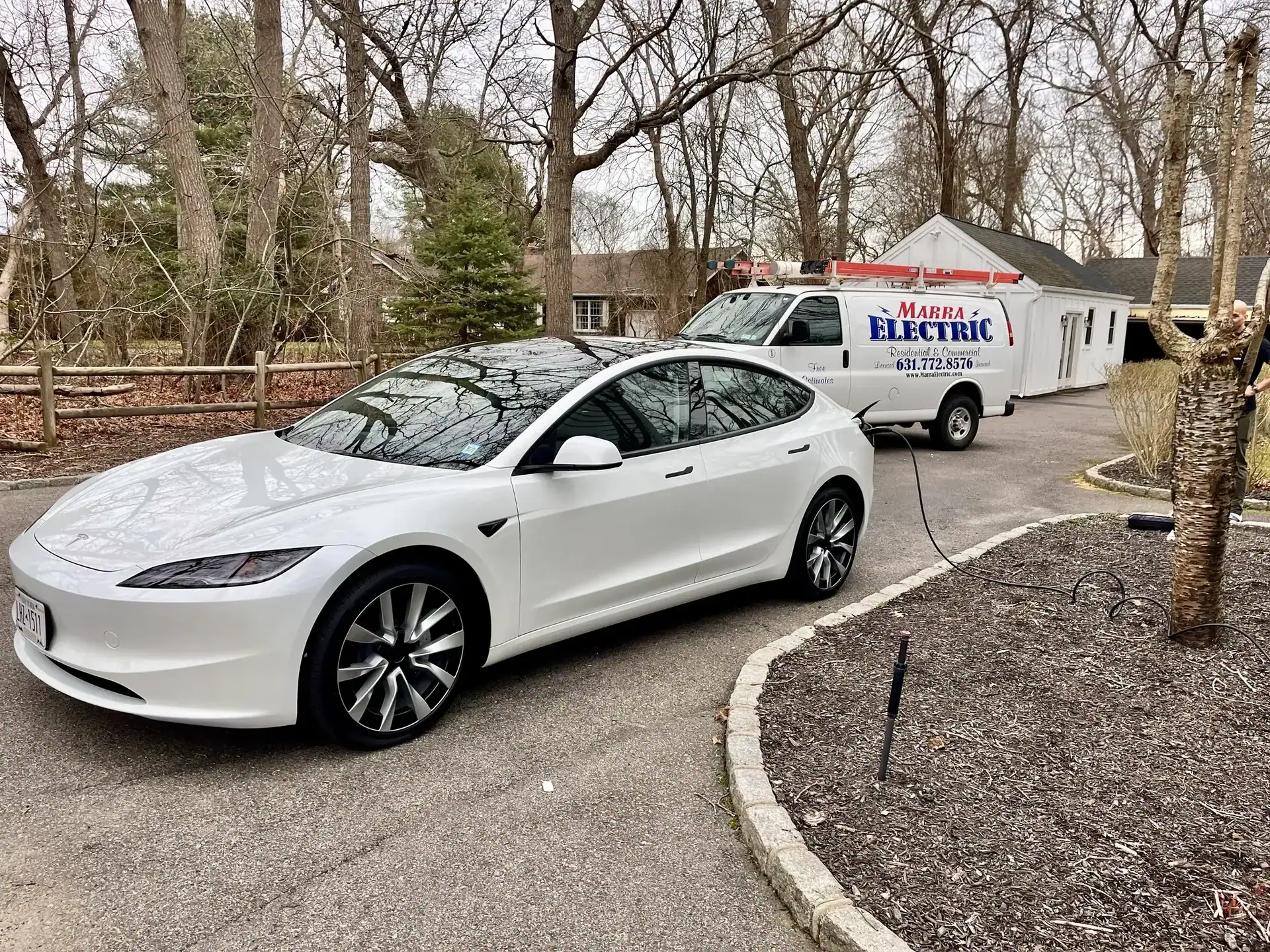
It starts with a free estimate, and it should feel like a conversation, not a pitch. Dan Marra is often the one doing it. We arrive in a lettered vehicle and uniform, so you know exactly who’s at your door, and we walk through what you want done.
One customer who hired us for a panel upgrade and EV charger wrote that the estimate was broken down and the scope explained before anything started. That’s the standard. The number you get is the number you pay. You know the total before we begin, with no surprise bills at the end.
Get two or three estimates if you like, and compare the scope, not just the bottom line. A price that’s far below the rest can mean hidden fees later or work that skips code.
Once you say yes, we pull the permit, set the date, and show up when we said we would. Reviewers keep landing on the same words: prompt, right on time. A recessed-lighting customer noticed we kept ceiling cuts to a minimum, and we test our work—like an EV charger—before we pack up.
After that, Dan often stops by or checks in to make sure everything’s running the way you expected. If something isn’t, our 100% satisfaction guarantee means we make it right. That approach has earned us a 5.0 rating across 191 reviews on Angi, and more than a few customers who’ve called us back for a fourth job.
Electrical Panel Upgrades And EV Charger Installation In Suffolk County
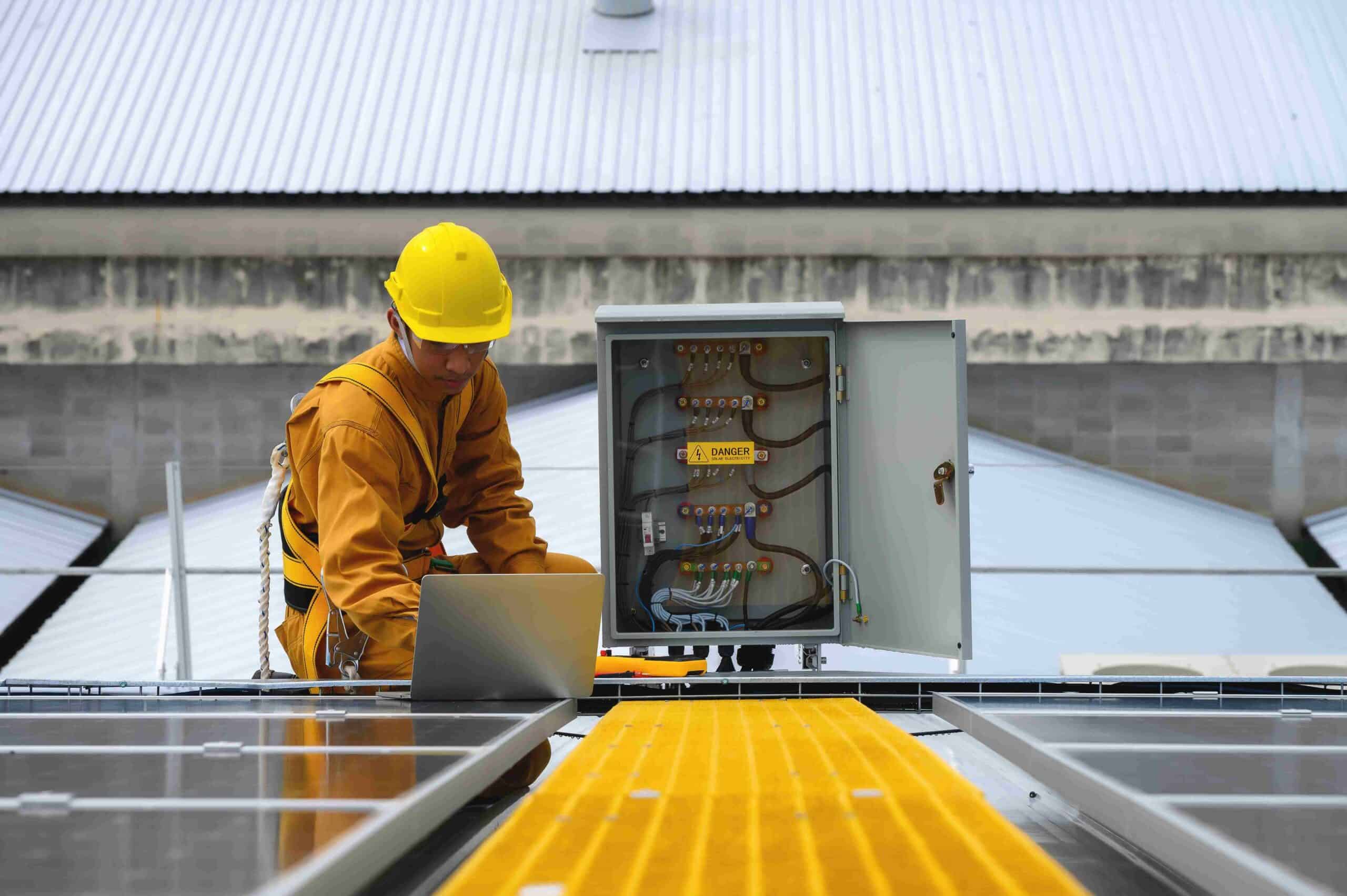
For a lot of Suffolk County homeowners, the first real reason to call an electrical contractor is the panel. Your electrical system has a fixed capacity, and your panel decides what you can add to it: a charger, a hot tub, a renovation, a generator. If the panel is old, full, or sitting on 100-amp service, that’s where the conversation starts.
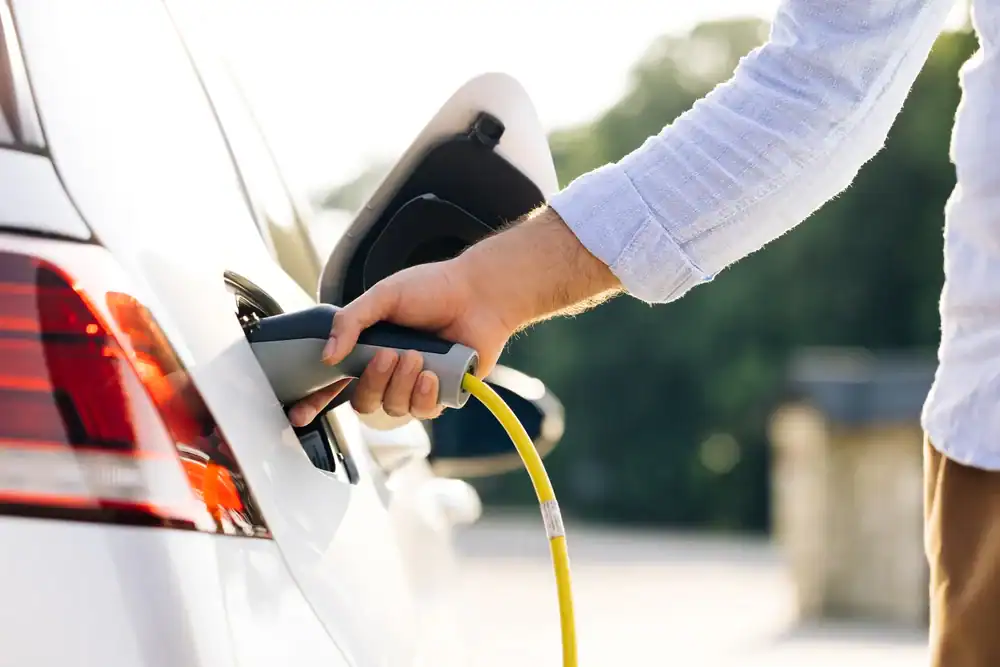
More drivers across Suffolk County are bringing home EVs, and chargers put real demand on older panels. Most people calling us about a charger don’t know yet whether they also need a panel upgrade. That’s a fair thing not to know, and it’s the first thing we figure out.

Do You Need A Panel Upgrade To Install An EV Charger In Suffolk County?
Often, no. About 80% of homes with 200-amp service can support a Level 2 charger without a panel upgrade. Whether yours is one of them comes down to a capacity check, which is why we measure what your panel has available before we quote anything, not after.
Here’s why it matters. A standard outlet runs on a 15 to 20 amp circuit. A Level 2 charger usually needs a 30 to 50 amp circuit of its own. If you have 100-amp service and a crowded panel, that extra load may be more than the system should carry, and that’s when a move up to 200 amps comes into the picture.
On cost, here’s what we see in Suffolk County. A standard Level 2 charger installation runs $1,200 to $3,000 before incentives. A panel upgrade from 100 to 200 amps typically runs $2,000 to $3,500, and that range includes permits and PSEG Long Island coordination. If your home needs both, the upgrade adds to the charger cost, which is why a written, itemized estimate beats a ballpark over the phone.
PSEG Long Island also offers a rebate on home chargers. Amounts and eligibility change from year to year, so we’ll check the current terms with you at the estimate rather than quote a number that’s gone stale.
We’ve installed everything from the Tesla Universal Wall Connector to chargers for a Mach-E, and our team is Tesla and ChargePoint certified. If you’re unsure which charger fits your car and your panel, bring us the question first and buy the hardware second.
Do You Need A Permit And Electrical Inspection In Suffolk County?
For most electrical work in Suffolk County, yes, you need a permit, and that includes EV chargers. Pulling it is the contractor’s job, not yours. We pull the permit, schedule the inspection, and coordinate with PSEG Long Island when the work calls for it, so you’re not playing go-between with the utility and the building department.
Panel upgrades are where PSEG matters most. The utility has to disconnect your power and reconnect it once the new panel is in. The job typically takes about a full day, and the power is usually off for around four to six hours. Plan around it, whether that means a work-from-home setup or a fridge full of groceries, and we’ll give you the window ahead of time.
The word “inspection” covers two different things. After permitted work, it’s the municipal inspection that signs off on the job. Separately, it can mean an electrical inspection of the system you already have, which is worth doing before you buy an older home, remodel, or add a big load like a charger. We do both kinds. Tell us which one you’re after and we’ll set it up.
Whether you’re in Bohemia or West Islip, out in Smithtown or Huntington, or farther east toward Riverhead and Southampton, the same process applies. We serve all of Suffolk County, residential and commercial. And if something’s sparking or smells burnt, call us any hour. We offer 24/7 emergency service.
Hiring An Electrical Contractor In Suffolk County: Where To Start
Here’s the short version. Ask for the Suffolk County license, not just “licensed in New York.” Get the price in writing, itemized, before work starts. Make sure someone else is handling the permit, the inspection, and PSEG, and that someone is your contractor. Then expect a crew that shows up on time, protects your house, and checks back once the job is done.
If you’re weighing a panel upgrade, an EV charger, or an electrical inspection and you’re not sure what your home needs, Marra Electric can walk through it with you. The estimate is free, the price is set before we start, and you’re welcome to check our credentials first.