Summary:
You bought or leased an EV, and the cord that came with it is already testing your patience. Plugged into a regular outlet, it can take over 20 hours to fill the battery, so you end up planning your week around public chargers. A Level 2 charger in your garage fixes that, but most Suffolk County homeowners stall on the same three questions: can my electrical system handle it, what will my town want, and what’s the bill going to be?
We install home chargers from our base in Bohemia, and we’ll answer all three. First, here’s why having one at home changes your routine so much.
Why Suffolk County Homeowners Need A Level 2 Charger At Home
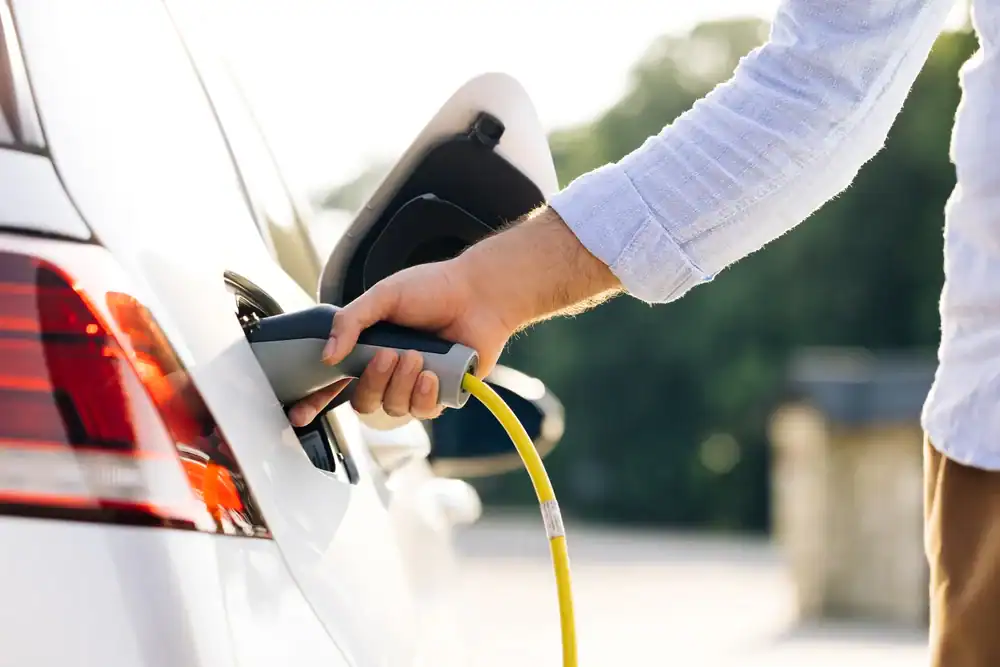
A Level 2 charger runs on a dedicated 240-volt circuit and adds roughly 20 to 30 miles of range per hour. Plug in when you get home and you wake up to a full charge. That matters here, where daily commutes and round trips to Manhattan burn through range quickly and a detour to a public station can swallow an evening.
The charger itself is the easy part. What decides how the project goes is the electrical system behind it, because a Level 2 charger is a big, steady load that can run for hours. Your home either has room for that or it doesn’t, and finding out is where most of the worry comes from.

Do I Need An Electrical Panel Upgrade For An EV Charger?
Often, no. About 80% of homes with 200-amp service can support a Level 2 charger without a panel upgrade. The only way to know for sure about yours is a load calculation, but you can get a first read in about ten minutes.
Open the panel door and look at the big breaker at the top, the main. The number on it, usually 100 or 200, is your service size. A 200 is a good sign. A 100 doesn’t automatically mean trouble, but it means we need to look closer.
Here’s what the load calculation does. We add up what your home already draws (things like the furnace, oven, dryer, and central air) and see what’s left over for the charger. The code treats a charger as a continuous load, so the breaker has to be sized at 125% of what the charger pulls. A 40-amp charger, for example, needs a 50-amp breaker. If your panel has the room, that’s the whole answer: one new dedicated circuit and you’re done.
Older homes are where the question gets real. In older neighborhoods like Islip Terrace, many houses were built decades ago and still run on 100-amp panels. If the math says you’re short, a full upgrade from 100 to 200 amps typically costs $2,000 to $3,500, including permits and utility coordination. One customer paid $3,600 to go from 150 to 200 amps and add the EV charger in the same project, after we walked through a broken-down estimate and explained what to expect. And if you don’t need an upgrade, we’ll tell you so.
What If My Electrical Panel Is Full Or Too Small?
A full panel isn’t a dead end. There are a few ways through it, and the right one depends on your numbers rather than on whatever is easiest to sell.
Sometimes the fix is simply adding a circuit, which is the least invasive route. If the panel has capacity but no open slots, a sub-panel can add breaker spaces without replacing everything. And if the load is tight but not impossible, an energy management system can slow the charger down when the rest of the house is drawing heavily. The electrical code allows this specifically so people can avoid a panel upgrade. Your charger eases off at dinnertime with the oven and AC running, then picks up again overnight, when you’re asleep and it doesn’t matter.
Then there’s the case for doing the bigger job once. If you live in an older Suffolk County house and can picture a heat pump, an induction range, or a backup generator in your future, a service upgrade or sub-panel now means you won’t be opening the wall again later. That’s the honest argument for a panel upgrade: you’re sizing your electrical system for the next decade, and the EV charger just happens to be the first thing on it.
We also install generators and transfer switches, so we can plan for them in the same estimate. Whichever route fits your home, we explain it in plain terms and give you the price before any work starts.
How EV Charger Installation Works In Suffolk County
The sequence is simple once you’ve seen it. We come out, look at your panel, and talk through where the charger should go. Our owner Dan often does the estimate himself and stops by afterward to check in. Next comes the load calculation, then an itemized estimate, which is free. Once you approve it, we apply for the permit with your town, schedule the install, and book the final inspection.
The hands-on work is the short part. A straightforward install takes about 2 to 4 hours, and a complex one can take a full day. Start to finish, including permit and inspection, plan on two to three weeks. Before we leave, we test the charger to make sure it actually works.

Why Does A Few-Hour Install Take Weeks? Suffolk County Permits Explained
Because in Suffolk County there’s no single office to call. Permits come from your town, not the county, and each town runs its own building department with its own fees, forms, and backlog. Babylon, Islip, Huntington, Smithtown, Brookhaven, Riverhead, Southampton, and East Hampton all work a little differently.
Permit fees generally add $150 to $350, and turnaround varies. Brookhaven has typically run about 10 to 18 business days, while Islip is often closer to 7 to 14. Those timelines shift, so check with your town.
Pulling that permit isn’t something just anyone can do, either. Here you need a Suffolk County Master Electrician license to pull permits, and a Nassau license doesn’t carry over. New York doesn’t allow homeowner DIY on work that requires a permit, and a Level 2 charger is on that list. That’s why the cheap handyman route can come back to bite you. An unpermitted install can cause problems with your insurance and when you sell the house.
Then comes the electrical inspection. After the install, the work is inspected, either by the town directly or by a certified agency, depending on where you live. That inspection works in your favor. It’s a second set of eyes confirming the breaker, wire, and connections are right before you trust them with your car every night.
We handle the permit application, the load calculations, and the inspection scheduling, so you don’t have to stand in line at town hall or take a day off to meet an inspector. The wiring takes an afternoon. The calendar belongs to the town.
How Much Does EV Charger Installation Cost In Suffolk County?
For a Level 2 install with no panel upgrade, you’ll typically see $800 to $2,500 all in. A permit adds $150 to $350, and if your numbers call for a panel upgrade, that’s another $2,000 to $3,500. You can see why two quotes for “the same job” can land far apart. The distance from your panel to the charger, indoor versus outdoor mounting, and the condition of the panel all move the number.
That’s why we give free estimates and price the job before we start. The number you get is the number you pay, and it doesn’t change halfway through. Customers have told us that’s what stood out, using words like “what you pay, no hidden extra cost.” When you compare estimates, look at what each one includes: load calculation, permit, inspection, and testing.
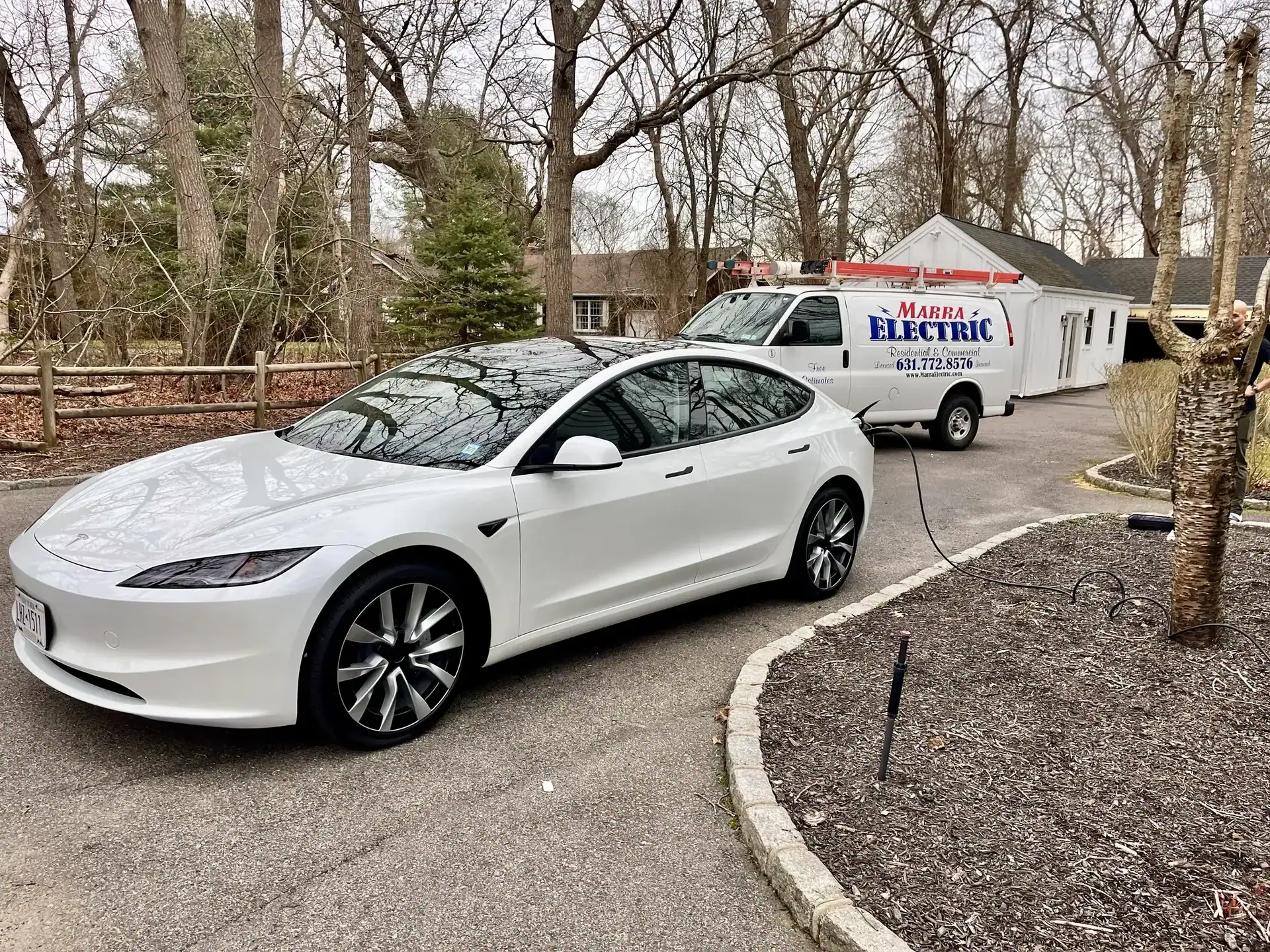
As for who should do the work, you want a licensed electrical contractor who knows the code’s EV rules and pulls the permit with your town. We’ve installed Tesla Wall Connectors and a Mach-E charger for neighbors around Islip and East Islip, and one customer described the experience as “easy and stress-free.”
One last thing to check before you buy a charger: PSEG Long Island offers rebates on qualifying ENERGY STAR Level 2 chargers, with higher amounts for qualifying customers. Check PSEG LI’s current program page for today’s amount, and pick a certified model so you qualify.
Ready For EV Charger Installation In Suffolk County, NY? Start With A Free Estimate
A home charger is worth a serious look if you drive an EV in Suffolk County, and the panel is the piece that deserves a straight answer. Check your main breaker, expect a load calculation, and remember that the permit and inspection, not the wiring, set your timeline. Many homes with 200-amp service don’t need an upgrade, and when one does, you should see the price before anyone touches your wall.
At Marra Electric, we’ve served Suffolk County since 2004, and we stand behind our work with a 100% satisfaction guarantee. We’ve also earned the Angie’s List Super Service Award seven years in a row. If you want to know where your electrical system stands, reach out for a free estimate and we’ll tell you honestly what your home needs.