Summary:
Someone told you that you need an electrical inspection. Maybe it was your insurance company, your real estate agent, or the town after you hired somebody to run a new circuit. Either way, you’re probably wondering what exactly you’re signing up for, because in Suffolk County that phrase can mean two very different things. One is a check the town requires after certain work. The other is a look at your whole system that you choose to schedule. We’re Marra Electric, based in Bohemia, and we’ve been sorting this out for homeowners across Suffolk County since 2004. Let’s start with what each version actually is.
What Does An Electrical Inspection Mean In Suffolk County?
A permit inspection happens after electrical work that needs a permit, like a panel upgrade, a new circuit, or an EV charger. In much of Suffolk County, a third-party agency handles it, such as the New York Board of Fire Underwriters or Long Island Electrical Inspectors. A few towns, including Riverhead and Southampton, do their own inspections. When the work passes, you get a Certificate of Compliance, sometimes called a Letter of Satisfaction.
A safety inspection is different. You schedule it, an electrician goes through your system, and nobody is checking paperwork. People book one before buying or selling, after an insurance notice, or when something just feels off. Same two words, very different visit, and mixing them up is how people end up paying for the wrong one.
Do I Need A Permit Inspection Or A Safety Inspection In Suffolk County?
Start with what’s happening in your house. If you’re adding or changing something (like a panel, a circuit, a charger, or a generator) you’re in permit territory. Whether you’re in Islip, Brookhaven, Huntington, Smithtown, or Babylon, the permit goes through the building department that covers your address, and an inspection follows. We handle that paperwork and schedule inspections at the right stages of the project, so you’re not chasing anyone.
Suffolk County lets homeowners do their own electrical work, which Nassau doesn’t, but the permit and inspection still apply. That’s where plenty of DIY projects get stuck. Licensing is local too. Suffolk County has its own county license, so an electrical contractor licensed in Nassau isn’t automatically cleared to work here, and it’s worth asking before you hire anyone. If someone asks you to pull the permit yourself, keep looking.
A permit inspection covers the permitted work. It isn’t an open invitation to audit the rest of your house.
A safety inspection is the one you’d book on your own. Buying or selling, an insurance notice, a renovation, a breaker that keeps tripping, an outlet that’s warm to the touch, a burning smell. A home inspector’s look at the electrical system is visual and limited to what’s reachable, which is fine for a general overview. When you want someone to open the panel and tell you what’s really going on, that’s an electrician’s job.
Timing matters too. One local permit guide lists Town of Brookhaven permits at $200 to $375, with approvals historically taking 10 to 18 business days. Fees change, so confirm with your town before you plan around those numbers.
What Gets Checked In A Home Electrical Inspection On Long Island?
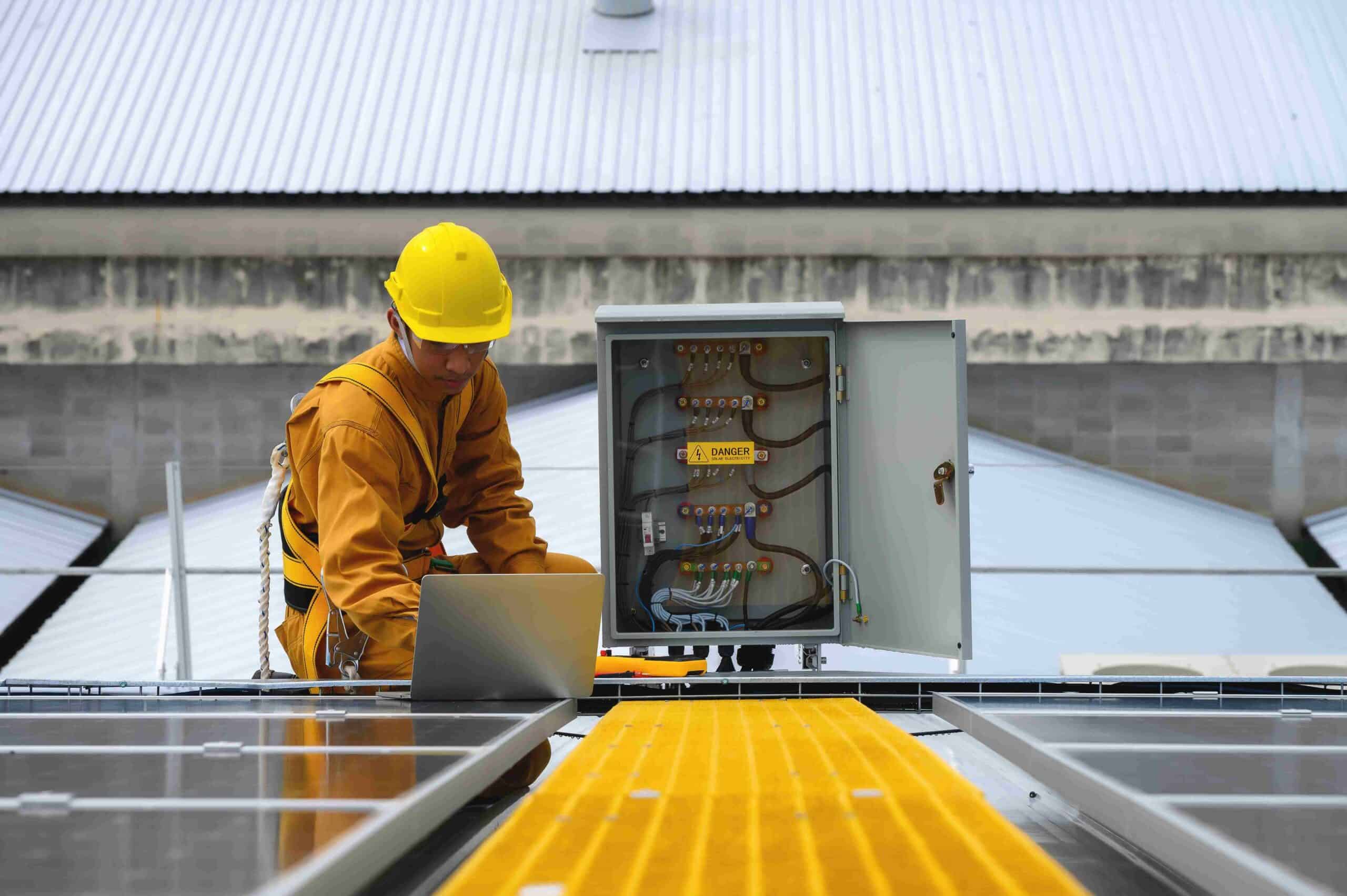
When we do a safety inspection, the panel is the first stop. We open it and look at the condition of the breakers and the bus, the grounding, and whether connections are tight, because loose ones are quiet trouble. Then we check that GFCI and AFCI protection is where it should be, test smoke and CO detectors, and look at surge protection. If we suspect a hot spot, infrared thermal imaging can find it.
What makes Long Island and Suffolk County its own case is the age of the houses. Plenty of homes from the 1950s through the 1980s still have Federal Pacific Stab-Lok or Zinsco panels, and some built in the late 1960s and early 1970s have aluminum branch-circuit wiring. Zinsco breakers can fuse to the bus bar, and many insurers won’t write a policy on a home with either panel. Aluminum wiring isn’t automatically a problem, but it’s only safe when the connections and devices are rated for it, and you can’t know that without looking.
We give you a free estimate and an upfront price before we start any work, so you decide with real numbers in front of you.
Electrical Panel Upgrade Or EV Charger? Get The Inspection First In Suffolk County
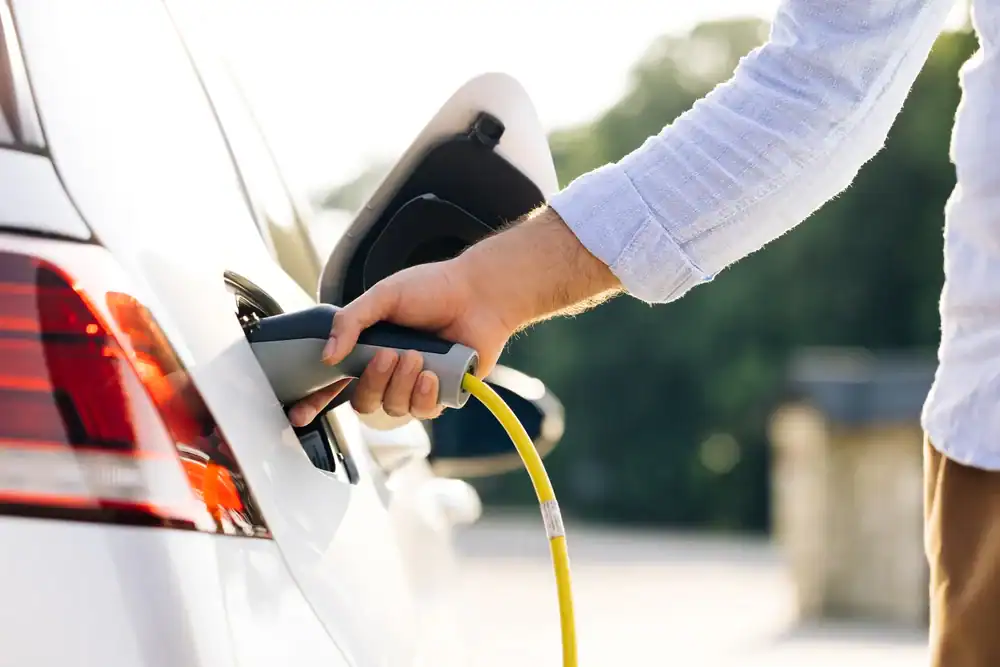
If you’ve just bought an EV, or you’re about to, this is the inspection that earns its keep. A Level 2 charger puts a heavy load on your electrical system for hours at a time, and a panel that was fine in 1985 may not have the room. Before you spend anything on EV charger installation, an inspection tells you whether your panel can carry it, whether it needs an upgrade, or whether the wiring needs attention first.
This pairing comes up in our work across Suffolk County. One customer had a 150-amp to 200-amp panel upgrade done along with an EV charger, and another in Ronkonkoma had a Mach-E charger installed. Knowing what the system can handle up front keeps a project from changing halfway through.
Can My Suffolk County Home's Panel Handle An EV Charger?
Maybe, and the only reliable way to know is to have someone look. Panel age is the first clue. A newer 200-amp panel in good shape can have room to spare. An older 100-amp panel feeding central air, an electric dryer, and a kitchen renovation is a different story. And if the panel is a Federal Pacific or a Zinsco, the question usually shifts from “can it take a charger” to “should this panel still be here at all.”
During the inspection we look at what the panel already serves, the condition of the breakers and connections, and how much capacity is left. If there’s room, the charger goes in on its own circuit. If there isn’t, an electrical panel upgrade is the cleaner fix than squeezing a heavy load onto a system that’s already stretched.
Either way, the work needs a permit, which means an inspection afterward. We pull it and schedule it, and when it passes, the Certificate of Compliance is what you keep on file. That paper matters later. Buyers flag unpermitted work, and it can complicate an insurance claim, which is the last thing you want to learn while a sale is on the line.
One customer who had a Tesla Universal Wall Connector installed mentioned that our crew tested the charger before leaving. That’s how we like to finish: the job isn’t done until it works.
What Happens If My Electrical Inspection Fails In Suffolk County?
First, it’s usually fixable, and it’s more common than people think, especially with DIY work. A failed permit inspection means something doesn’t meet code yet. The work gets corrected, the inspector comes back, and once it passes you get your Certificate of Compliance. In towns where approvals move slowly, a re-inspection can add time, which is one more reason to get it right the first time.
A safety inspection can’t fail, but it can turn up findings, and that’s the part people dread. We tell you what we found in plain terms, separate what’s urgent from what can wait, and give you a free estimate with an upfront price on anything you want done. You’ll know the total cost before we start. As one customer put it, “he gives you an estimate and that is what you pay.”
If we do find something that can’t wait, our 24/7 emergency service means you aren’t calling around at night. Planning ahead keeps it from getting that far. Winter is a good time for a panel check, well before the spring rush of buyers and sellers across Suffolk County, and after a big storm it’s smart to have your surge protection and service equipment looked at.
And if you’re selling a house from the 1960s or ’70s, finding a Zinsco panel yourself, with time to deal with it, beats having a buyer’s inspector find it two days before closing.
Schedule An Electrical Inspection In Suffolk County With Marra Electric
A permit inspection follows your work and covers that work. A safety inspection looks at your whole system, and it’s the one to book before you buy, sell, insure, or plug in an EV. Knowing which one you need saves you money and a few confusing phone calls.
With Marra Electric, you get a licensed and insured team that’s worked in Suffolk County since 2004, a free estimate, an upfront price, and a 100% satisfaction guarantee on our work. We show up on time in a lettered truck and uniforms, and we explain what we find in plain English.
If you’re not sure which inspection you need, reach out to Marra Electric and we’ll help you figure it out, no sales pitch attached.